

When I hopped on a video call with Dominic Richard Harrison, better known as Yungblud, ahead of his concert in Mumbai this weekend, there was no sense of preamble. The English punk-rock musician and songwriter barreled in mid-motion, his instantly recognisable Yorkshire accent already somewhere between laughter and declaration, greeting me with a big smile. The warmth is immediate. This was a punk-rocker if I ever knew one.
This weekend’s performance at Lollapalooza India alongside the likes of Linkin Park, Playboi Carti, Kehlani and more, will mark his first time in the country. The word “first” lands heavily throughout our conversation, weighted with anticipation. “First time ever, man, first time I’m coming to India, let alone performing in India, I can’t wait.” He talks about Indian crowds with wide-eyed excitement. “I’ve seen footage of gigs and you guys are crazy… [I’ll] Bring a bit of rock and roll to India, it’s going to be fun.”

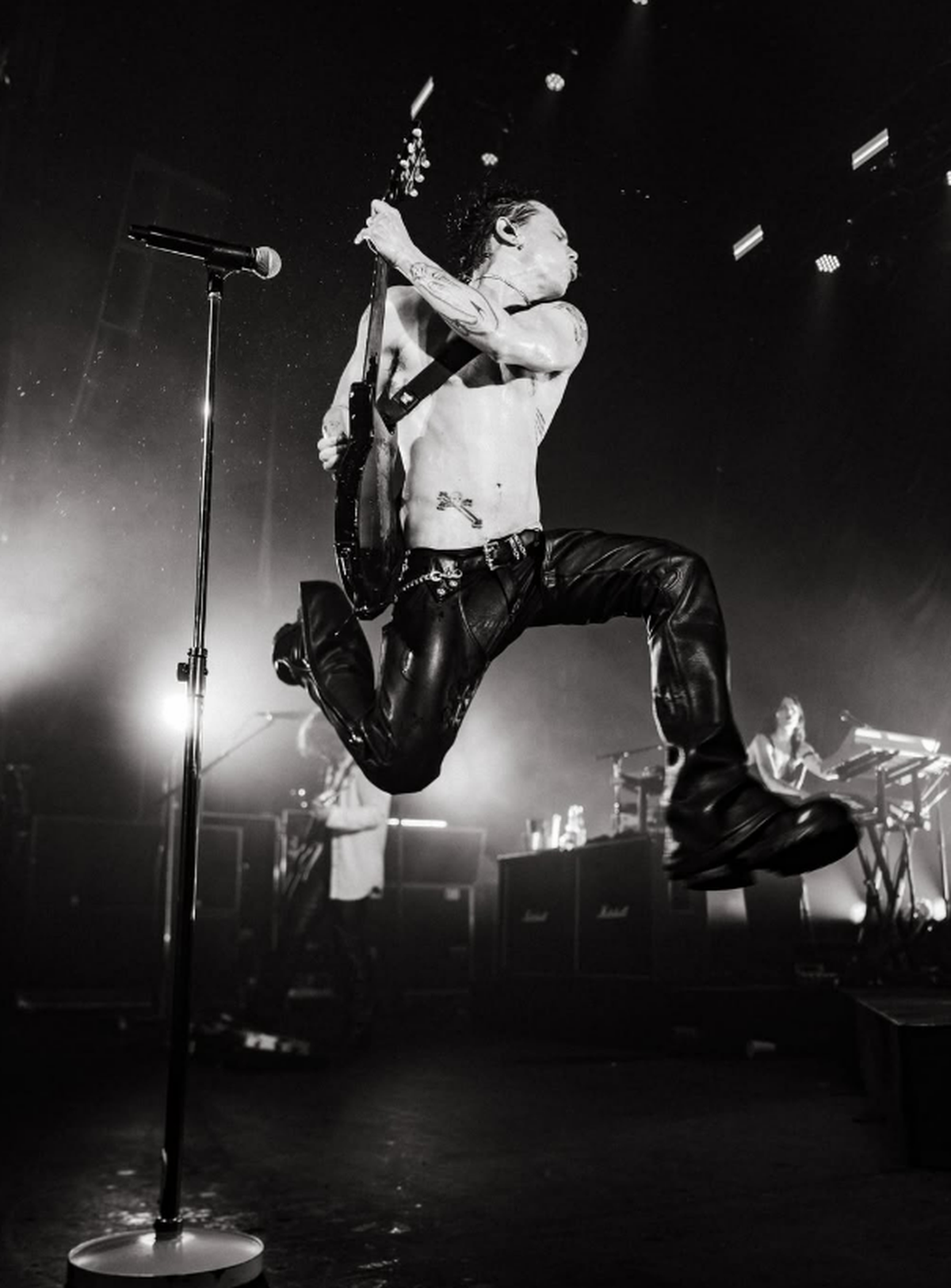
Yungblud
| Photo Credit:
Instagram/ @yungblud
Time, however, will be brutally compressed. Three days in the country, a single performance, then a dash out for the Grammys. He laughs at the idea of rest. “When I’m there for three days in one show, I don’t really sleep… Morning to night, I’ll be exploring.” The pace feels familiar since Harrison has built his career by moving faster than the spaces he enters.
That forward momentum has carried his music into increasingly expansive territory. Early releases burned with a neo-punk immediacy, with songs that felt designed to ricochet off small rooms and teenage nerves. With his latest album, Idols, released last year, the scale has widened dramatically, embracing longer forms and a theatrical sweep that seemed deliberately oversized. When I ask what has remained non-negotiable in his songwriting across that evolution, he lands squarely on intention. “I really wanted to make an album that would be so human, on a human basis,” he says.


The gamble was obvious to him while making it. “These long songs and these orchestrations and orchestras were a wild thing to do,” he admits, aware of how far it pushed against contemporary expectations. He talks about size and spirit, about music that “transcends language and culture.”
Yet the response surprised him. He talks about audiences across continents connecting with it instinctively. Calling in from Australia, he sounds slightly stunned by the cumulative effect of the past year. “What a crazy year,” he says, repeating it a few more times as though still pinching himself.

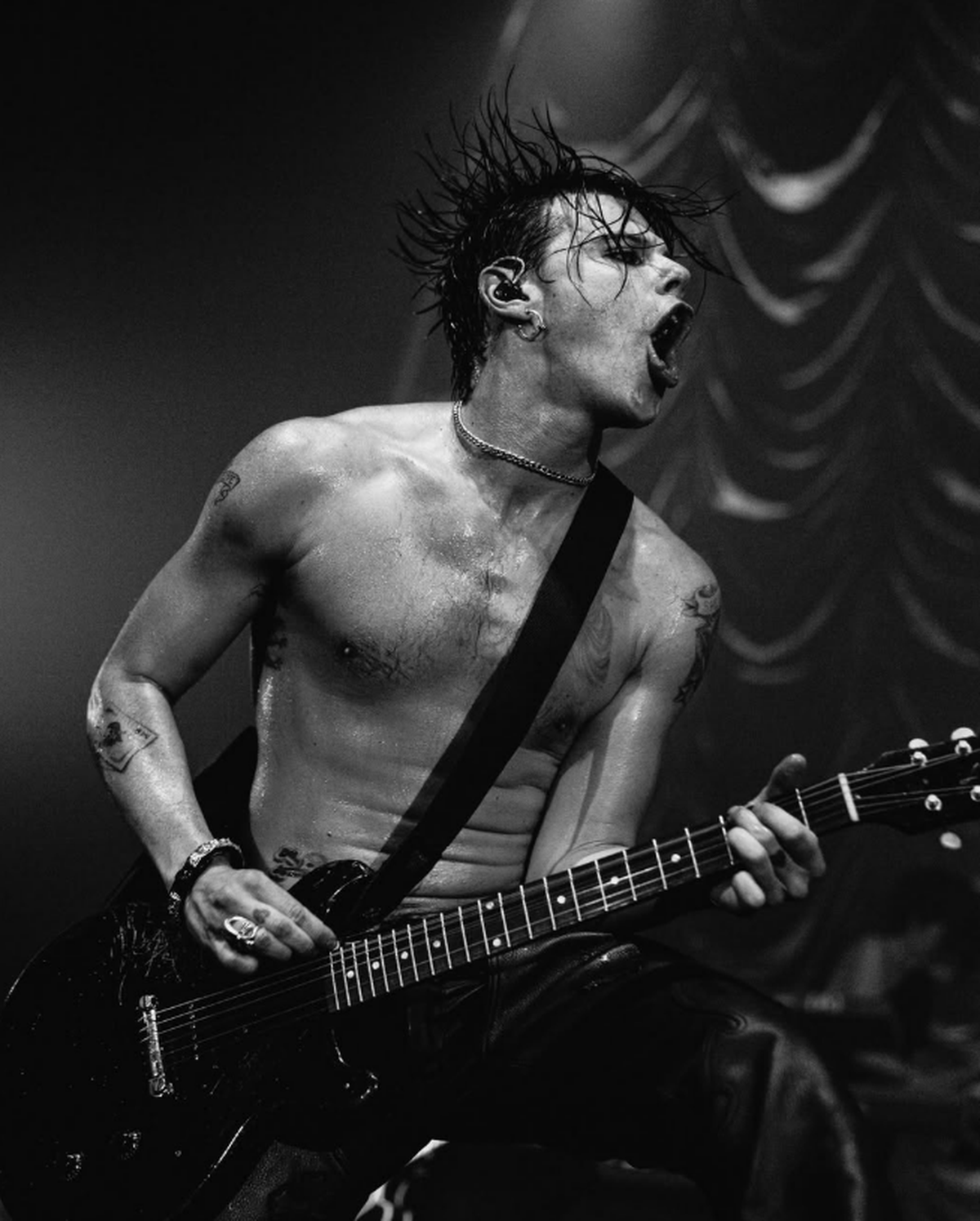
Yungblud
| Photo Credit:
Instagram/ @yungblud
Idols was also shaped by the figures who once stared down from the walls of his room, looming over his imagination. Black Sabbath’s late vocalist Ozzy Osbourne, Queen’s Freddie Mercury, the incomparable David Bowie, and other Rock & Roll Hall of Famers — he describes the album as beginning with a desire to become those photographs on the wall, before circling back to the realisation that the guidance he sought had always been internal.
That realisation grew heavier after Ozzy’s death earlier last year, which came after Harrison had begun to know him personally, even mentoring under him. “You put out this album, and then you start to know these people,” he says. “And then I lost him [Ozzy].” The collision between myth and intimacy left him reeling. “I really have been trying to unpack how the f**k this happened.”
The ‘Prince of Darkness’s early recognition of himself in Harrison intensified public comparisons, something Harrison traces back to childhood. “I knew him as a superhero,” he says, describing Ozzy as Batman long before he understood Black Sabbath’s music. What bound them in his view was temperament rather than style, a shared sense of excess, honesty, and emotional transparency that sits at the core of rock music as he understands it. “We come from a similar place of madness and craziness, but also heart and love,” he says.
The pressure that followed Osbourne’s final concert hit hard. Public expectations multiplied, but Harrison returned instinctively to his mentor’s voice. “I still turned to Ozzy in the same way that I have done since I was this big,” he says, holding up his hands a couple of feet off the ground. His answer to the noise stayed stubbornly simple. “I just got to carry on doing what I set out to do at the beginning and not be dissuaded.”
Watching legacy rock stars up close sharpened his sense of what needed preservation. When asked what he wants to carry forward from that older ethos, his grins, “The theatre.”
Rock, he says, “became really serious for 10 years,” so serious that it lost its sense of fun that once made it feel dangerous and alive. He explains how that spirit doesn’t slide easily into the present moment. “It didn’t necessarily fit with an iPhone generation because it’s naughty, cheeky, breaks the rules, and people don’t like you breaking the rules nowadays.” That means danger has to be reimagined rather than recycled. “You have to do it from a place of love and modernity,” he says, drawing a firm line under nostalgia. “It’s not the 80s anymore.”
What he still chases is the same sense of fearlessness and theatre that drew him to rock in the first place, even as he’s conscious of how differently he arrived there. “I grew up in a different world than a lot of the old rock stars,” he says, which is precisely why the relationship works. “We love theatre, we love rock shows, we f****ng love the lifestyle,” he adds, laughing at the bluntness of it. “But it’s from two different perspectives. I think that’s why we find each other interesting.”
Identity, too, remains fluid by design. Harrison has long resisted fixed labels, publicly embracing ambiguity around sexuality, image, and sound. When I ask whether being undefined has ever frightened him more than being misunderstood, his answer turns inward. “It only scares me if I don’t know who I am. Being an unfinished chapter is the most exciting thing about life. If people don’t like what they’re reading, I don’t give a f**k,” he says. He recalls advice from both Ozzy and Steven Tyler: “Never compromise”.
Curiosity continues to pull him into new cultural spaces. His recent track “Abyss,” written as the opening theme for the anime Kaiju No. 8, marked a deeper engagement with pop culture. “Kaiju was an opening of a door,” he says, describing the pleasure of reading manga from right to left and absorbing the form on its own terms.
That same openness also shapes his anticipation of India. He traces a lineage from Indian sounds through the Beatles into psychedelic rock, expressing eagerness to learn directly from musicians here. His excitement spikes at the thought of sitars, strings and half-scales. “I can’t wait to come to the country and get soaked in it,” he says, already imagining how those textures might surface in future work.

When asked what he hopes Indian audiences recognise immediately, he says, “The energy. The passion. The love.” He speaks with certainty, as though the connection has already been made. “We’re going to fall in love,” he says. “I can feel it… Open the pits, boys.”
I get sent off with the blessing of a “Right on, man! Rock and roll star,” which feels generous under the circumstances. I’ll do my best to earn it this weekend.
Yungblud will be performing at the upcoming Lollpalooza India 2026, produced and promoted by BookMyShow Live, taking place on January 24 and 25, 2026 at the Mahalaxmi Racecourse in Mumbai

