


Winter in India is not a season to endure, but one to celebrate-especially through food. As temperatures dip, kitchens across the country come alive with dishes designed to warm, nourish, and comfort. Homemade pinnis, rich with ghee, nuts, and jaggery, are prepared not just for taste but for their strength-giving health benefits. Seasonal vegetables find new life in winter achars—gajar, mooli, matar, and gobhi slowly cured with spices, preserving both flavour and tradition. Leafy greens like spinach are at their best, making palak paneer a staple that feels wholesome and deeply satisfying. Then comes gajar ka halwa, slow-cooked and fragrant, marking the true arrival of winter on Indian tables. In markets and street corners, the season announces itself through steaming plates of hot matar kachoris, eaten standing in the cold, hands wrapped around warmth. From Punjab’s ghee-rich treats to North India’s winter street food, food becomes a quiet antidote to grey skies, lifting the gloom with familiarity and joy.
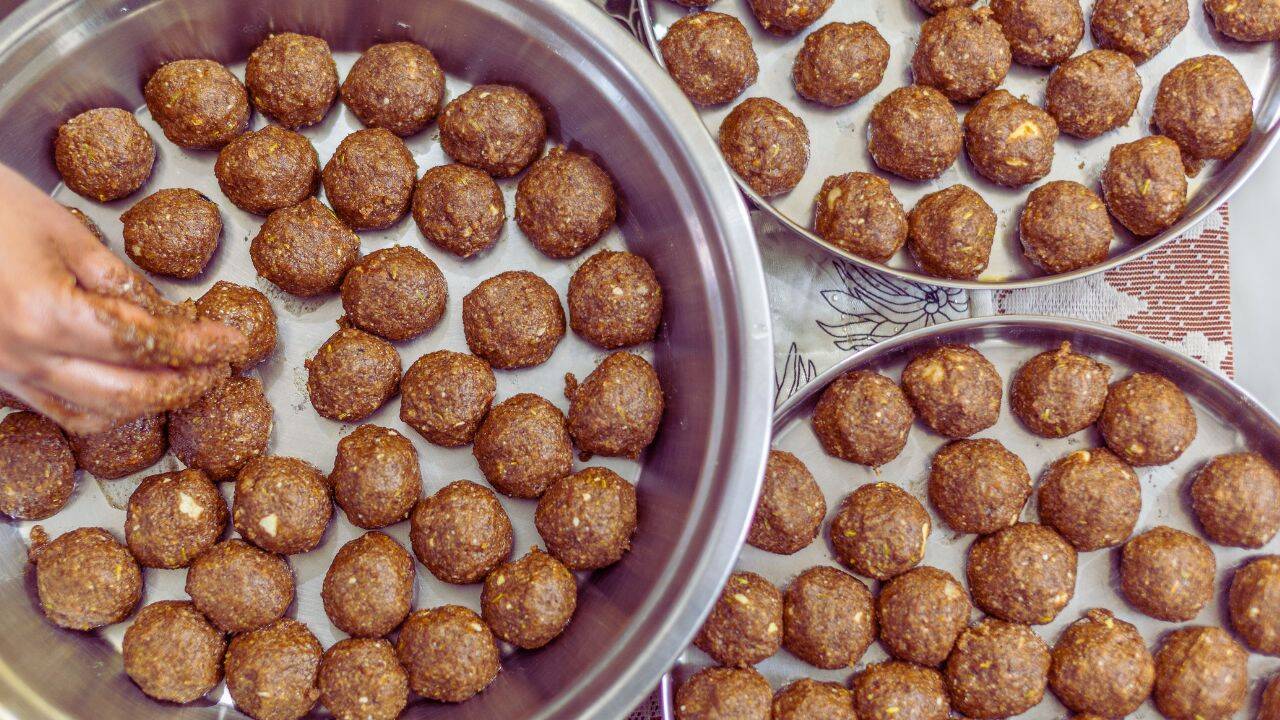


In this newsletter, we will explore winter foods and the nostalgia associated with them-stories, flavours, and memories that make the cold season feel comforting and alive.
Read more at: 6 traditional Indian laddoos made for winter warmth and nourishment
Winter heirlooms in a jar
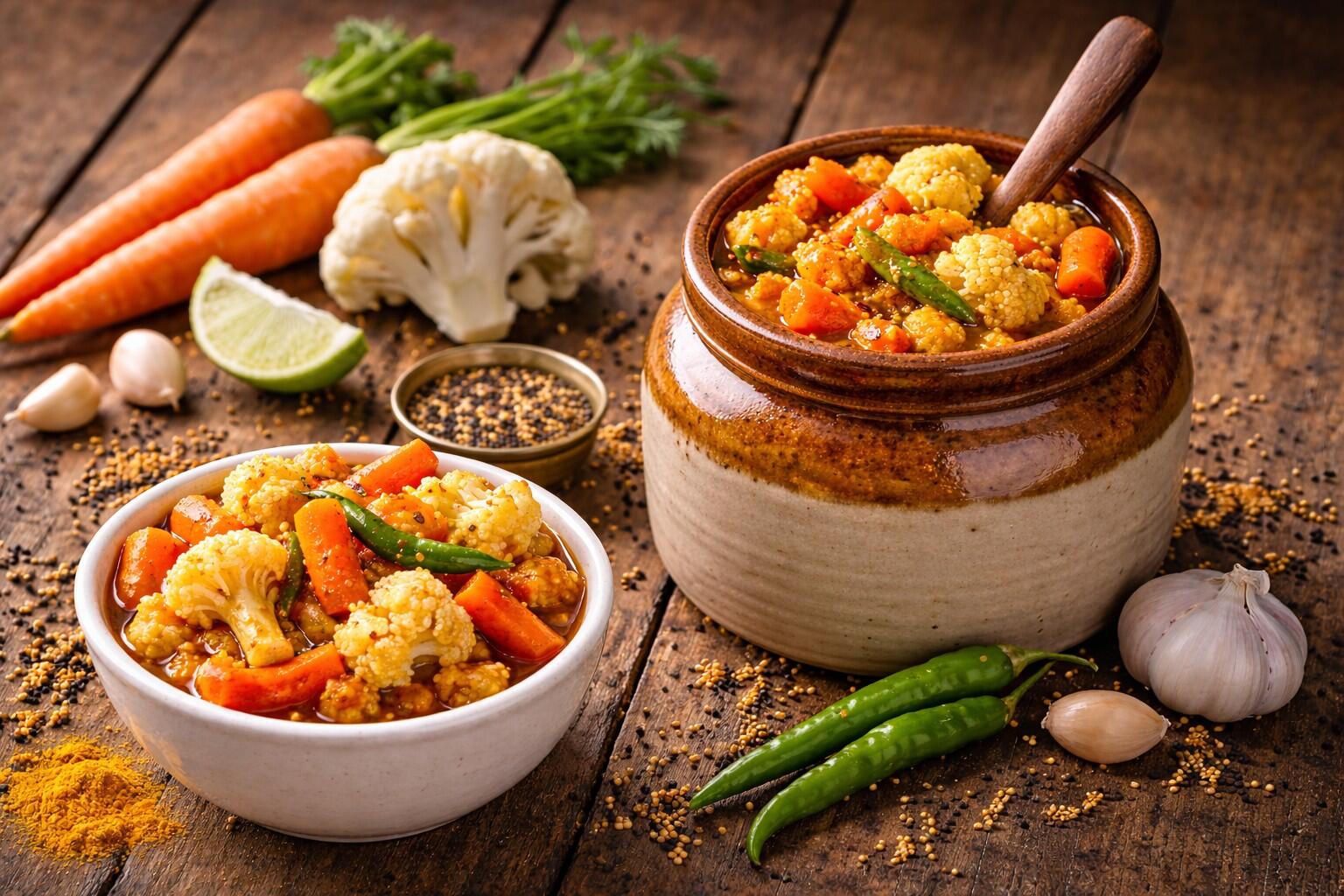


Winter achars made with gajar, mooli, matar, and gobhi capture the season at its most generous. These vegetables are at their freshest in winter, making the pickles both flavourful and nutritious. Sun-cured slowly and spiced with mustard, hing, and chilli, winter achars develop depth over time, turning simple produce into something bold and long-lasting. Beyond taste, they add warmth to winter meals, aid digestion, and bring balance to heavier foods. Rooted in India’s timeless achar tradition, these pickles reflect generations of knowledge of seasons, preservation, and patience—passed down in kitchens across the country. More than condiments, they are edible heirlooms sealed in jars.
Read full article: 8 winter pickles to add warmth and taste to your meals
Buttery palak and creamy paneer- seasonal timeless comfort
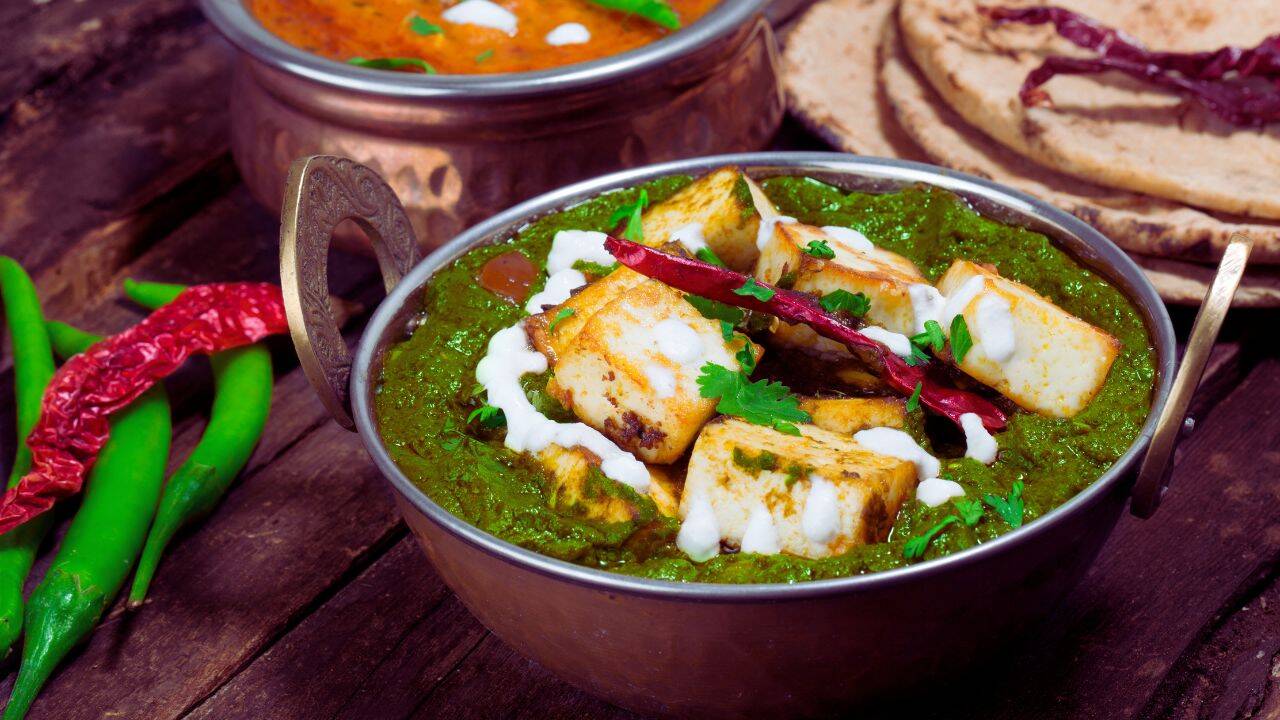
Palak paneer feels like winter comfort served in a bowl. Made with fresh spinach at its seasonal best, the dish carries a natural warmth that suits cold days perfectly. The slow-cooked palak, tempered with garlic, ginger, and mild spices, feels nourishing rather than heavy, while soft cubes of paneer add richness and protein that keep you full for hours. Its deep green colour mirrors winter produce at its peak, and the gentle heat of the gravy warms the body from within. Paired with hot rotis or steamed rice, palak paneer is wholesome, soothing, and satisfying—exactly the kind of food winter demands, balancing indulgence with nourishment in every bite.
Read full article: How to make classic Palak Paneer for lunch at home
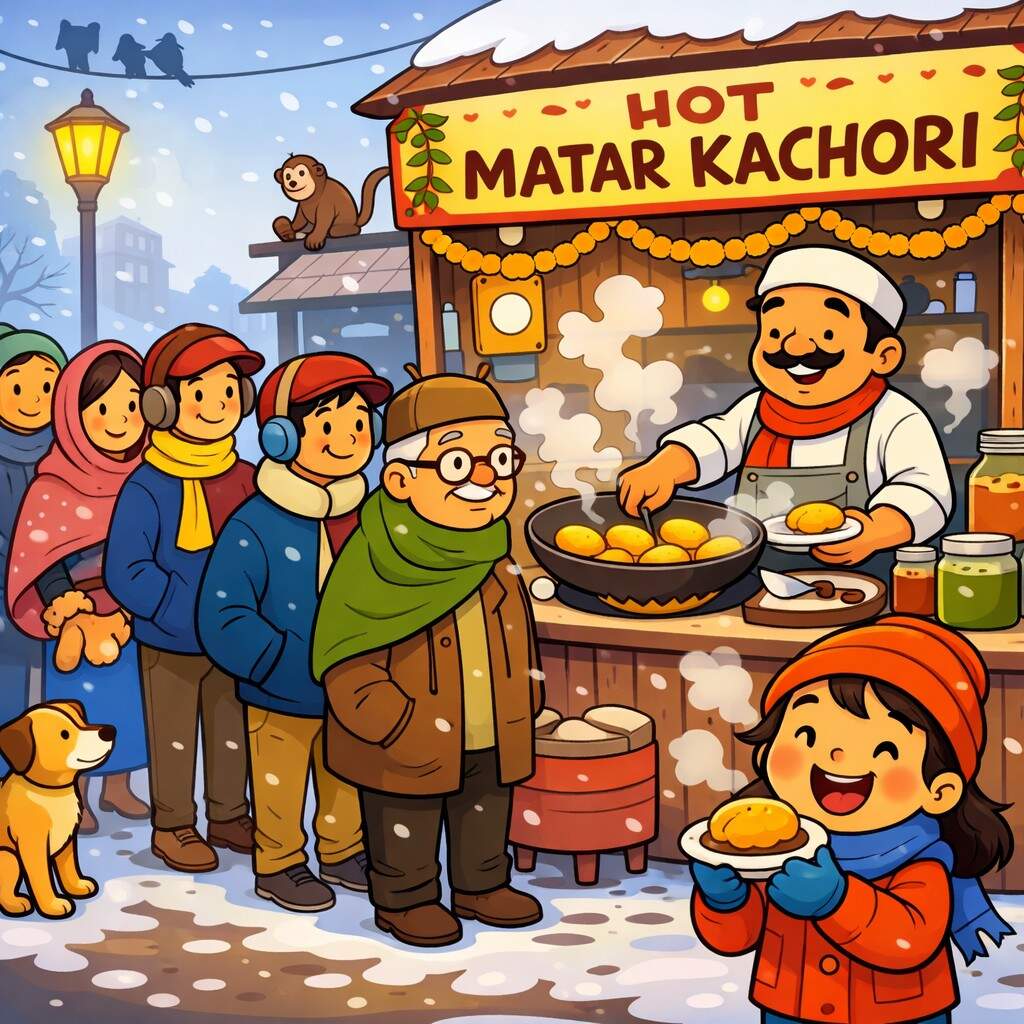
Matar Kachori: Pure winter nostalgia!
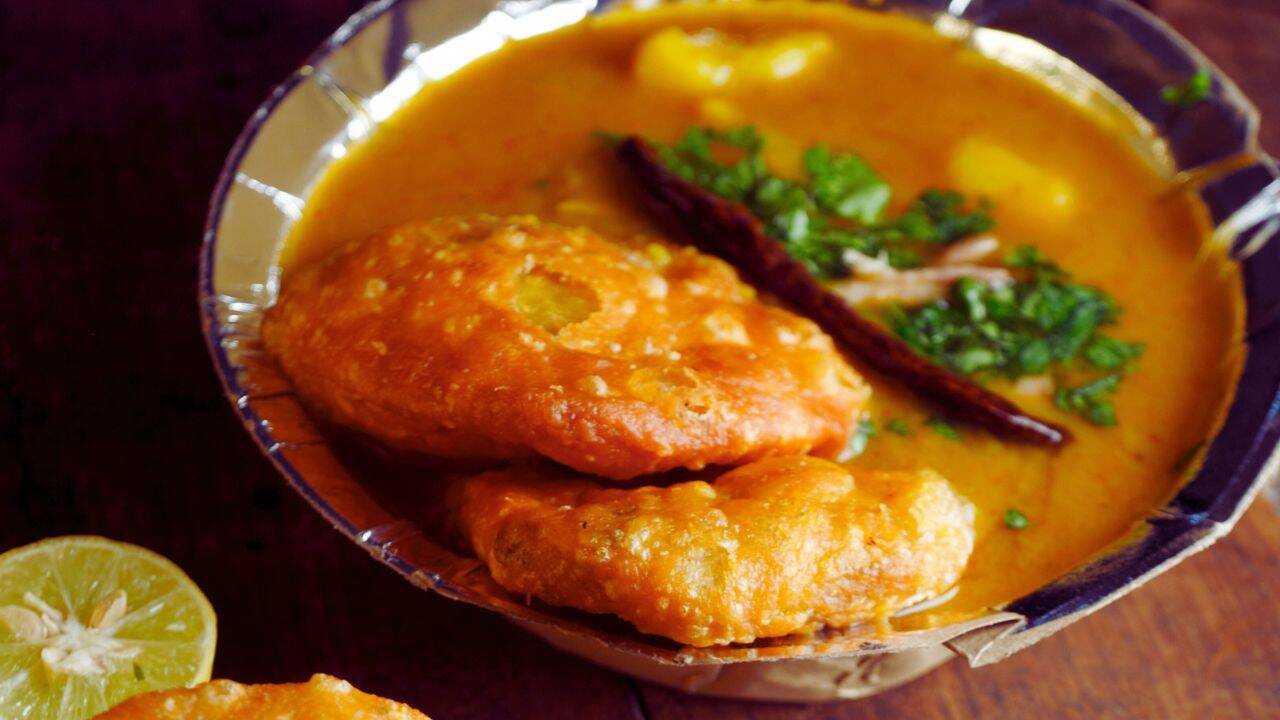
Matar kachori is pure nostalgia because it belongs to a slower time-foggy mornings, school holidays, and roadside halwais calling out from street corners. It recalls standing in queues with parents, paper plates balancing hot kachoris, and the simple joy of eating something freshly made. In a season when warmth is sought everywhere, matar kachori delivers it effortlessly-through flavour, memory, and the quiet reassurance of traditions that never really fade
Read full article: How to make Matar ki Kachori for dinner

Disclaimer
Views expressed above are the author’s own.
END OF ARTICLE


