

Perhaps it was closer than I had imagined — like a truck looming suddenly in the rearview mirror as I sped down the freeway. The big four-oh (40) loaded faster than a Monday morning email inbox. No detours, no slow lane, just an abrupt arrival!
The journey getting here had been exhilarating. Goals were checked off with satisfying regularity, accolades accumulated neatly on my desk. From journalist to PR professional, and eventually sales and marketing director at one of the world’s most admired hospitality brands, the waves at work had kept building. I held steady, convinced that the rush of the surf made everything worthwhile. Yet, between those seemingly idyllic crests, a quiet question was beginning to gnaw at me: Is this really all?
Perungattur P Rajagopal
| Photo Credit:
Special Arrangement
A life one rich with balance
In my twenties, balance had come easily. Work was just one part of a rich and diverse life — part-time stage actor, outdoors enthusiast, sports lover. My job had felt like a mere slice of what was usually a generously filled day. But as I climbed the corporate ladder, this balance had somehow gotten skewed. Travel, once my greatest joy, now revolved around work events, and not exploration or adventure. I was always on the clock, and yet never had the time for the things I loved, or the people who mattered most. The week would begin before the previous one had ended, and extracurriculars were becoming increasingly infrequent.
The glamour that masked the grind
Standing on the red carpet at the premiere of HBO Original The White Lotus Season 3 at Four Seasons Resort Koh Samui, surrounded by flashbulbs and champagne flutes, the realisation hit me hard: my world had somehow been subverted. The big-city life, with its high-octane meetings, and all the jet-setting had glossed over the grind — 30-60-90 day action plans, sales targets, and a calendar of meetings packed tighter than a carry-on suitcase.
Stepping off the wheel
They say life comes full circle, and for me, that moment arrived in May last year. I learned that PERCH, a vibrant collective of artists and theatre practitioners, was bringing Under The Mangosteen Tree — a colourful collage of stories by iconic Malayalam writer VM Basheer — back to life. Stepping off a moving wheel is unnerving, especially when you have stayed the course so long. Yet, the timing felt serendipitous. What better way to celebrate a milestone than returning to a story — and a version of myself — I had once loved? I decided to gift myself a self-imposed sabbatical. My husband and I are no strangers to living on the edge, but this felt different: less thrill ride, more leap of faith. With a few adjustments to our bottom line, we felt ready to give it a real shot.

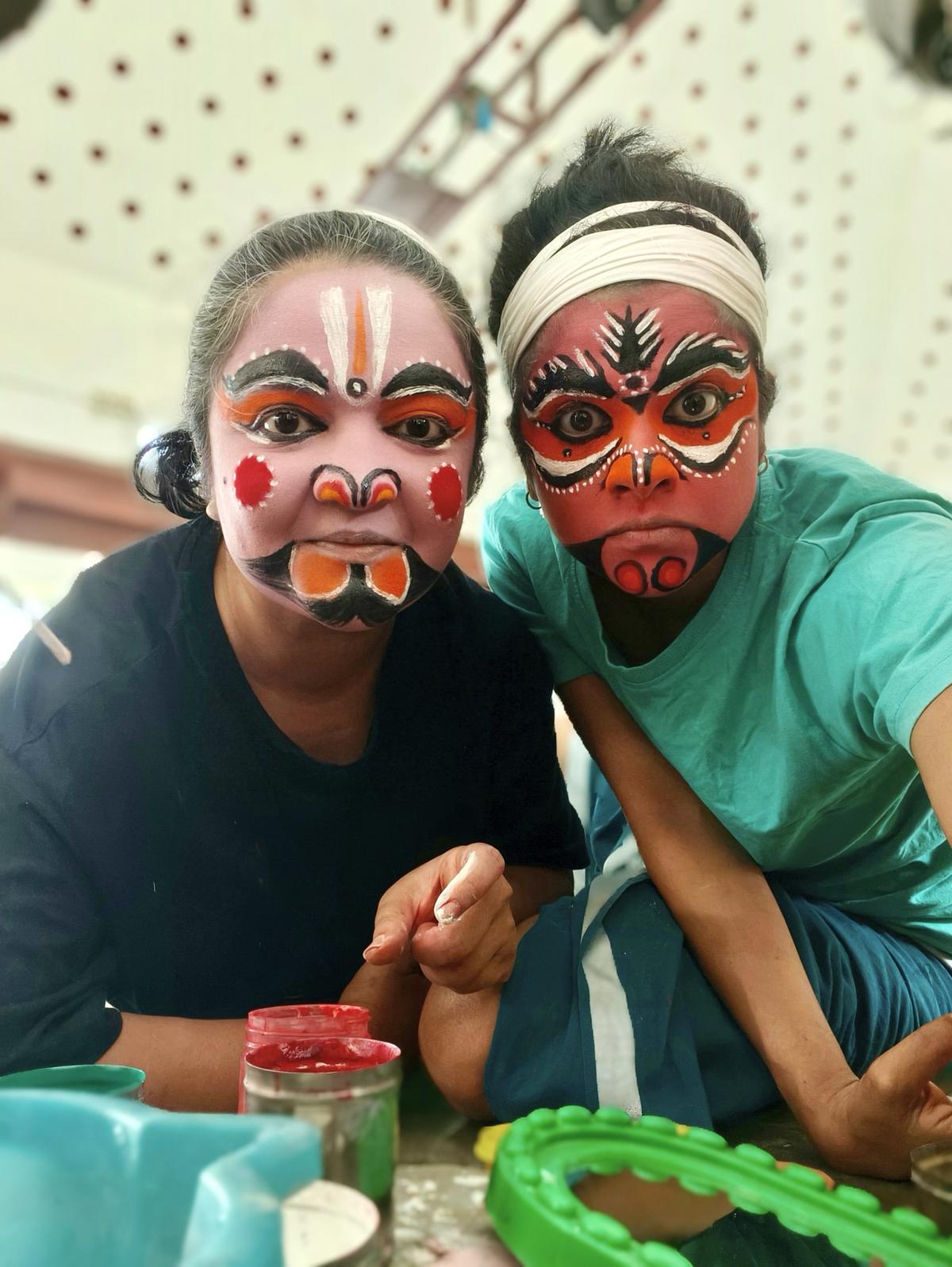
Actor Maya S Krishnan and Karuna Amarnath
| Photo Credit:
Special Arrangement
Pressing pause (and play)
One month into my sabbatical, with 12 sold-out performances behind us, I found myself craving more. That craving led me somewhere entirely unexpected and utterly irresistible: a rare opportunity to study Kattaikkuttu, a traditional Tamil folk theatre form, under one of its living legends — Perungattur P Rajagopal. For the first time, he was opening his institution in Kanchipuram for a short-term immersive course.
Entering the world of Kattaikkuttu
Despite growing up in Chennai, Kattaikkuttu was unfamiliar territory: the stages are open village grounds, the language imposing, the costumes overwhelming. Stitched together with high-pitched verse, and relentless rhythm, this physically demanding form is typically staged across an adrenaline-fuelled all-night performance.

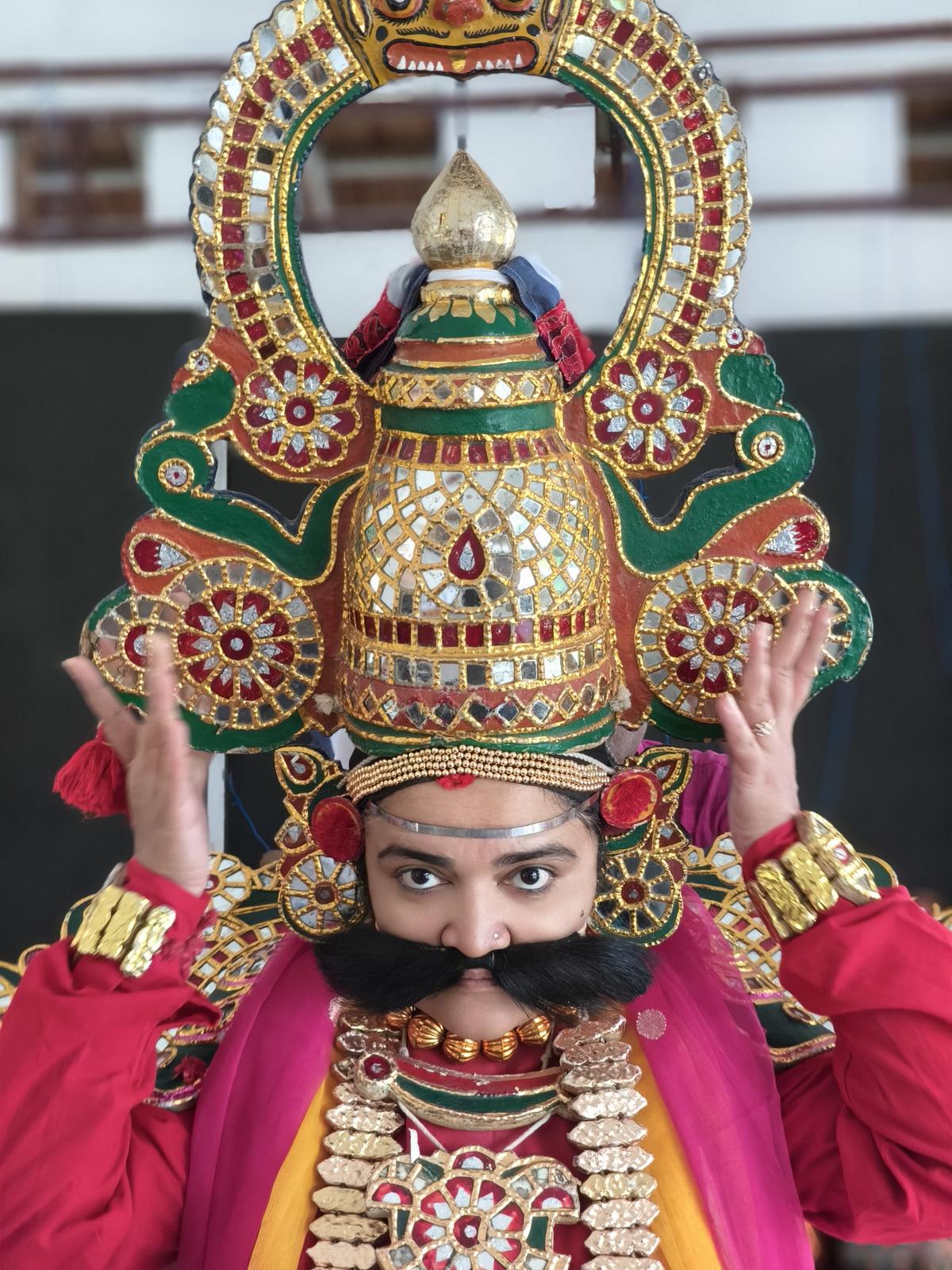
Wooden thiru mudi (crown) weighing 2kg
| Photo Credit:
Special Arrangement
The ornamentation tells a story of its own—elaborate wooden pieces, hand-painted, glued, and decorated using ‘muggu’, ‘gondhu’ and other traditional techniques. The musicians — mridangam, mugaveenai, and harmonium players—create each song in complete partnership with the performers singing in perfect unison at F-sharp, transforming every performance into a living conversation. Passed down orally through generations, the form is guided solely by a teacher’s lived knowledge.
One of the most fascinating aspects of Kattaikkuttu is its relationship with the audience. People may get up, walk out, or even take a nap at any point. It’s a space where people yell out when a particular verse isn’t performed correctly. The audience knows the intricacies, the nuances—the very fabric of the form. They’re not just passive observers; they’re participants in an ongoing dialogue. This critical and active engagement makes Kattaikkuttu a dynamic theatre form, where performers and audience are in constant exchange, making the performance ever-evolving.
Each aspect of this form is an act of preservation, keeping centuries-old craftsmanship alive with every performance. Historically rooted within specific communities, stepping into this space as a learner feels less like access and more like a privilege — one that comes with responsibility, listening, and deep respect.
Learning at Kattaikuttu Sangam
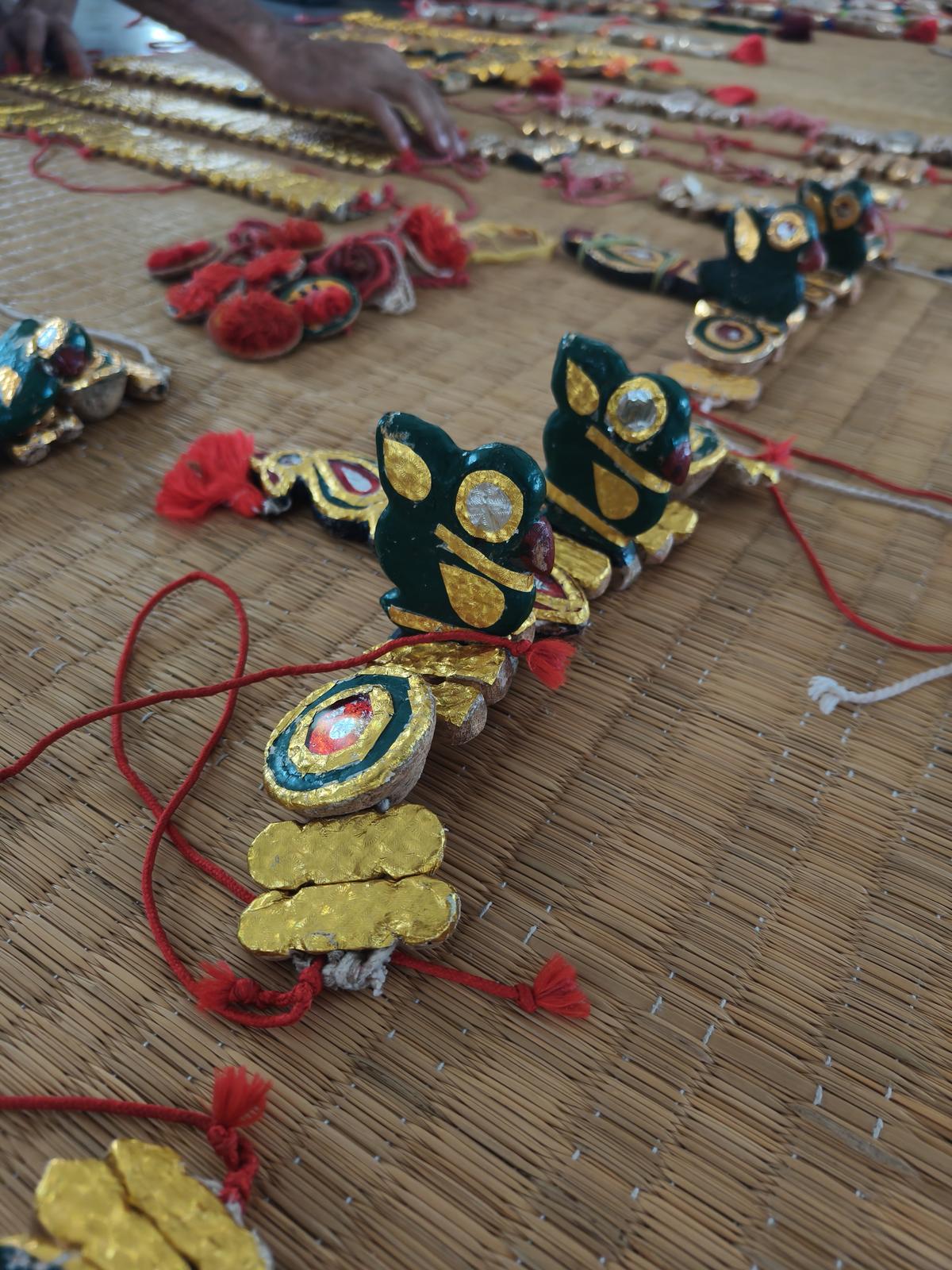
Ornaments made with ‘muggu’, ‘gondhu’ and other traditional techniques
| Photo Credit:
Special Arrangement
On the outskirts of Kanchipuram, Rajagopal and Dr. Hanne de Bruin have created the Kattaikuttu Sangam — a sanctuary for preserving, upholding the prestige, and nurturing this art form. Learning here goes beyond rehearsal, offering a fully immersive entry into the Kattaikkuttu way of life. Once practiced exclusively by men, Rajagopal’s inclusion of women in lead roles has transformed it. His legendary discipline underpins everything — rehearsals exacting, repetition relentless, and precision non-negotiable. Yet, his students, now teachers, mirror his precision and generosity: welcoming, quiet yet particular, ensuring no one is left behind until every voice catches up.
A reset: barefoot and grounded
The challenges have been many — learning Tamil verses, understanding complex rhythms, executing ‘kirukis’ (pirouettes) under elaborate costumes. Yet, living here, in a village community as eclectic as the characters we perform, has been profoundly grounding. Three months felt barely enough to scratch the surface of this art form, a lifetime of practice is needed to truly understand its depth. But this window into a world I barely knew existed has given me the space to reset and reassess what truly holds value.
As 2026 dawns, I see the year behind me split in two: six months in Bangkok, sharp-heeled and fluorescent, and six months barefoot on village soil, where time moves to an older rhythm. Here, singing ragas at the nalre katte (4½ scale) is the only high-octane drive I know.
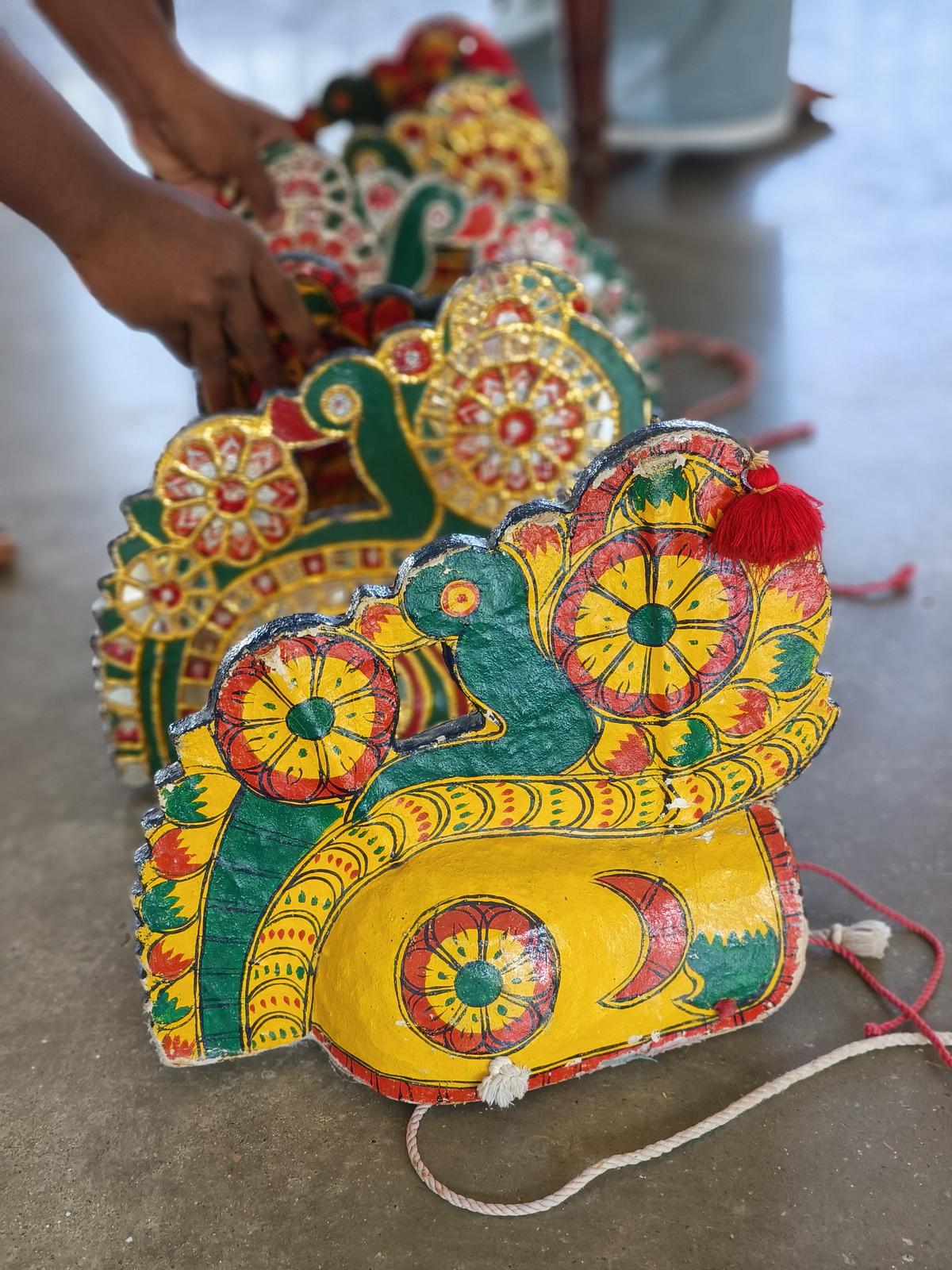
Beautifully hand-painted wooden ornaments
| Photo Credit:
Special Arrangement
The rigour, discipline, and precision that once defined my corporate self, have not disappeared—they have in fact been honed further, now rooted in song, movement, and the steady cadence of a centuries-old practice. Now, as the rearview fades behind me, it feels less like arrival and more like departure — not a chapter where barefoot steps, F-sharp ragas, and centuries of song guide the way.
With the support of Tata Trusts, Kattaikkuttu Sangam offers certification courses ranging from three to 10 months, with the next intake beginning in February 2026. More details at kattaikkuttu.org.
Students from the inaugural batch (October–December 2025) will perform Pagadai Thugil (Draupadi Vastrabaranam) on January 3 and January 10 at 6 pm at Kattaikkuttu Sangam, Kanchipuram. Entry is free.


