

Creole travel services, Elvis Presley’s “King Creole”, Creole cookbooks, Creole descent, Creole languages. The diversity encompassing the term “Creole” isn’t negligible. For this reason, its definition varies from place to place, context to context, sometimes even colliding in conflict with its own meanings.
To understand what Creole is, it is important to always keep in mind context.
In the Belize Capital, the cart of a food vendor displays the Creole version of “Do Your Own Thing”.
| Photo Credit:
NYT PICTURES
Speaking Creole
“Nak yu ownting”
“Shi hav tumuch dress”
“We yu go?”
“Mi lavem yu”
These are examples of some English-based Creole languages. You might read this out loud and think these are baby-talk but no. They are real languages with their own grammar, linguistic complexities, and degrees of differences.
“Nak yu ownting” is an example of creole of Belize (Belizean Creole) and it means ‘Do your own thing’.
“Shi hav tumuch dress” is an example of creole of Trinidad (Trinidadian Creole) and means ‘She has too many dresses’.
“We yu go?” is an example of Torres-Strait creole (creole spoken on Torres-Strait Islands, Australia) and means ‘Where are you going?’
“Mi lavem yu” is an example of Bislama (creole of the country Vanuatu, a South Pacific Ocean nation), meaning ‘I love you’.
A sociolinguistic understanding of the term “Creole” tells you that the name is given to languages that have acquired native speakers, meaning such languages were not initially native (mother tongue) but rather acquired as native by a new generation of speakers, i.e., they are learned as first language by children. A lot of creoles are spoken today in many parts of the world like the Caribbean, South/Central America, Africa, Indian Ocean Islands, etc. Historically many creole languages emerged in coastal colonies of the Atlantic and Indian Ocean.
Like the English-based Creoles, there are creoles based on languages like French, Portuguese, Arabic, etc. These blends are historically due to many social factors that brought communities to close proximity with other languages. Such factors include colonisation, slavery, etc. Hence, creole has undergone many linguistic changes over time.
- Haitian Creole is a French-based Creole.
- Papiamento, spoken in the Caribbean, is a Portuguese-based Creole.
- Yilan Creole, spoken in Taiwan, is a Japanese-based Creole. In fact, it is the world’s only surviving Japanese-based creole.
Being Creole
If one ruminates, it’s also as if the existence of creole languages signify a journey, an “in-between”. Creole peoples are as different as the creole languages. They represent different ethnicities and their identity, much like the languages themselves, have developed over time.

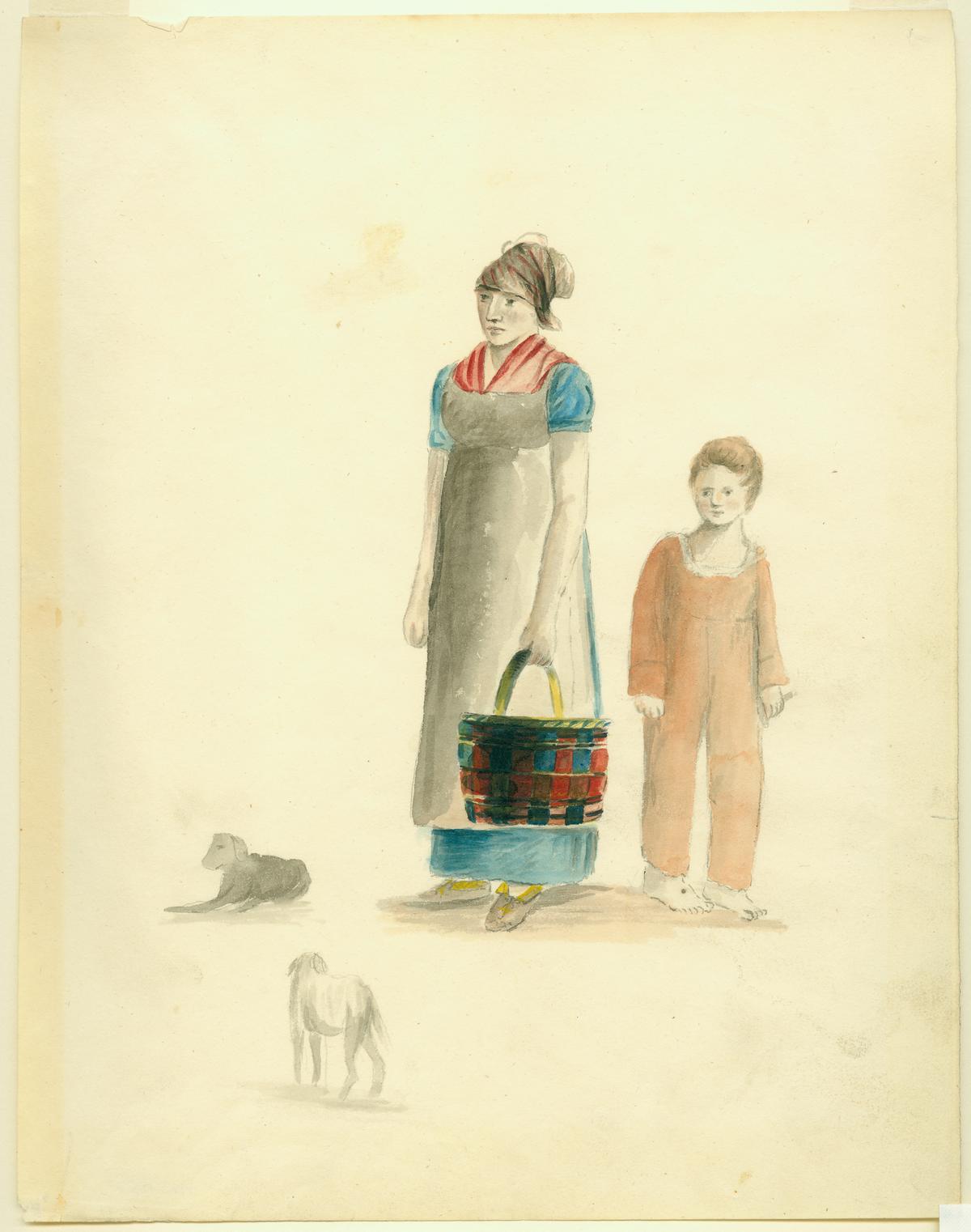
“Creole woman and boy” by Anna Maria von Phul, 1818.
| Photo Credit:
Wikimedia Commons
The Louisiana Creole people (U.S.) are typically associated with “Black Creoles”. They were the descendants of enslaved Africans, African Americans. They are also descended from other Louisiana inhabitants (during the period of French and Spanish rule) and hence, are a mix of Native American, Spanish, or French ancestry.
Yilan Creole people are an ethnic group from Yilan County, Taiwan. Their language, Yilan Creole, was developed during Japan’s colonial rule of Taiwan when Japanese came into close proximity with Indigenous Taiwanese languages — Atayal and Seediq. Yilan creole people live in rural communities with their lifestyle largely tied to agriculture and fishing. Since Taiwan is already a linguistically diverse country, Yilan Creole is relatively quite socially marginalised — both the people and the language.
In the West Indies, the term Creole refers to all people who are part of Caribbean culture, regardless of their ancestry — African, European, Asian, Indian.
Creole Culture
From all of the above, we can infer that Creole culture is a melting pot. Several cultures and traditions coexist within it. Hence, it is not one monotonous whole but a cultural embrace of differences and similarities. Creole tourism captures this idea.
A melting pot
is a place where a variety of peoples, cultures, and ideas exist and mix together.
Creole cuisine is a blend of many traditions like African, European, and so on. Creole foods are found all over the world and they are all so different. In each region, Creole cuisine adapts to the local food culture.


