

“I am human — I scroll for six hours a day,” said Subbu Karuppayee Bhavani, 21, with a laugh. “But the satisfaction I get after reading a chapter or two is far more.”
Subbu Karuppayee Bhavani
| Photo Credit:
Srijani Mukhopadhyay
At The Hindu Lit for Life this year, the tension between endless scrolling and the slow pull of books surfaced frequently in conversations with young readers. Across two days, attendees below the age of 30 spent their weekend rushing between sessions, bookstalls and long signing lines. Some were lit fest regulars, some were determined to make it through their checklists, and others arrived as reluctant recruits of enthusiastic friends or family, later spotted voluntarily queuing for panel discussions. Most were seen leaving with paperbacks, hardbacks and tote bags heavier, but spirits lighter, than when they arrived.


The centrality of stories and how they are told, kept coming up in conversations, even when reading choices were unplanned. Subbu’s introduction to James Baldwin began when her roommate borrowed a library book in her name and forgot to return it. “It was just lying around,” she said. “But I realised I hadn’t read engaging prose in a while because I’ve been buried in academic reading.” Baldwin’s essays, she says, have made her want to read more literary essays.

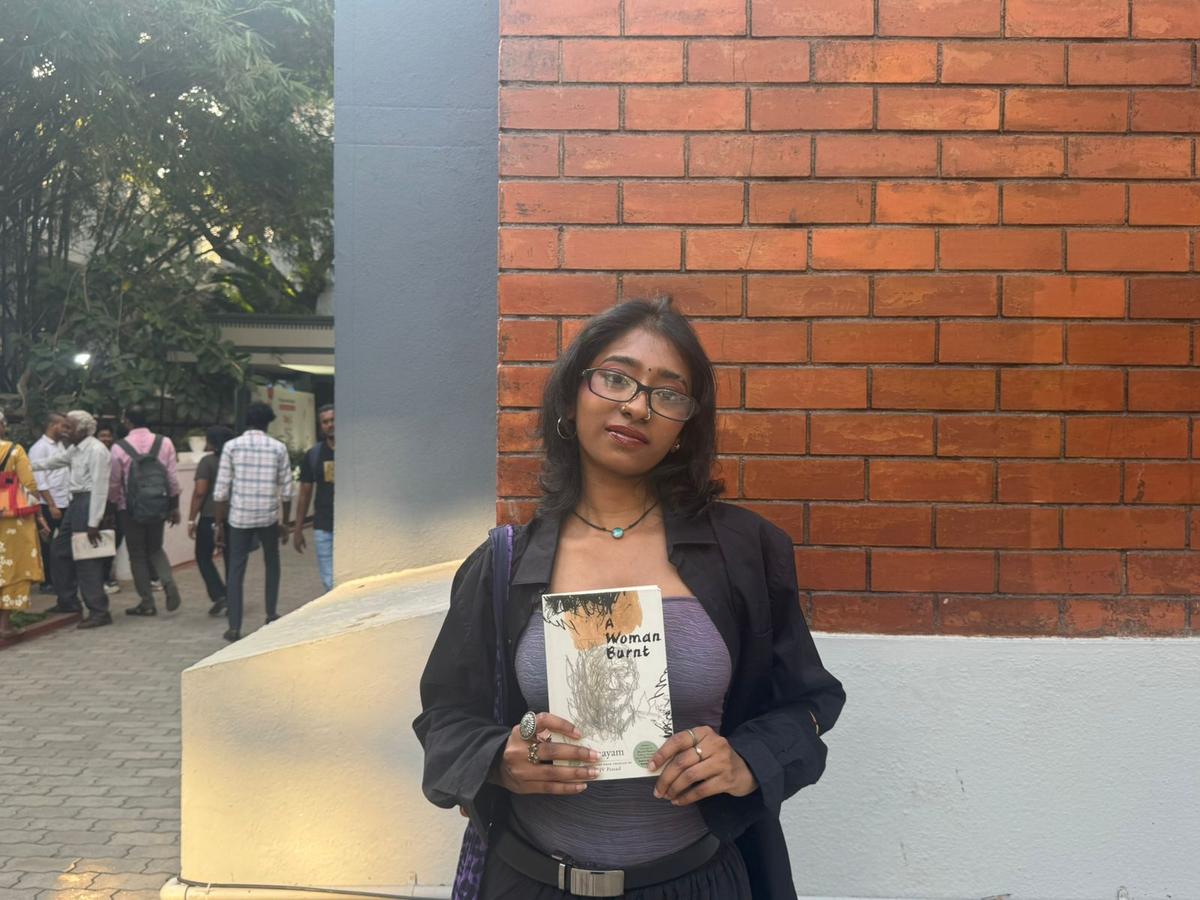
Radha Ragamalika
| Photo Credit:
Srijani Mukhopadhyay
For 21-year old literature student Radha Ragamalika, reading has meant steadying herself within the digital world, rather than escaping it. “We use social media as escapism,” she said, “but I also use books to escape. They exercise the mind in a different way.” She has been reading Audrey Lorde’s Sister Outsider slowly, often at night, while parallely tackling Albert Camus’ The Outsider. “I didn’t want to graduate college without having read Camus,” she chuckled.
Others agreed that books demand a different kind of attention. “When you’re watching something, everything is already pre-made for you,” said Dinesh, 21, who has been reading James Clavell’s Shōgun. “With books, you imagine the entire scene yourself. You cast your own actors, choose their faces and colours. It’s more organic.”

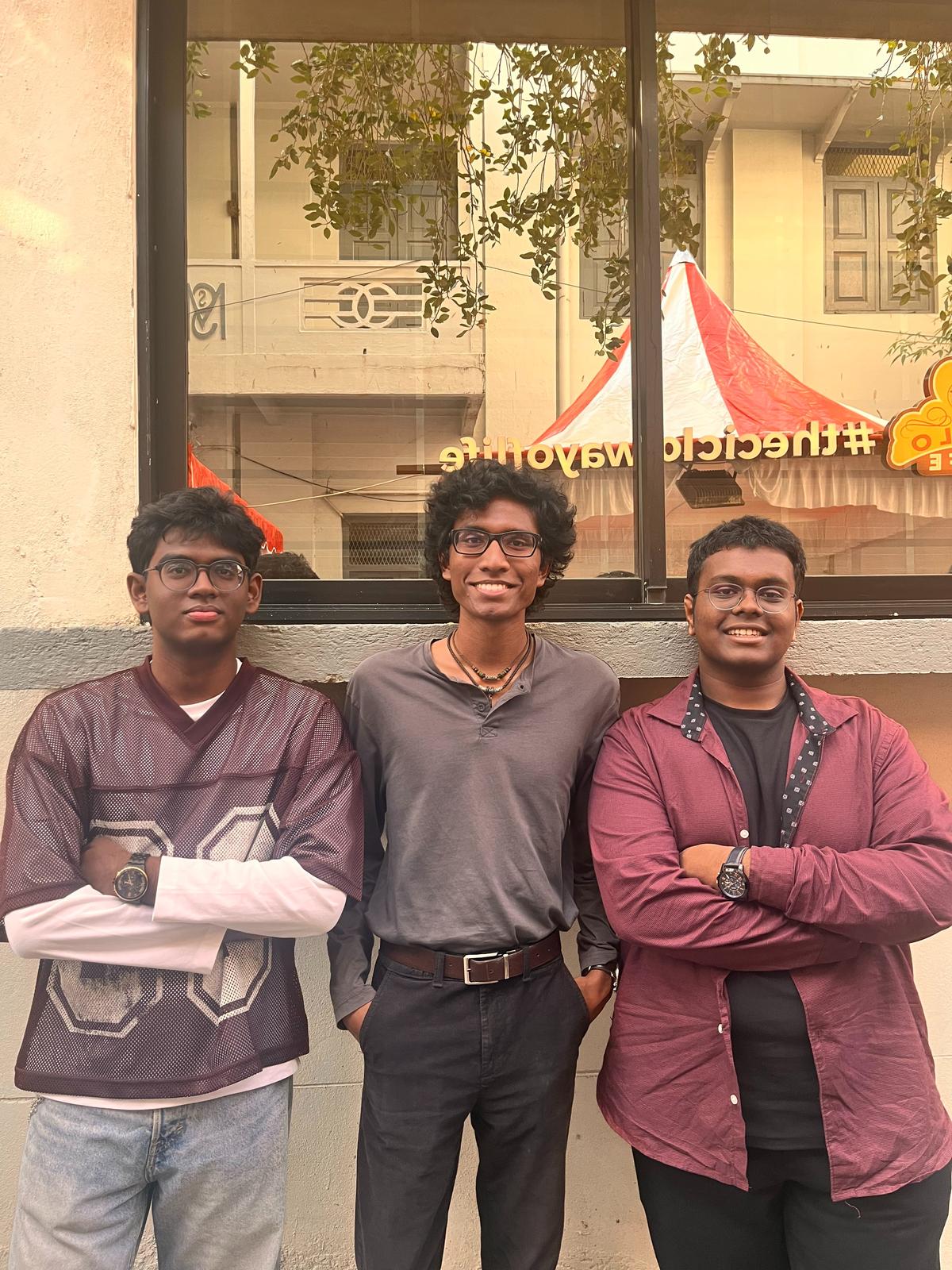
Kiruthikesh, Dinesh and Varun V
| Photo Credit:
Srijani Mukhopadhyay
He was accompanied by friends Kiruthikesh and Varun V, all members of the Stanley Literary Society, a student led collective for literature lovers in Stanley Medical College, Chennai. While Kiruthikesh gravitates towards fantasy, Varun has been reading Osamu Dazai’s The Setting Sun for its bleakness. “I like tragedy,” he said simply.
Pranuthy, 20, a literature student, also felt that “a book is the actual art,” and “anything online or AI-generated cannot be equivalent to what you hold in your hand.” She had picked up Andaleeb Wajid’s Learning to Make Tea for One from the festival, drawn by its title. “It feels like it will hit,” she said, “and then heal.”
For most of these readers, reading is a default part of their academic lives, and also a way of surviving it. Maryum Ameen and Hari Roopan, both 21 year-old Law students, spoke about balancing their dense legal curriculum with books that widened their perspectives. Maryum, an avid Shashi Tharoor reader, had picked up his book The Battle of Belonging after attending his session.
“It connects with what we study, how laws are built around ideas and debates of nationalism and patriotism,” she said. Hari, meanwhile, chose to pick up a work of fiction, Tharoor’s murder-mystery novel Riot. “Law teaches you procedure,” he said. “But law is also about reading someone’s story and telling it better. Fiction helps you understand how the world works beyond just the law.”
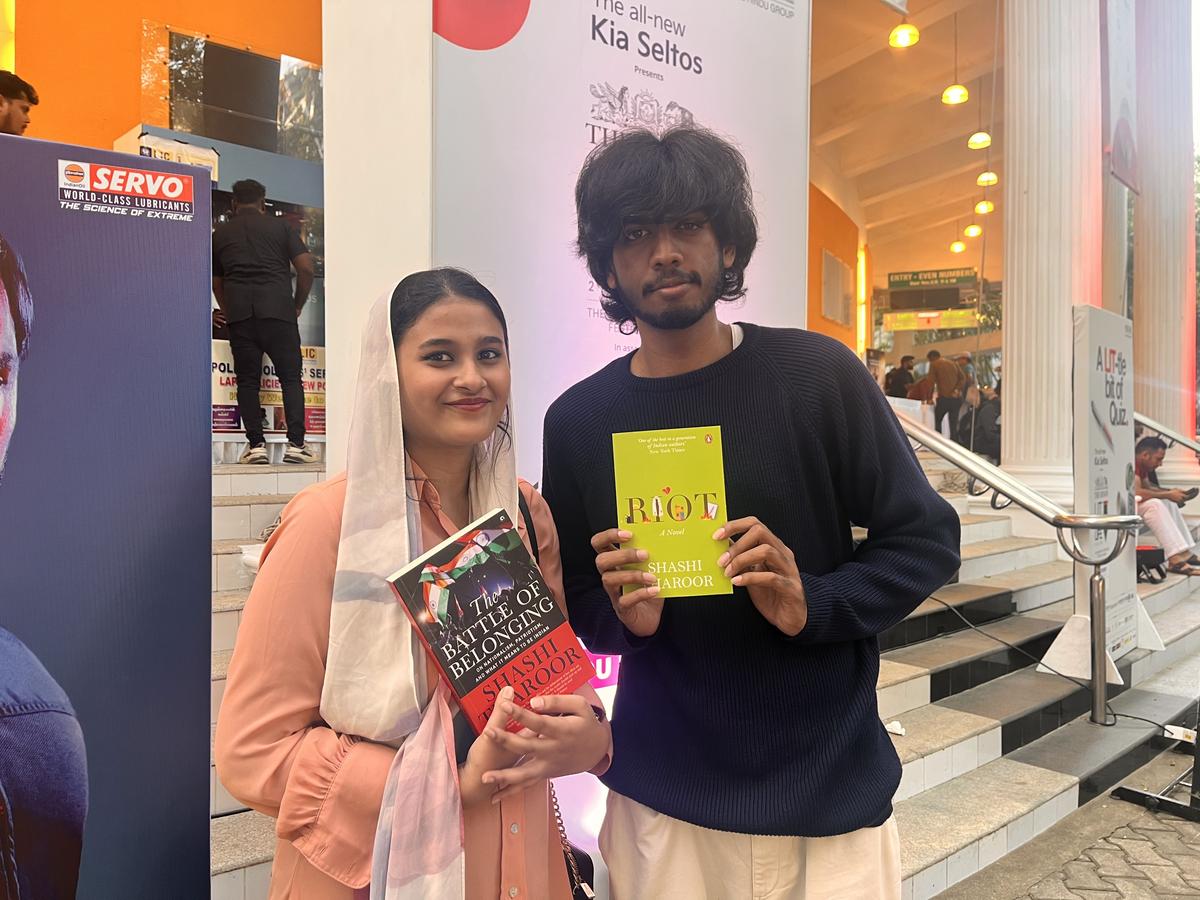
Maryum and Hari
| Photo Credit:
Srijani Mukhopadhyay
The festival also prompted young readers to pick up writers closer home. Browsing the bookshop in the festival grounds, Subbu picked up Kalki’s selected works, curious about his Tamil writing beyond the classic: Ponniyin Selvan. “I want to see what else he has written,” she said. Radha chose Imayam’s A Woman Burnt, translated by GJV Prasad, to look at Tamil literature in translation.
As the festival drew to a close, Radha admitted that she drifts to her phone all the time. “But coming to places like this, where people are constantly talking about books and ideas, reminds me why I read,” she said.

