
One thousand feet above sea level, just after dawn, I get a a 360-degree view of rows and rows of coconut groves bathed in morning light; an unforgettable view from a hot air balloon, skimming over the treetops of Pollachi, located 45 kilometres from Coimbatore. “The first rule,” reminds Oliver Stallwood, the 23-year-old pilot from the UK, as he steers the balloon’s ascent, “Is to put your phone away and soak up the views.” As the balloon drifts over fields, cows and dogs look up. People in the villages below, awestruck by the gigantic structure over their tile-roofed homes, wave at us.
The balloon safari rides, launched by Tamil Nadu Balloon Adventures in association with Tamil Nadu Tourism at Pollachi in Coimbatore district, Madurai and Tiruvannamalai, can fly with a maximum of eight passengers, and only once in the morning at sunrise..
“Every location offers something unique from the air,” says Benedict Savio, founder of Tamil Nadu International Balloon Festival (TNIBF) and director, Global Media Box, adding, “In Pollachi, you see oceans of coconut trees, something you’ll never see elsewhere. Madurai’s landscape is completely different. Thiruvannamalai has the Arunachala Hill.” Benedict’s first balloon ride, he recalls, was in Germany in 2005. “It was magical. I had never experienced anything like it. That’s when I knew I wanted to bring this to Tamil Nadu.”
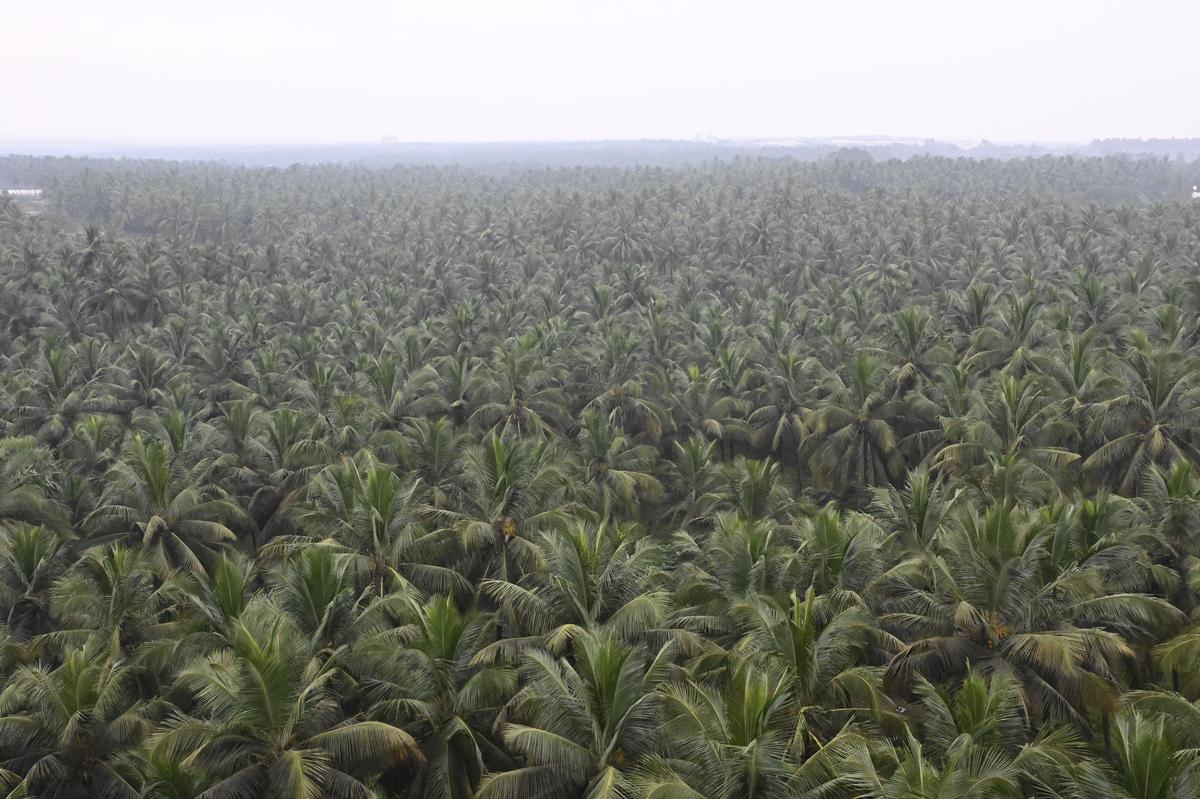
Bird’s eye view of coconut groves in Pollachi
| Photo Credit:
PERIASAMY M
Ballooning in Tamil Nadu has largely been introduced through festivals over the past 11 years. Turning it into a permanent safari, however, required careful study. “That’s why we are doing it in phases: 20 days each in Coimbatore, Madurai, and Tiruvannamalai. We will assess feasibility starting with weather conditions, landing zones, tourist response, costs, and long-term scalability. Based on this, we will decide where to establish a permanent base,” explains Benedict, who has also designed and operated special-shaped balloons, including ones for Emirates Airlines and the Angry Birds franchise, flying across more than 30 countries.
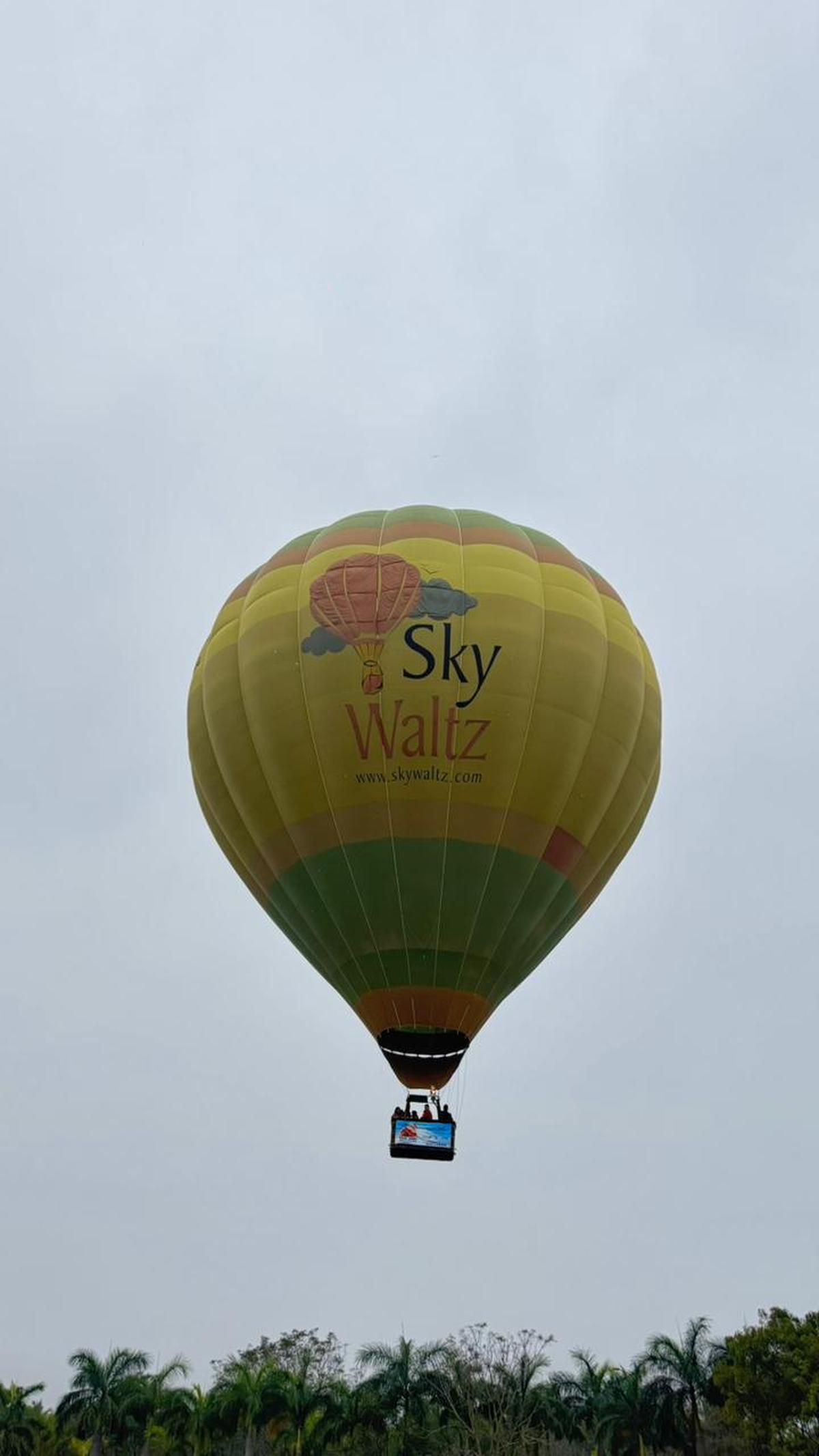
Ballooning in Tamil Nadu has largely been introduced through festivals over the past 11 years.
| Photo Credit:
Special Arrangement
The initiative aims to introduce hot air ballooning as a safe and immersive adventure tourism experience for domestic and international travellers while supporting local employment and regional tourism economies.
As hot air balloons are classified as aircraft, DGCA regulations, clearances, weather studies, and air traffic permissions, apply. Airport and air traffic control clearances are mandatory. Flights are always launched from the outskirts of cities. “Balloons fly with the wind. We need calm zones, open landing spaces, and no active airports nearby,” he says, adding that the limitation, along with pilot costs, crew, maintenance, and DGCA-mandated inspections, makes ballooning expensive. “Realistically, we need to charge ₹12,000 to ₹14,000 per person. However, sponsorship could change that. If a brand sponsors the balloon, like Qatar Airways does in Australia, our costs drop by nearly 50% percent. My dream is to make it under $100.”
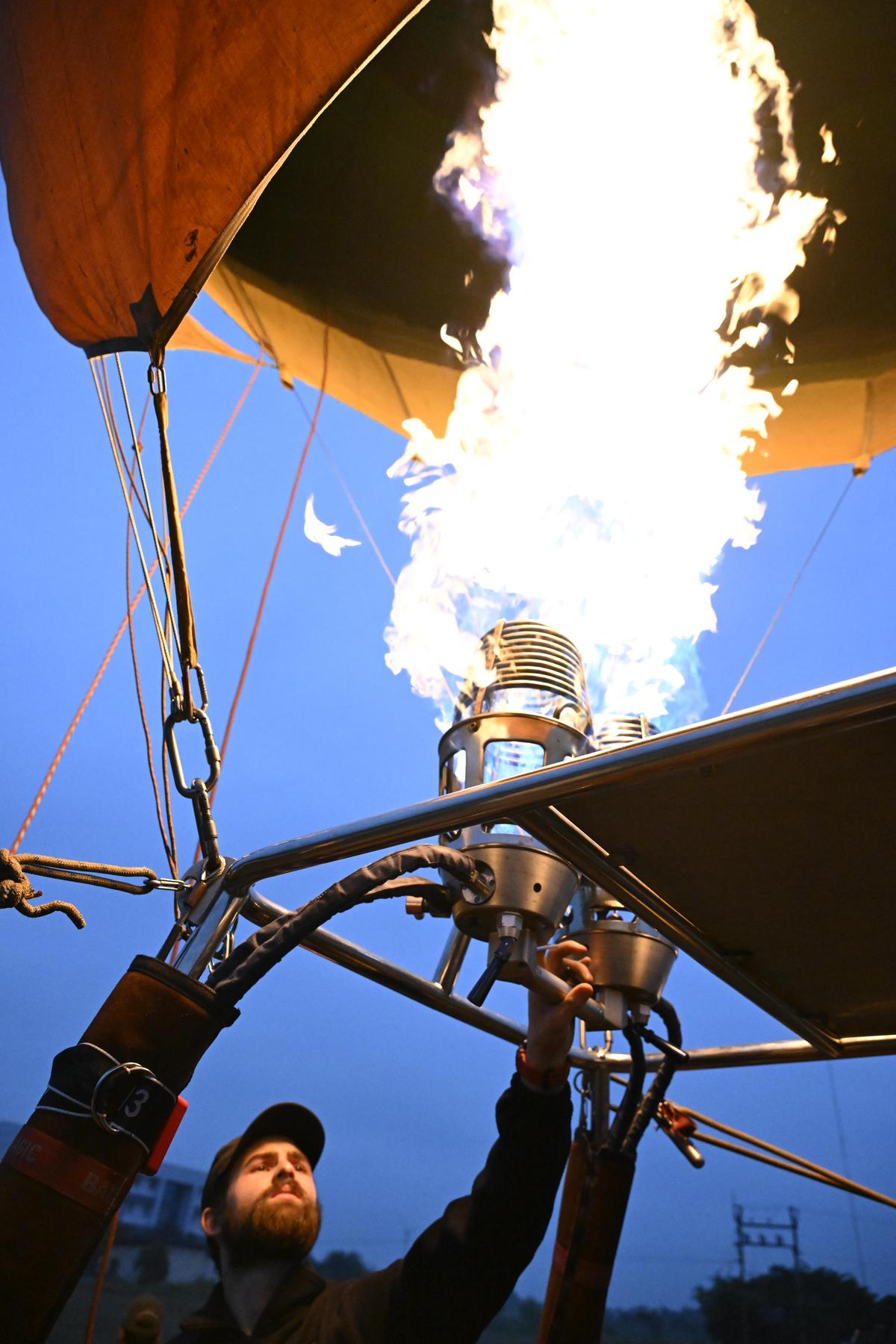
Oliver Stallwood, the 23-year-old pilot from the UK,
| Photo Credit:
PERIASAMY M
Ballooning, unlike other adventure sports, is completely weather-dependent anywhere in the world. Flying in India also comes with unique challenges. “In Europe or Australia, road access and landing recoveries are easy. Here, terrain, access, and public awareness are challenges. We have to educate people that a balloon is an aircraft. The pilot is actually flying, controlling altitude, reading winds, making real-time decisions,” says Benedict who has flown celebrities like AR Rahman in Las Vegas.

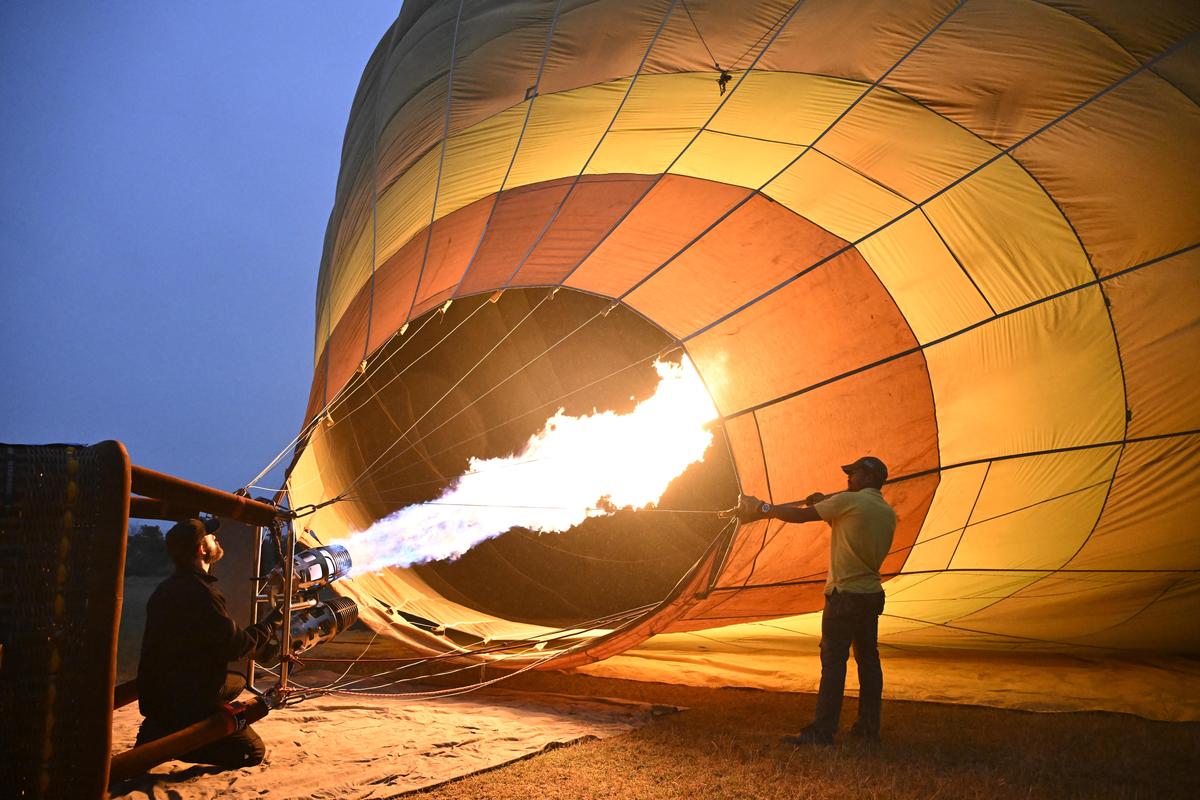
Ballooning, unlike other adventure sports, is completely weather-dependent anywhere in the world
| Photo Credit:
PERIASAMY M
Pilot selection, he says, is critical. Oswald is already seven years into the job, and is the youngest commercial hot air balloon pilot in the UK with over 300 hours of flying time. “I have done most of my flying in the UK, and across Europe. Places like Saudi Arabia and Qatar are mostly desert, but still are beautiful,” says Oswald, whose dream destination to fly is Cappadocia, Turkey, home to the world’s most famous balloon festival.
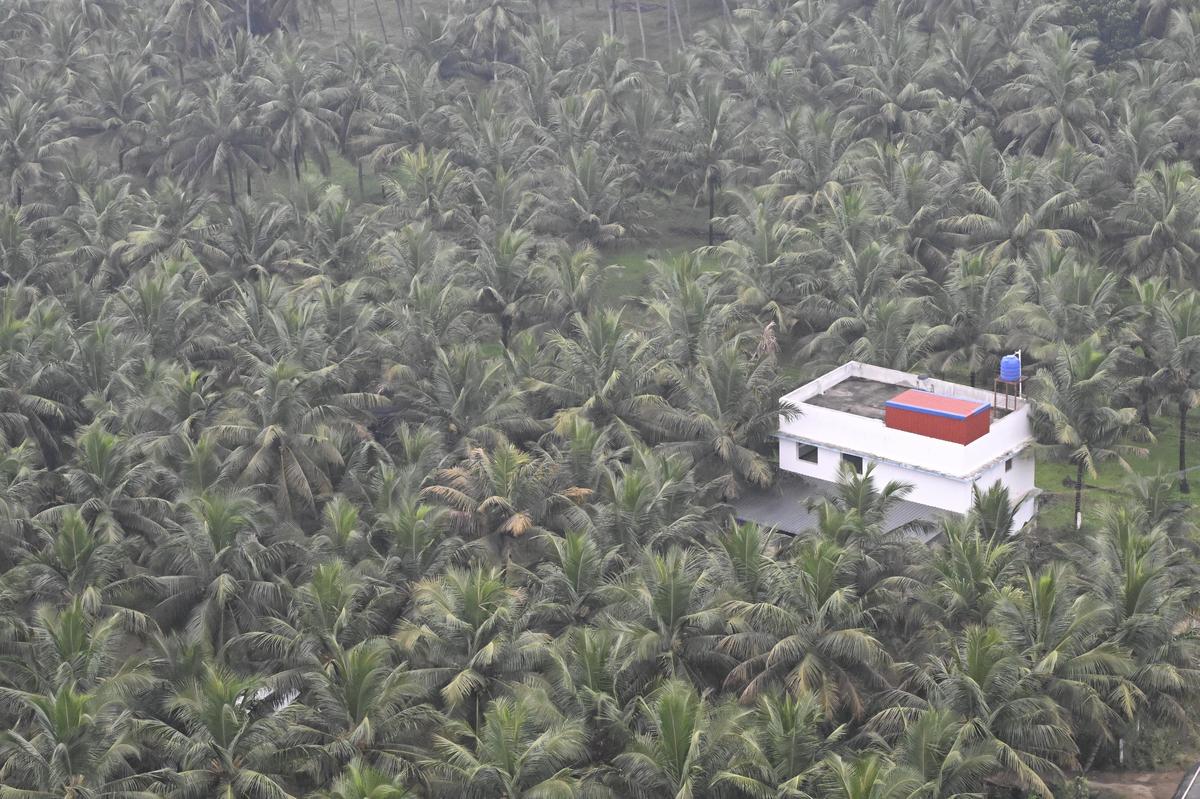
Views of coconut groves and tiled-roof homes of Pollachi
| Photo Credit:
PERIASAMY M
As our 30-minute ride ends in an incredibly smooth landing, Oswald reflects on flying in India. “People look up, they stop, they watch. That curiosity makes it special. And the greenery is something else. It’s lovely.”
According to Benedict, their long-term vision is to build an aviation ecosystem. “We want to set up a small aviation park where there will be balloon flights, aviation exhibits, and eventually a pilot training school. Skill-based training to build pilots network from here. Currently, Jaipur is the only place in India with regular balloon safaris. Tamil Nadu is pioneering this with balloon festivals. Hyderabad has one added only recently,” says Benedict adding that every flight is unique.
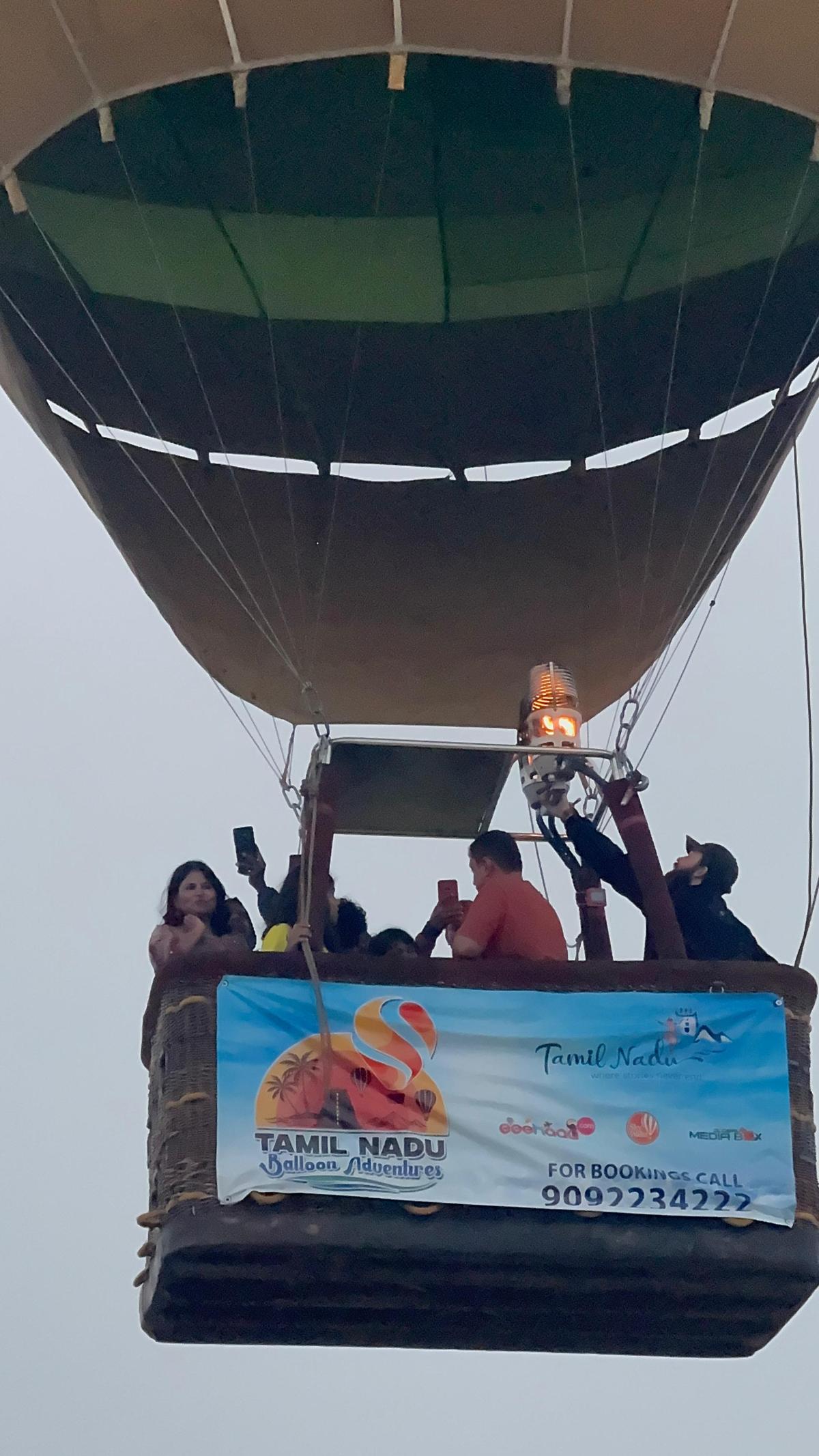
Every location offers something unique from the air
| Photo Credit:
Special Arrangement
“It is never point A to point B. You just go with the flow. There’s also the silence. It calms you. Makes you reflect. It’s a natural way of moving, what nature tells you to do,” he says, adding, “ Unpredictable but not dangerous. ”
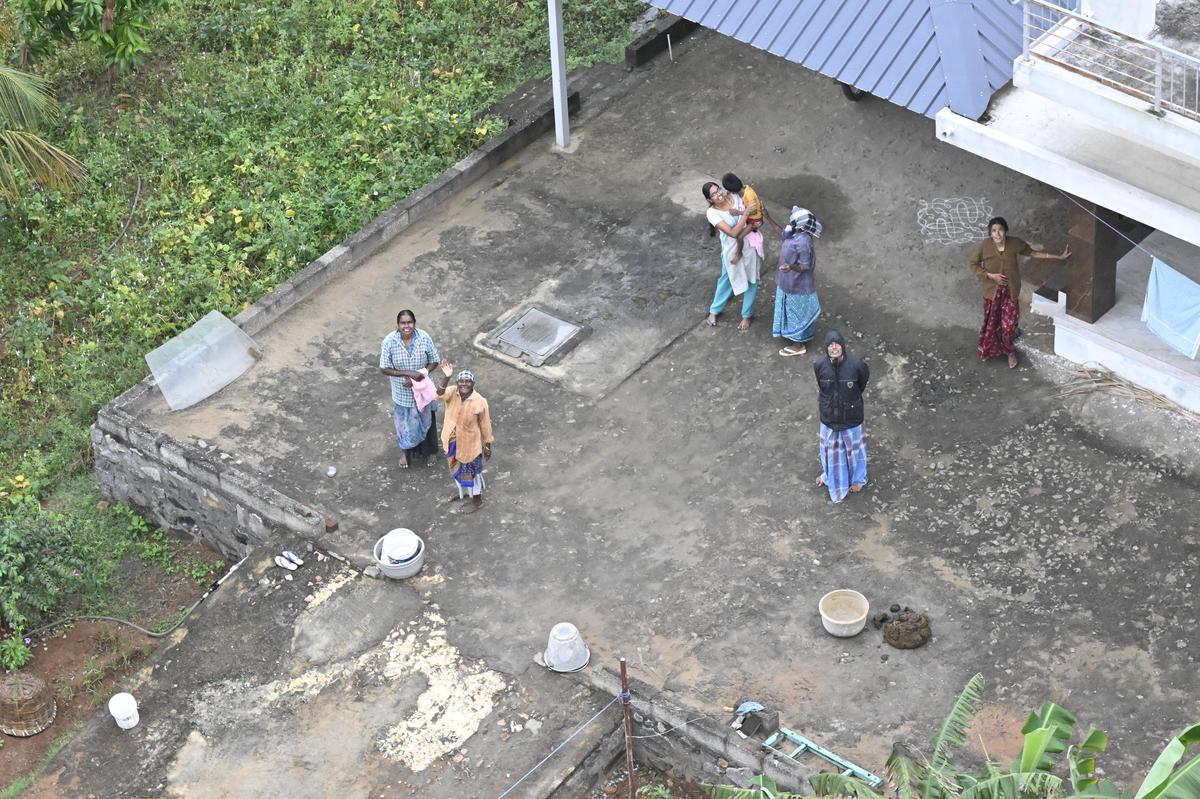
People in villages near Pollachi look up and wave
| Photo Credit:
PERIASAMY M
Balloon Safari rides are ongoing at Pollachi Institute of Engineering and Technology at Poosraipatti in Pollachi till January 26. The trial operations will be conducted in Madurai (from January 30 to February 22 ) at Vishaal Swarnhabhoomi and Thiruvannamalai (from February 26 to March 29) at Loyola College Grounds, Vettaivalam. For details, visit www.tamilnaduballoonadventures.com


