
The V-formation we have all seen growing up is commonly seen in migratory birds like cranes, pelicans, and ducks. It consists of a bird leader up front and the others trailing behind. Each one keeps a precise position relative to the one ahead of them.
Now, let’s look at some reasons behind this synchronisation. Firstly, it helps to consume energy during long migration journeys. This is what we call taking advantage of aerodynamic drafting. In other words, each bird catches the updraft (upward flow of air caused by the movement of the wings) from the wingtips of the bird ahead. This helps to create more lift, crucial for flight. It also offers more efficiency as it minimises air resistance (or drag). It also helps the flock to co-ordinate better as they can see each other better, and provides a view to spot predators.
In the course of the formation, the leader of the flock also changes rather frequently, often within minutes or even during a single flight. Leading a flock is usually a situational role based on energy, skill, and risk; and not a fixed title. And when the leader gets tired, they give their position to another bird.
Of course, not all birds fly in a V. Smaller birds or those that fly short distances fly in clusters. The formation is usually done by long birds with big wings.
Behind the flight
Let’s look more in detail at how this V formation works. When a bird flaps its wings, it creates spirals of air. These spirals produce updraft just behind and slightly to the side of the bird. This helps in lifting the bird behind them. Birds have to continuously adjust their wingbeats (set of motions of a wing) to stay in sync.
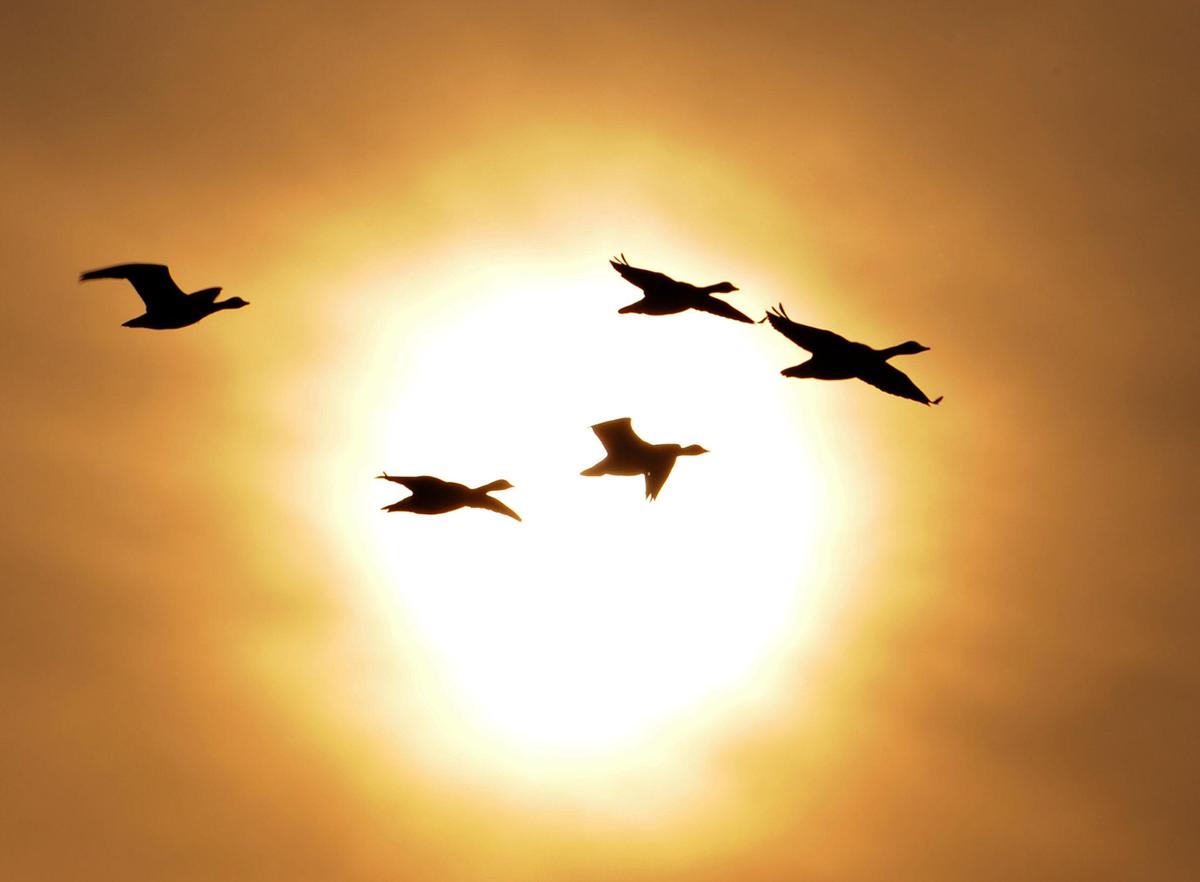
A flock of wild geese fly in South Korea’s southwestern county of Seosan on October 29, 2008.
| Photo Credit:
AFP PHOTO/KIM JAE-HWAN
Instinct or learning?
Is it instinctive or learned? The answer: both! Birds don’t pick up on this skill through explicit training, but through a unique mix of instincts, and finding those aerodynamic sweet spots, and teamwork.
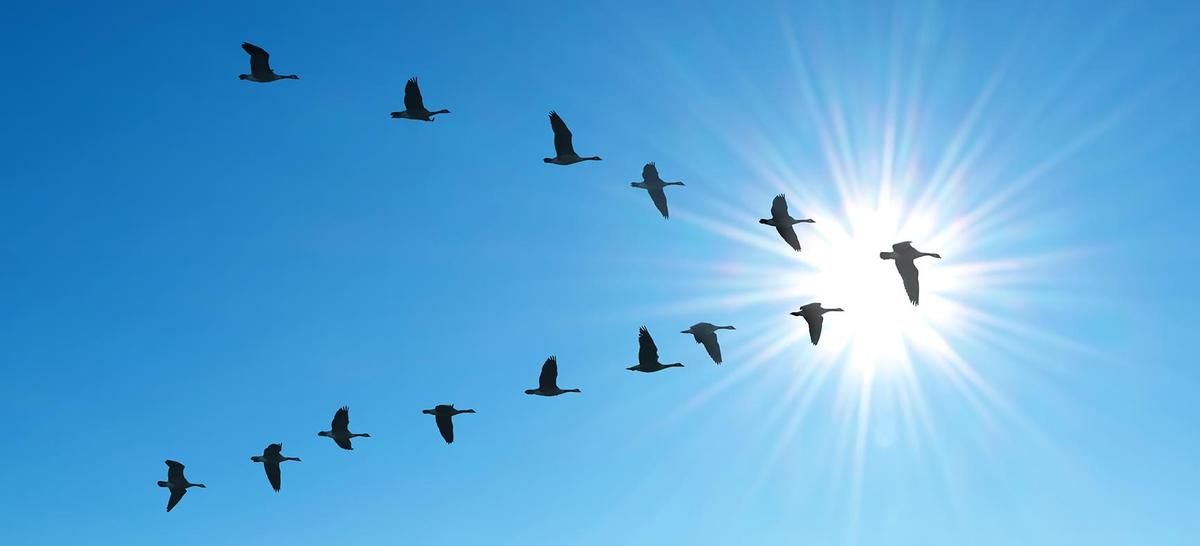
Migratory birds in V Formation, travel over long distances
| Photo Credit:
Getty Images/Mbolina
Flying in a V formation is nature’s greatest gift to birdkind. This is how they learn to share workload, take turns, and use physics of air currents — thereby turning it into a lesson on teamwork and efficiency.

