

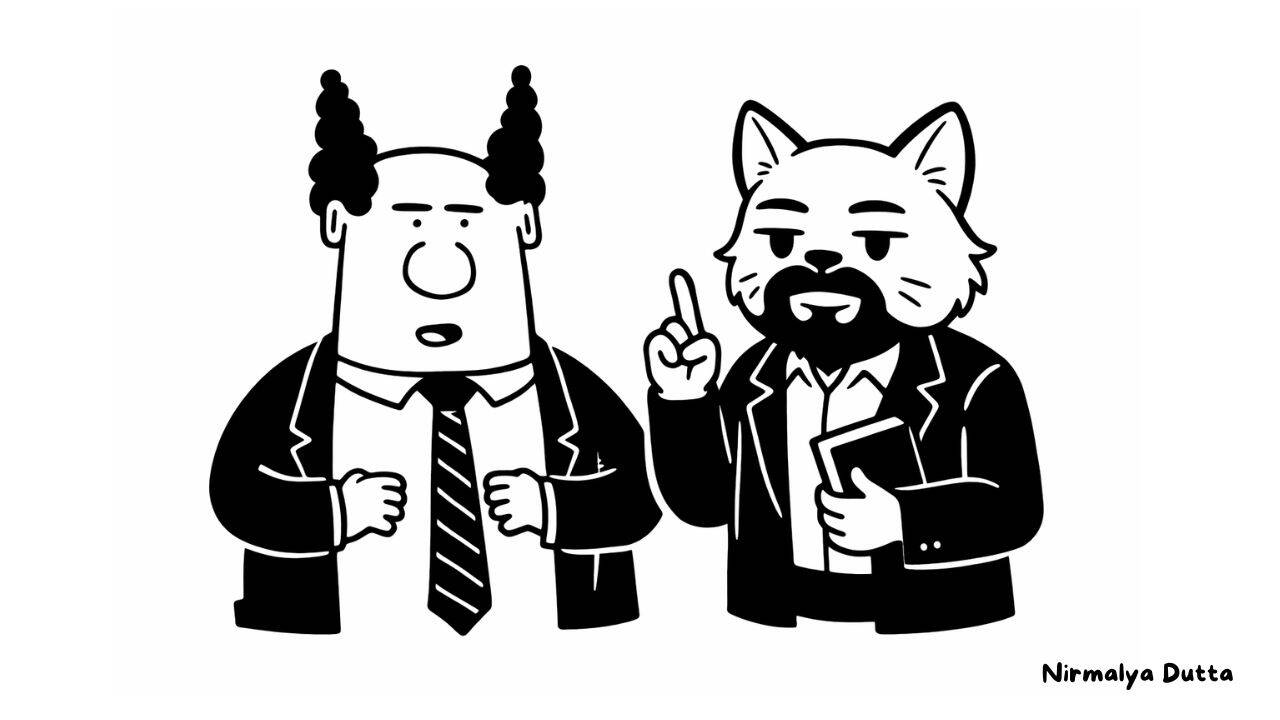
Scott Adams, the creator of Dilbert, died on January 13, 2026.
It feels strangely fitting that the news arrived without spectacle, because Adams spent a lifetime observing how the most consequential things in organisations rarely happen with drama. They don’t explode. They linger. They continue. They refuse to end.
There is a sentence economists repeat with monk-like certainty: money you already spent should not influence your next decision. It is clean, rational, mathematically correct. And almost entirely useless in the real world.
Adams knew why.
Dilbert was never really about cubicles, bosses, or bad meetings. Those were props. What he was documenting—patiently, mercilessly—was the human inability to let go of the past once we have publicly committed to it. The comic strip worked not because it exaggerated corporate life, but because it barely had to. Organisations, like people, are not governed by logic as much as they are governed by memory.
Once effort has been invested, once confidence has been displayed, once a story has been told and retold in boardrooms and town halls, retreat stops being a strategic option and starts to feel like a moral failure. Numbers may whisper caution, markets may express indifference, and evidence may line up politely outside the door, but none of these carry the emotional authority of having once been certain.
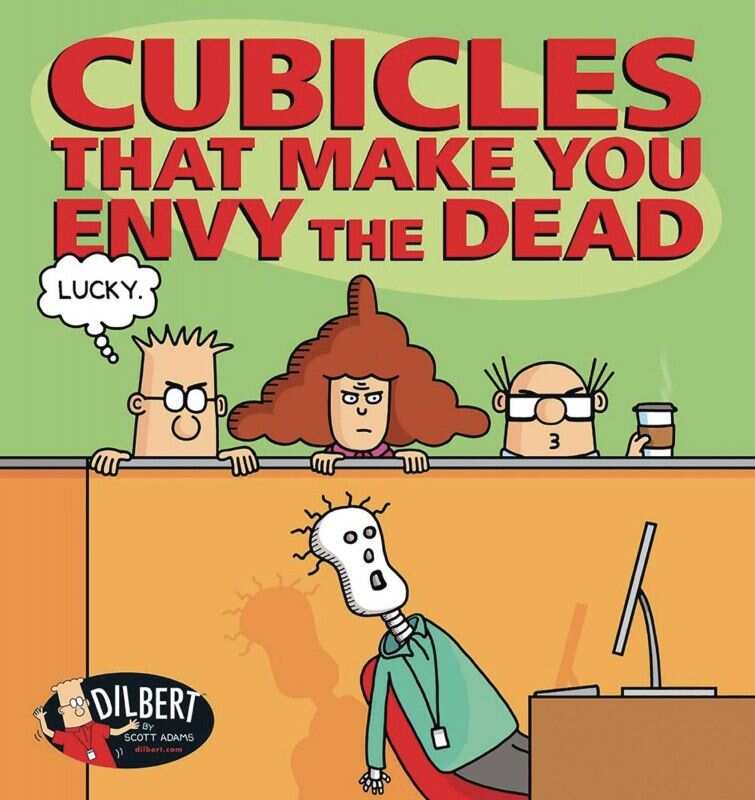


This is where Dilbert was at his sharpest. The Pointy-Haired Boss was not stupid; he was insulated. His genius lay in surviving systems that rewarded momentum over reflection. Dogbert didn’t succeed because organisations were broken; he succeeded because they were functioning exactly as designed—protecting hierarchy, preserving narrative, and mistaking consistency for wisdom. And Dilbert himself, permanently weary yet lucid, represented the modern professional’s quiet tragedy: understanding the absurdity perfectly well while lacking the power to interrupt it.
What Adams captured, with unsettling clarity, is that most business decisions are not acts of reasoning. They are acts of self-preservation. Projects are rarely sustained because they still make sense; they are sustained because stopping would require too many people to admit that earlier versions of themselves were wrong. That the decks were confident, the meetings earnest, and the applause premature.
So organisations do what they have always done. They build process around decay. They add governance to stagnation. They measure activity long after purpose has evaporated. The original goal quietly exits the room, but the structure remains, defended now not by logic but by reputation, sunk effort, and the collective discomfort of rewriting the past.
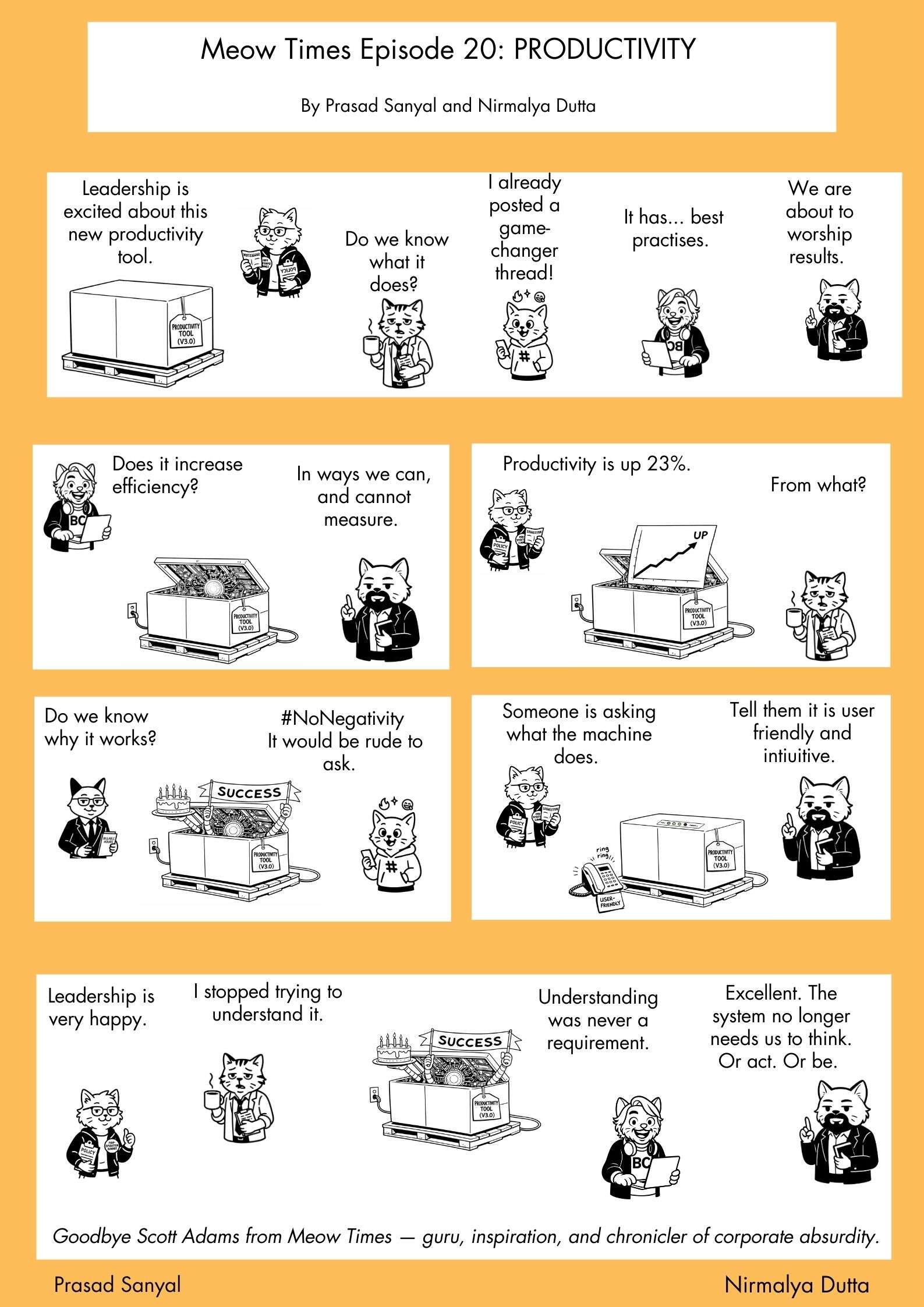


Dilbert endured because it recognised that continuity is often mistaken for virtue. That learning is welcomed only until it threatens status. That changing course feels less like intelligence and more like betrayal. In such environments, even failure must be managed politely, stretched over quarters, and disguised as transition.
Scott Adams never offered solutions, because satire understands something consulting often forgets: awareness does not automatically lead to reform. What it offers instead is recognition. A way of seeing the machinery clearly enough to stop romanticising it. Adams leaves behind more than a comic strip. He leaves behind a vocabulary for understanding why smart people, acting together, so often make decisions that feel baffling in hindsight and inevitable in the moment. Whether organisations learn from that clarity or continue honouring their sunk costs with ever greater devotion is, of course, a different question altogether.
Dilbert, after all, was never about fixing work. It was about noticing it. And sometimes, noticing is the most subversive act available.
Disclaimer
Views expressed above are the author’s own.
END OF ARTICLE


