

Recently a paper named “The Contribution of Ukrainian scientists to the Formation of the IIT Bombay (1950–1970s) within the context of the UNESCO Mission” has been published in the academic The World of Orient magazine. As one of the authors, I feel responsible to share the story with the people of India. Let me explain why.
India is highly estimated as a land of knowledge since ancient times. Indians are well-known for their glorious success in the spheres of science, mathematics and technology. The world is grateful to Indians for various achievements and inventions, starting with “shunya” – zero, and decimal number system. Today, India is seen as one of the most digitalised nations in the world.
In this success story the Indian Institute of Technology (IIT) possesses a leading position, as it is a flagship institution in the sphere of engineering and technology, an alma mater for thousands of well-respected scientists, businessmen, IT officers, and people who are really changing this world for better. From the very beginning, IIT has managed to attract the best students, and its prestige has grown with every passing year. Currently, IIT is a distinguished institution, a wide network within India and beyond, and a brand which made modern India possible.


IIT is a symbol of the epoch of progressive development in India and is representative of a desire to establish a knowledge society and economy. This was a choice made by the first generation of independent India’s leadership, and it has been proved to be a right decision. At the same time, the origins of the modern fame of IIT are also connected to the contribution of Ukrainian scientists who participated tremendously in its formation.
The above mentioned paper highlights the history of the establishment of IIT Bombay, and what makes this story really unique is that the study is based on archival materials of Professor Georgii Meshcheriakov, Doctor of Technical Sciences from Odesa Polytechnic Institute under Soviet Ukraine, who served as the head of UNESCO missions in India from the late-1950s, ensuring the full range of IIT’s formation – from the construction of the building and laboratories to training of its first students and teachers.


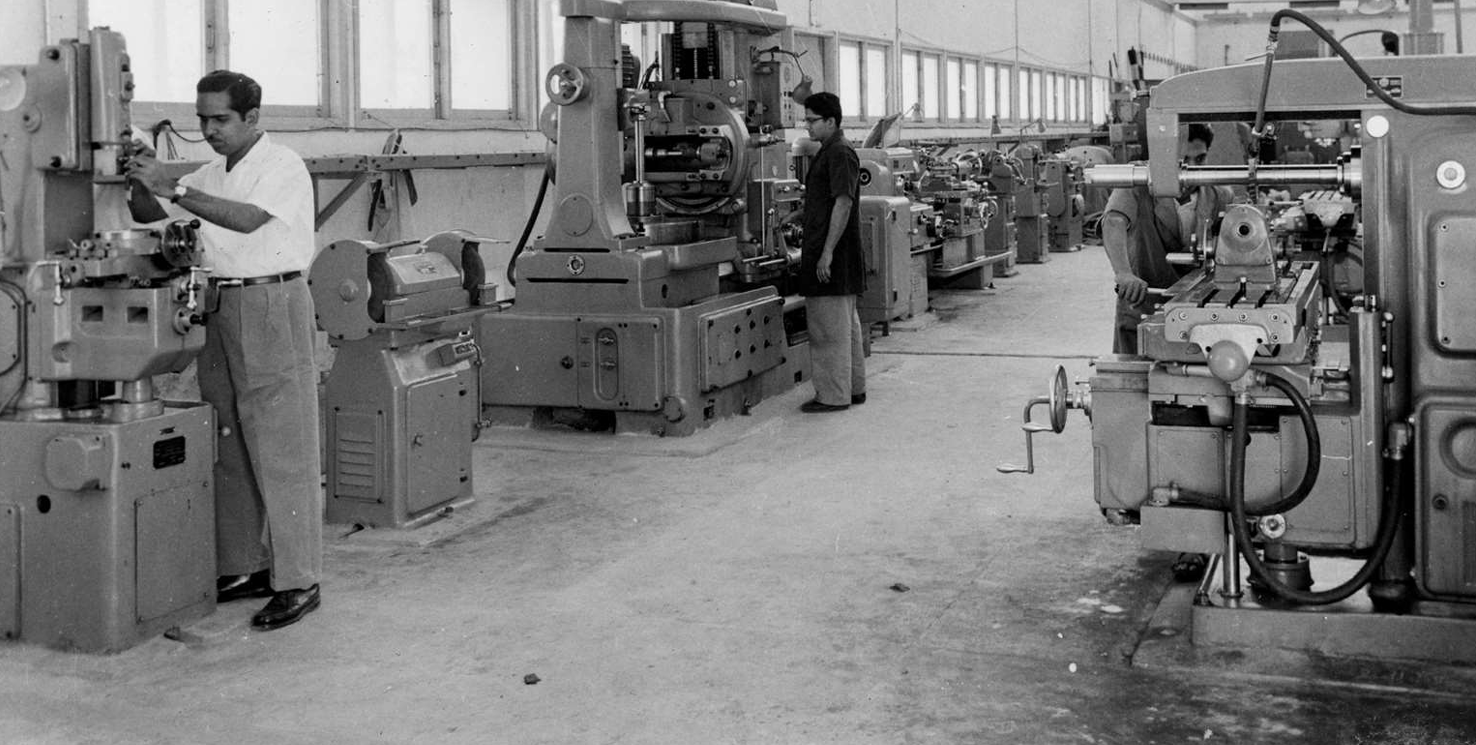
His mission lasted 10 years (1956–1966) and was aimed at laying the foundations of Indian technology to ensure progress in critical fields. Within the framework of the mission, Professor Meshcheriakov headed the machine tool section at IIT-B; he was responsible for the development of curricula and the creation of educational and research laboratories at the formative stage of the institute. Along with this, he served as the main coordinator of the UN Special Fund project aimed at creating a programme for training engineering personnel. In this regard, he was busy with the formation of six regional engineering colleges in India, in particular the Regional Engineering College in Warangal.
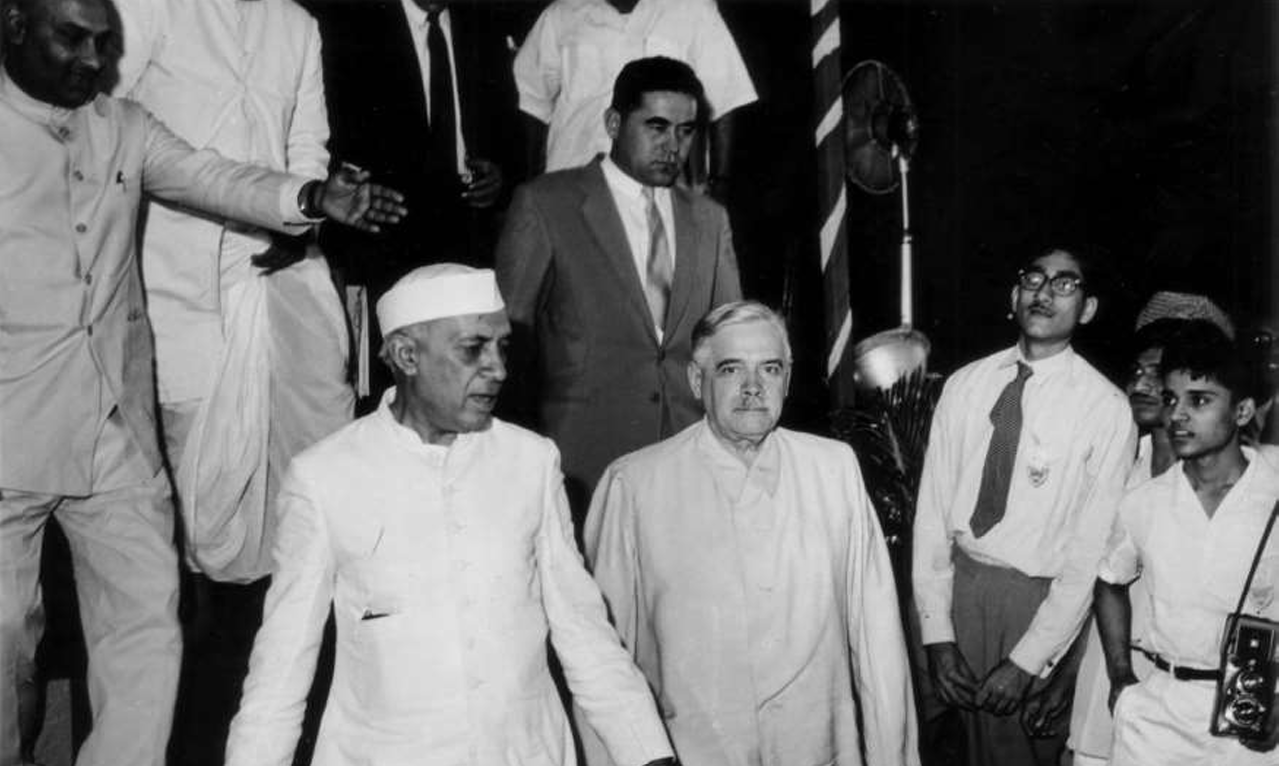
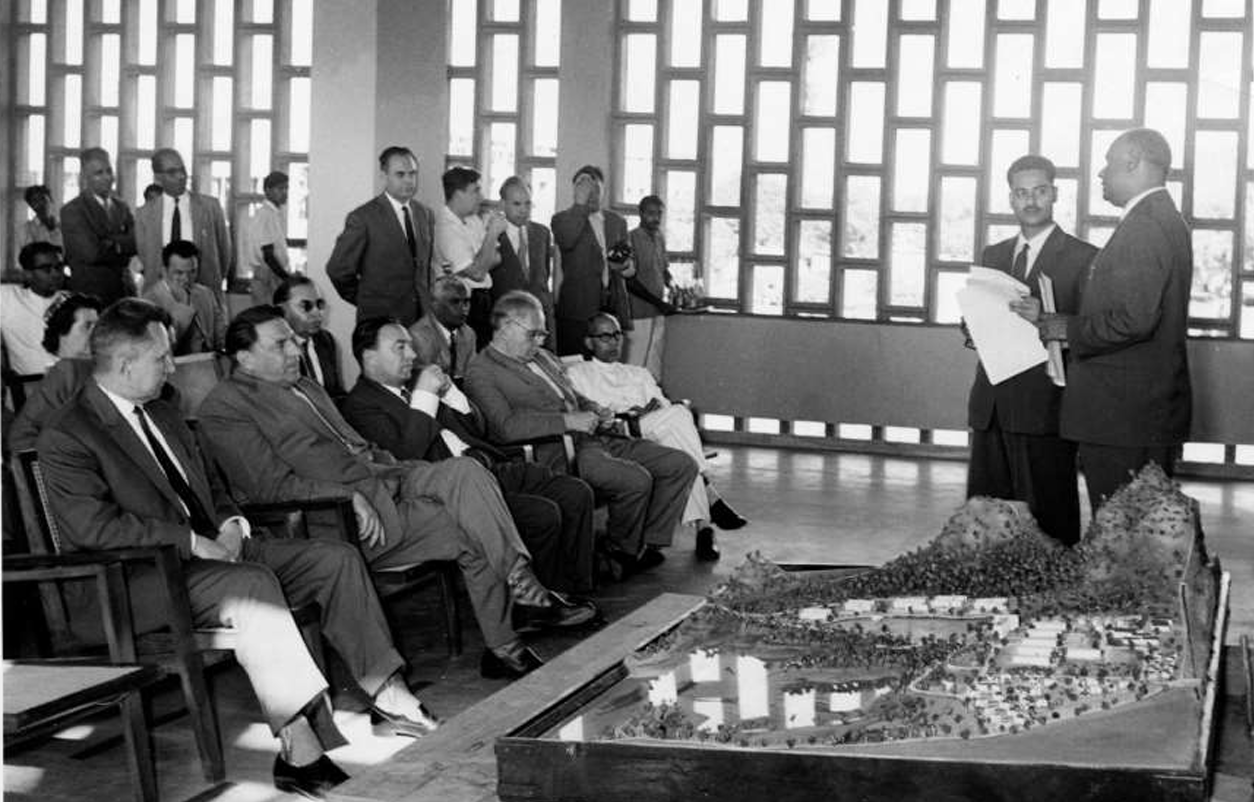
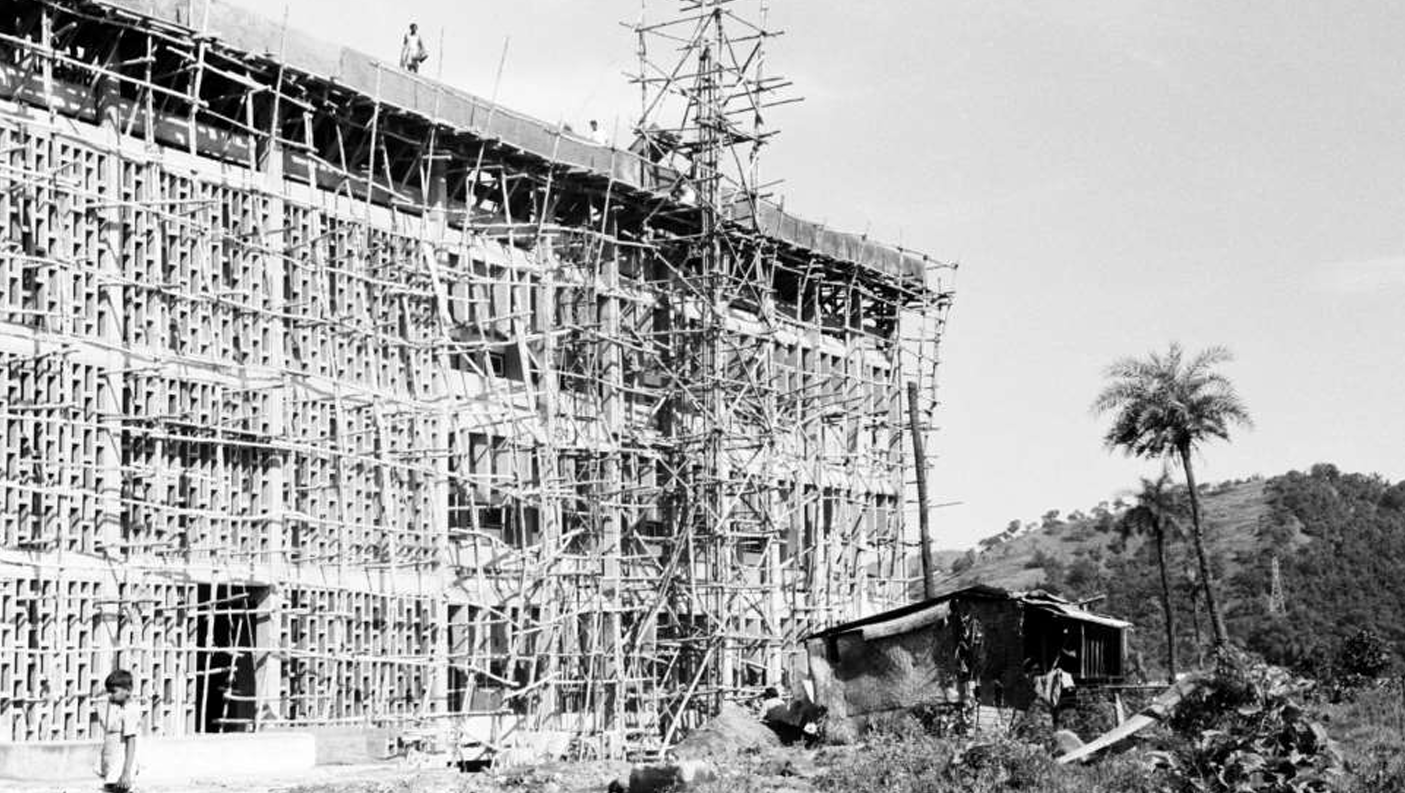
One of the co-authors of this paper (together with me and my colleague Indologist Yuliya Fil) is a grandson of the Professor – Dr Georgii Meshcheryakov (the Junior). He is a third-generation engineer in this family who lives in Odesa and proudly maintains his grandfather’s archive – a fascinating collection of photos, documentaries and memories of India. Some of the pictures are represented in our article. They demonstrate the process of construction of IIT’s main building and campus, paying a tribute to the beauty of Indian nature and culture, as well as political history of the state.


In wider context, the paper examines the history of successful cooperation between Ukraine and India in the fields of science, education, and cultural heritage, providing a case study – the example of the participation of Odesa Polytechnic Institute in the establishment of IIT Bombay. But there is something beyond: the purpose of this research is to place this history within the broader context of Ukraine-India technological cooperation during the Soviet period, as well as within the framework of UNESCO educational missions.
The results of the study demonstrate that this process was not exclusively a Russian initiative but was carried out with the involvement of other republics of the former USSR, particularly Ukraine, which has its own history of partnership and cooperation with India in education, science and culture. This is of special importance since it is widely – and wrongly – believed that it is only Russia who supported India tremendously since the Soviet era with the construction of plants, power stations and institutes. However, Russia was not the Soviet Union.
Russia has a habit (if not a sin) of stealing everything – from Ukrainian territories and children to coffee-machines and toilets (the crimes committed during a short period of Russian occupation of parts of Kyiv and Chernihiv regions at the very beginning of the full-scale war, in Feb-March 2022). Russians do the same when they try to steal the history of Ukraine and our national identity, spreading throughout the world including in India, propaganda and fake messages about the reasons for their aggression.
“BFF” – “best friends forever”, a slogan which was bandied about during Putin’s visit to New Delhi in December, is also used to describe the overall India-Russia relationship. In reality, this is a Russian tactic to wipe out facts about the friendship and cooperation between India and other former Soviet Republic, especially Ukraine – the biggest European country by territory, struggling for its independence, freedom, and progress. But facts and figures have a power to speak for themselves.
Even according to modest estimations, the part of Ukraine’s contribution to economic, scientific and technical assistance to India in those years (1960-80s) was, depending on the field of cooperation, from 40% to 60% of the all-Soviet Union contribution. Indian engineers came to Ukraine for training and internships; for example, 320 people were sent to meet the needs of the Bhilai metallurgical plant, built with the support of the USSR, and most of them were trained at Ukrainian enterprises.
Ukrainian scientists and engineers have made a significant contribution to the development of India’s scientific and technical infrastructure. For many years, fruitful cooperation with Indian laboratories, research centres and scientific institutions have continued between specialists of the National Academy of Sciences of Ukraine and their colleagues from Bengaluru, Hyderabad, Durgapur etc.
A distinguished feature of Soviet Ukraine’s cooperation with India was its distinctly high-tech dimension. Engineering industries have always been a priority, and cooperation in space exploration has become the pinnacle of scientific and technical development. In May 1972, the USSR Academy of Sciences and the Indian Space Research Organisation (ISRO) signed a cooperation agreement, and in 1975, the first Indian artificial satellite, Aryabhatta, was launched using a Soviet launch vehicle manufactured at the Ukrainian enterprise Yuzhnmash in Dnipro.
In the Ukrainian SSR, the first of the highly qualified and secondary-level personnel for India were trained way back in 1954. And if in the 1950s there were 4 Indian students studying at Ukrainian universities, then in the early 1980s there were already over 150. During the period from 1970s to 1980s, 60 specialists from Ukrainian institutes and universities were sent to India. So, the IIT-B mission is only one of many proud stories from the chronicles of Ukraine-India cooperation and friendship.
Ukrainian Indologists are actively researching, systematising, and introducing into academic circulation the legacy of Ukrainian scientists who contributed to India’s development, especially to the formation of its system of higher technical education. It is one of the pillars of our friendship. Ukraine had and still has a very special attitude towards India – her ancient culture, spiritual heritage and glory as vishwa guru.
In independent Ukraine, we keep a fascinating desire to know more about the culture and achievements of Indians. We have a tremendous number of Ukrainian dancers who perform Indian folk and classical dance, as well as a huge number of yoga studios and meditation centers. What’s more, in this time of war in Ukraine, we have started applying yoga and ayurveda to help our civilians and military personnel with rehabilitation. In war-time, we continue to study Indian philosophy and provide new translations of ancient holy texts like Bhagvad Gita and Charakasamhita.
In Ukraine we have a well-set-up tradition of learning Hindi, and recently made an exclusive success story in this field: the students from Hindi department won the 1st, 2nd, and 3rd positions (at different levels) in the first ever International Hindi Olympiad! This is the respect with which we treat India in Ukraine. And this is what distinguishes us from those who only pretend to be India’s friend.
As India today is trying to establish itself as vishwa mitra, why not keep a space for friendship with Ukraine, taking into consideration various successful stories from our scientific cooperation and cultural diplomacy?
Disclaimer
Views expressed above are the author’s own.
END OF ARTICLE


