

As farmers return to the streets on January 16, with bigger mobilisations planned for February 12 and February 16, it’s clear this is no routine agitation. It is a warning that rural India is running out of patience with policies it feels were written without it.
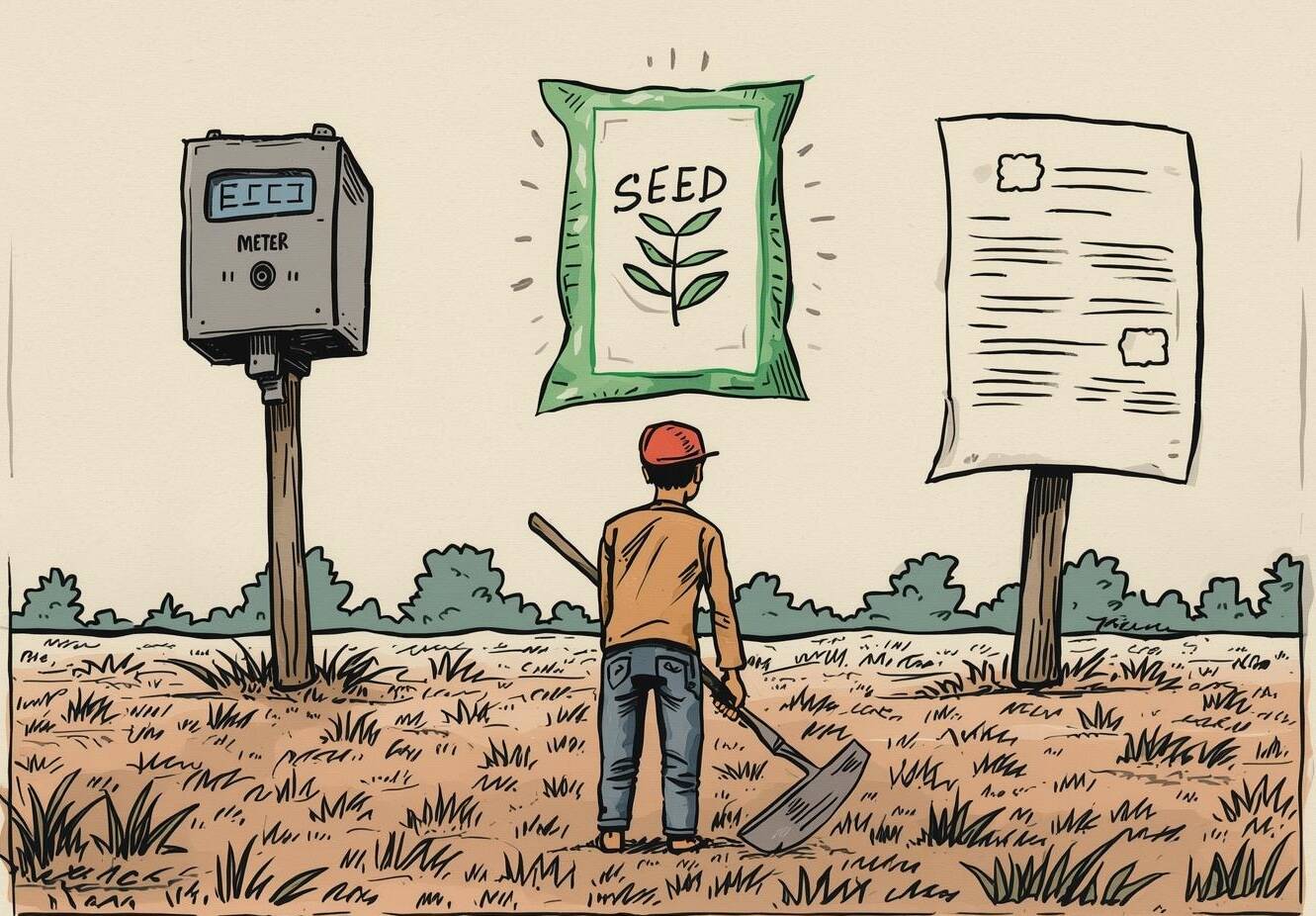
India has seen enough farmer agitations in the last few years to recognise a basic truth. When cultivators leave their fields to sit on highways or gather outside district offices, it is rarely for drama. It is usually because they believe nothing moves in Delhi unless it is forced to. Yet the government continues to treat farmer protests as an avoidable nuisance rather than a democratic alarm bell. The latest wave of mobilisation against the labour codes, the electricity bill and the seed bill is being painted once again as confusion or provocation. But it is neither. It is a clear, reasoned response to policies that farmers believe will raise their costs, weaken protections and deepen corporate control over agriculture and rural life.
Electricity reform, rural anxiety
The government’s argument is simple. The power sector needs reform, distribution companies are in losses and efficiency must improve. In a seminar room, that sounds tidy. On the ground, it sounds like an incoming bill that farmers cannot afford. Electricity for agriculture is not a luxury. It is the backbone of irrigation in large parts of the country. When farmers hear talk of tariff rationalisation, privatisation and reduced subsidy support, they do not hear better service. They hear costlier power and less support.
This anxiety is not irrational. Cultivation costs have been climbing steadily, from fertilisers and diesel to transport and labour. Farmers already face price uncertainty in the market and climate uncertainty in the sky. The one thing that has historically kept many farms functioning is some level of state support, especially for irrigation. A reform agenda that looks designed to make electricity operate like a profit-driven commodity is bound to generate resistance. The government has done little to ease this fear with clear, enforceable assurances. Instead, it relies on vague claims about future benefits, a style of communication that has repeatedly failed in rural India.
Labour codes and the myth of separate rural India
The government often suggests that labour codes belong to the world of factories and trade unions, not farms. That framing misses how rural India actually works. Villages do not operate with neat boundaries between farmer and labourer. Many households farm small plots but work as wage labourers during lean seasons. Farm operations depend on migrant and local labour and rural wages influence the entire village economy.
Concerns around labour codes stem from the fear that they tilt bargaining power further away from workers, weaken enforcement and normalise insecurity under the banner of flexibility. If rural workers become more vulnerable, the rural economy becomes more volatile. That volatility ultimately affects everyone in the village, including farmers. The government’s reform narrative has a familiar flaw. It frames rights and protections as obstacles to growth, rather than as the minimum foundation for a stable economy.
Seeds, sovereignty and a market built for the big player
If electricity is about survival and labour codes are about insecurity, the seed bill is about control. Seeds are not merely an input. They are the start of the farming cycle, the base of food security and a source of autonomy for farmers who have traditionally saved and exchanged seeds across seasons.
The fear around new seed regulations is that they will strengthen corporate dominance in the seed market and push farmers toward greater dependency on purchased, registered varieties. Supporters of reform argue that stronger regulation improves quality and ensures accountability. Farmers do not oppose quality. They oppose a system where regulation ends up favouring the largest companies while leaving small farmers with fewer choices and higher costs. The government has not convincingly demonstrated how it will prevent this imbalance. Without strong public investment in seeds and safeguards for farmers’ rights, any reform risks becoming a quiet transfer of control from villages to boardrooms.
The deeper crisis of trust
Ultimately, the protest is about more than three sets of policies. It reflects a growing conviction among farmers that the government does not consult them in good faith. Laws are drafted, announced and defended aggressively and only then does the government attempt outreach, usually framed as explaining rather than listening. This pattern has turned dissent into distrust.
What makes the situation worse is the tendency to delegitimise protest instead of engaging with it. Farmers are called misled. Unions are called political. Motives are questioned before demands are addressed. This is not governance. It is deflection. In a democracy, protest is not a disruption to be managed. It is feedback to be heard.
If the government wants to avoid another prolonged confrontation, it must change its approach. It must offer clear protections against tariff shocks for agriculture, address rural labour insecurity with seriousness rather than rhetoric and ensure seed policy strengthens farmer autonomy rather than corporate dependence. It must recognise that farmers are not merely beneficiaries of policy. They are stakeholders with a right to be consulted before the rules of their livelihood are rewritten.
The government can insist these measures are reforms. Farmers are insisting they look like risks. That gap will not be bridged by speeches. It will be bridged only by dialogue, transparency and a willingness to correct course.
Disclaimer
Views expressed above are the author’s own.
END OF ARTICLE


