

It was a hot humid afternoon in the mid-1990s. Clutching a file which contained my CV and clippings of a bunch of letters to the editors published in national newspapers, mostly in The Times of India, Patna edition, I reached a small office located in a modest building in the Jamia Nagar area of New Delhi.
Two bearded men, senior journalist M A Siraj and Dr Manzoor Alam, sat at a table chock-a- block with papers and files. They asked me a few questions like, why I wanted to become a journalist and which are the subjects of my interest. An advertisement for scholarship to media students and aspiring journalists from the media organisation Dr Manzoor Alam headed had drawn me there. They told me that I would be intimidated about the outcome of the interview. It never happened.
And I forgot about it.
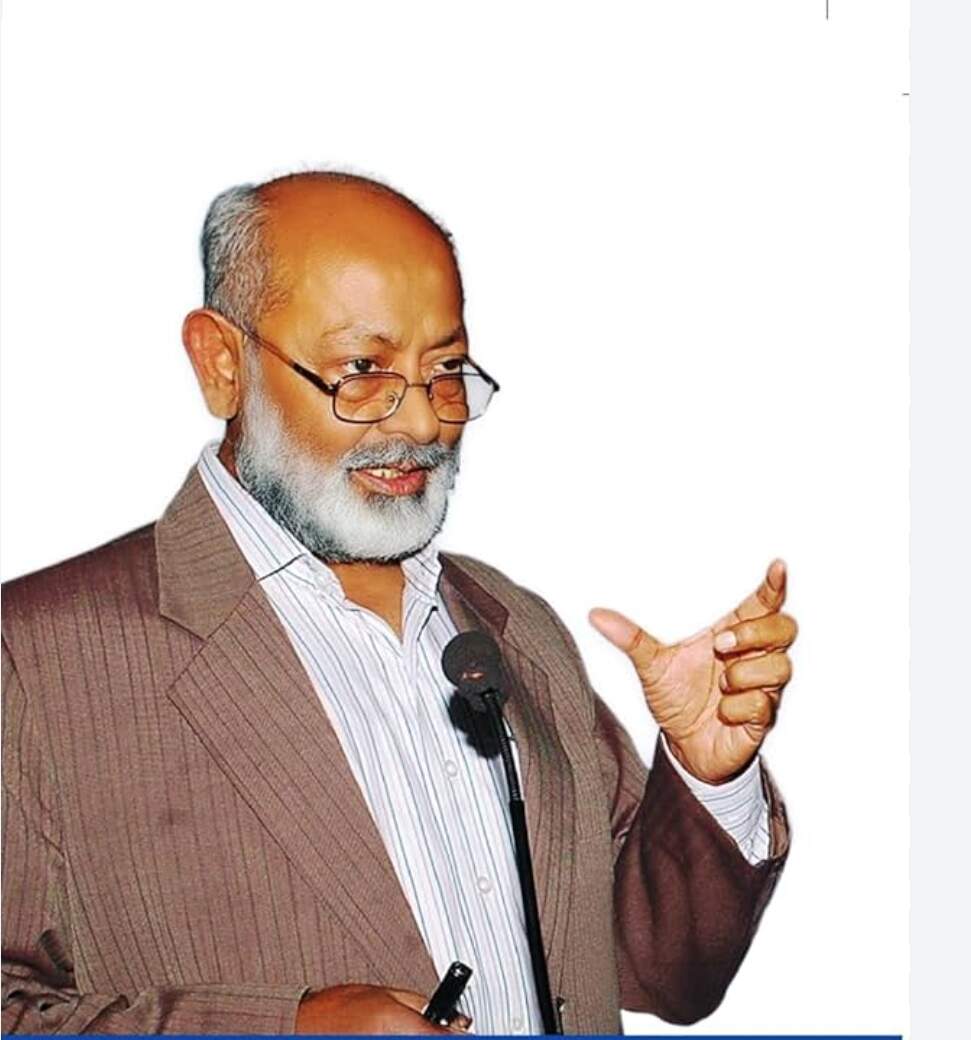
I realised the importance of Dr Manzoor Alam who passed away on Tuesday morning at a New Delhi hospital at 80, many years after that brief meeting that summer afternoon.
As General Secretary of All India Milli Council and founder-patron of Institute of Objective Studies (IOS), Dr Alam was a leading scholar and community leader. He would roam the country and globe-trot.
Just ahead of 2014 general elections, Dr Alam visited Mumbai and, through an acquaintance, invited a group of community leaders and media persons at a venue in Central Mumbai. That afternoon, Dr Alam spoke passionately about why India’s famed multiculturalism, its celebrated secular and syncretic ethos needed to be guarded. Why it was a national duty to oppose any ideology that envisioned homogenisation of an essentially diverse country. Many friends, including M A Khalid ( he later became general secretary of the All India Milli Council in Maharashtra), pledged support to Dr Alam’s mission in safeguarding the “Idea of India”, its inclusivity that treats everyone equally. The country’s commitment to co-existence despite differences.
Born in a remote village in Darbhanga, one of the backwaters of Bihar, Dr Alam excelled in studies and earned P.hd in Economics from Aligarh Muslim University (AMU), my alma mater too.
Dr Alam truly epitomised Allama Iqbal’s clarion call to youths through this couplet:
“Sitaron se aage jahan aur bhi hain
Abhi ishq ke imtehaan aur bhi hain
(There is a world beyond the stars
In life, there are more tests to pass).”
Never one to sit on his laurels, Dr Alam worked his way to get an enviable reputation as an economist, researcher, educationist and reformer. He earned the love and regards of eminent national and international personalities, including Malaysian PM Anwar Ibrahim.
Have a look at the list of some of the organisations he was associated with at different points of time: “Dr Manzoor Alam held the positions of Economic Advisor in the Ministry of Finance and National Economy, Riyadh, Saudi Arabia; Associate Professor, Department of Islamic Economics, University of Imam Mohammad-bin-Saud, Riyadh, Saudi Arabia; Chief Coordinator for the Translation of Meaning of the Holy Quran in different languages of the world at King Fahd Holy Quran Printing Complex, Madinah Munawwarah, Saudi Arabia, Chief Representative of International Islamic University, Malaysia (IIUM), in India, Member of the General Committee of the IDB Scholarship Programme for Muslim Communities in Non-Member Countries, Islamic Development Bank, Jeddah, K.S.A., and a member of Aligarh Muslim University Court, Aligarh for two consecutive terms.”
A couple of months ago, Delhi-based senior journalist and Dr Alam’s biographer A U Asif called to inform that the English translation of Dr Alam’s biography “Empowering The Marginalised: Role of Dr Mohammed Manzoor Alam” had seen the light of the day. He gave the phone to Dr Alam’s son Mohammed Alam who justifiably sounded effusive about the book’s scheduled release in Delhi and also shared with me its pdf file. Regrettably, I kept postponing its review, unaware of the fact that Dr Alam had little time left on this earth. I neither enquired nor anybody told me that he was seriously ill till social media posts informed us this morning.
Though Dr Alam was an institution-builder and wore many hats, he will be remembered mostly for Milli Council and the Institute of Objective Studies (IOS), the think-tank, he founded in 1986. IOS’s research-based studies, its countless seminars, symposiums and many inter-faith dialogues are the enduring legacies of this scholar-community leader. Dr Alam’s association with several institutions in the Gulf and the larger Muslim world put him in a unique position to guide his community in India. Though he attained financial freedom through works in Saudi Arabia, he thoughtfully returned to India and established IOS in Delhi.
Once I accompanied my friend and Oxford scholar Tanweer Alam to the IOS office, off a crowded street, not very far from Jamia Millia Islamia. My mentor and guru late Zeyaul Haq Sahab was then associated with IOS. I am yet to meet a more voracious reader than Haq Sahab. As a journalist who had worked with Girilal Jain at the Times of India, Haq Sahab was trained in the old school and would write perceptive opinion pieces. I am aware of a few people for whom Haq Sahab did ghost writing. By getting Haq Sahab in the IOS team, Dr Alam had actually acquired a jewel in the institute’s crown. That Haq Sahab neither craved publicity and never got the recognition he deserved is a tragic chapter in the Muslim story of India. But that deserves a separate essay.
Dr Alam’s substantial fame only got reaffirmed when the Milli Council celebrated its silver jubil over a decade ago. Delegates from across the country filled a conference hall in Lutyens’ Delhi. Then Delhi CM Sheila Dikshit gave the conference a miss but hosted the guests at her official residence. A qawwali band belted out Sufi songs even as the guests, including several senior religious scholars, enjoyed piping hot kebabs and biryani, its aroma wafting out of the fortified bungalow.
I reached there with my brother Prof Mohd Qutbuddine of JNU and ran into many friends and acquaintances, including A U Asif sahab and my high school teacher the late Wasi Ahmed Shamsi sahab. Seeing the lavish dinner being served and enjoyed accompanied by Sufi notes of the Qawwals, I remembered Akbar Allahabadi’s couplet:
Quam ke gar paas jao quam ki gaali suno
Quam se gar dur jao tana-e-Hali suno
Goli maro dono ko, dat ke qawwali suno.
The context of this satirical couplet is that Maulana Altaf Hossain Hali was very upset by the satire and criticism Akbar Allahabadi put Sir Syed Ahmed Khan to for founding MAO Colleg. It became AMU in 1920. Hali pulled up Akbar and asked him to appreciate Sir Syed’s tireless efforts. And so Akbar wrote this couplet which is so relevant even today.
Dr Alam has left us. Not many, like him, are fortunate enough to touch 80 and accomplish so much.
He will be missed by hundreds of lives he touched. With research, thoughts and action.
Travel gently Dr Alam. May you enjoy almighty’s mercies. Aameen!
Disclaimer
Views expressed above are the author’s own.
END OF ARTICLE


