

On Crescent Road behind Ethiraj College for Women lies a 49-year-old sprightly-looking bougainvillea tree, bearing hot pink blooms. These arresting flowers however, distract passers-by from witnessing a small yet significant piece of the city’s history. A few steps in, you enter Cambrae East, one of the city’s oldest apartment complexes.
Often mistaken for a hotel when it was first built, the building recently held its 50-year celebration, where residents, young and old, put up cultural shows and reminisced the times when the building felt and certainly looked younger.
Art work depicting soldiers at Cambrae East Apartment on Crescent Road
| Photo Credit:
R Ragu
Shonali Muthalaly who lived in the apartment until five years ago, paid a visit that led to a discovery. “My parents bought Cambrae East from the builder [Southern Investments (SI)], and like all the other residents, just took the vivid art in the lobby for granted. When I heard the residents were celebrating the building turning 50, I went back to investigate the pieces I had walked past every day for decades, curious about their provenance. For the first time, I noticed how each one was unique, with subtle differences in colour and detail, though they all came together as a dramatic and cohesive set. Noting ‘Tharini’ worked into the enamel, I messaged the artist. To my surprise (and delight!), artist Thota Tharani recognised the work immediately, and over a call confirmed that he collaborated with the builder, “Abby” from SI, 50 years ago,” she says.
Lining the lobby are 11 guards with fierce moustaches in bright enamel red paint, scrutinising residents and guests who pass. No two paintings, laid out as panels on metal sheets, are alike. The details on the coats, pants, and spheres, have micro variations.
“We’d often jokingly scare children in the building saying that if they misbehaved, the guards would imprison them,” says Lakshmi (or Chelli as she is known in the apartment). As the second-oldest resident of the apartment, Chelli says that none the residents knew that the work was done by such a significant artist. “We had no idea. Back in the day, the builders made the effort, I think,” she says.

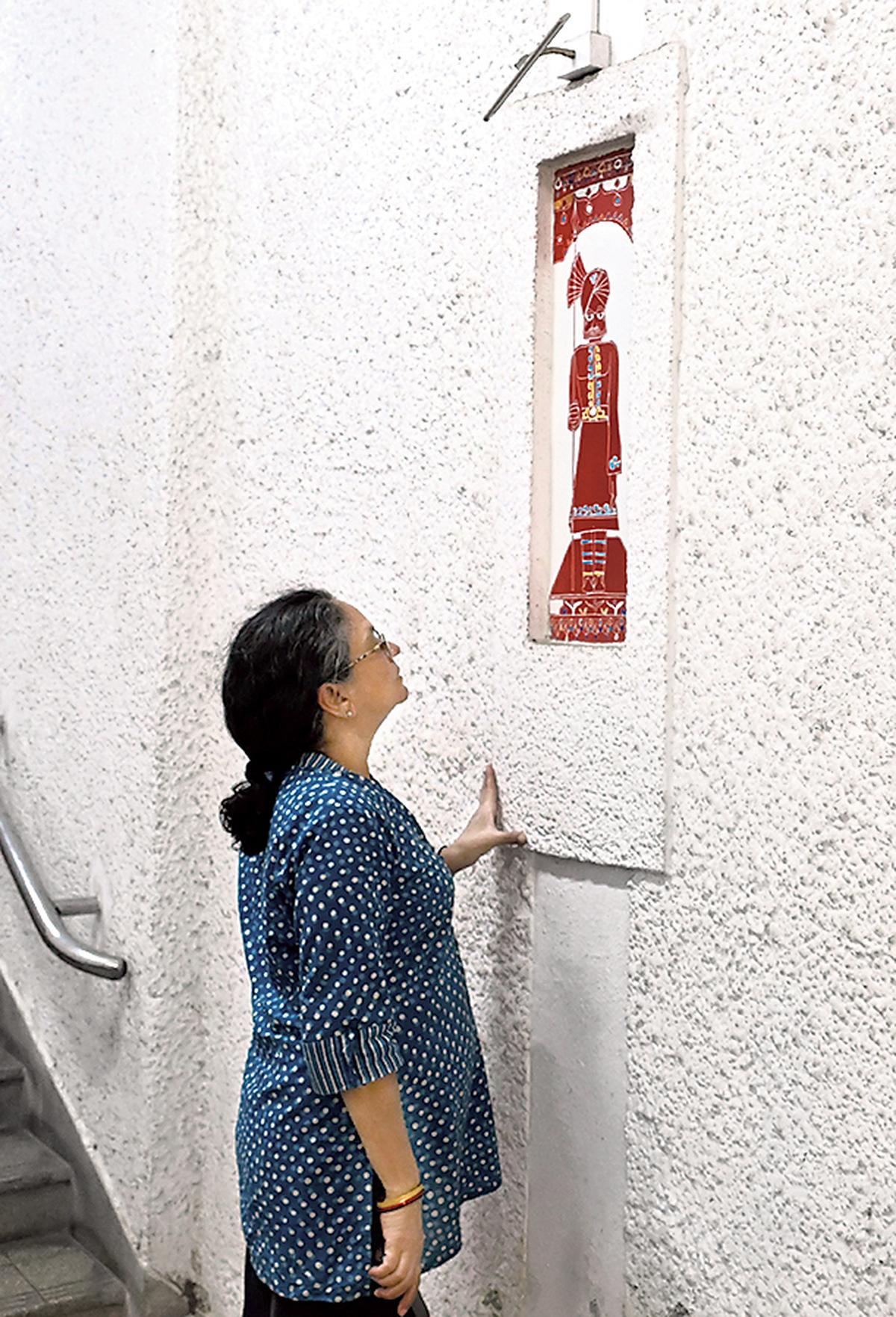
Resident Lakshmi admiring the painting at Cambrae East
| Photo Credit:
R Ragu
Artist Thota Tharani, who painted the images 50 years ago and had them fired at the Madras Enamel Factory (earlier on Eldams Road), says that they were painted at a time when he was young and in search of a steady stream of jobs before his career as an art director in films.
“It’s interesting to work with enamel paints, and it’s rare to get a red as bright as this. I used a technique where I sprayed the paint using a stencil as base and scratched it off. The paint can’t be too dry or wet. Back in the day, the artists who created the stencils were from Calcutta and were exceptionally skilled and essential for the job. I’d wait until the paint baked every evening because I was impatient to see how the work turned out. I was paid ₹75 per square foot for these and ended up making other such paintings in different apartments too,” he says.

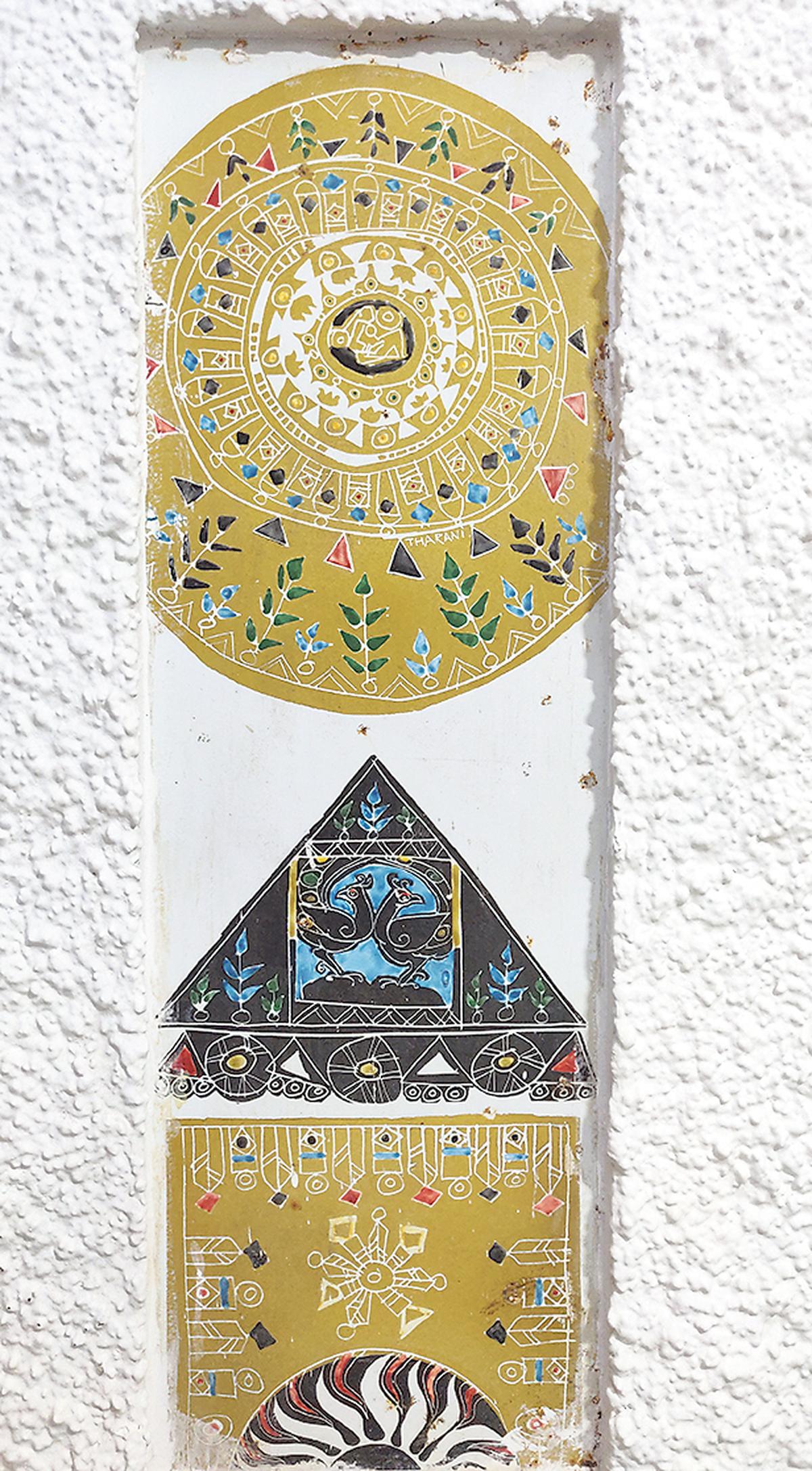
Art at Chesney Nilgiri
| Photo Credit:
R Ragu
A search down this rabbit hole of paintings in everyday places led us to Chesney Nilgiri on Chesney Lane, where Indian abstracts by Thota Tharani were spotted. “I landed the job because SG Vasudev had already done this work with the builders before. It was through him that I did such work in some other buildings where the motifs included flowers, plants, and even horses,” he says.
All in the neighbourhood

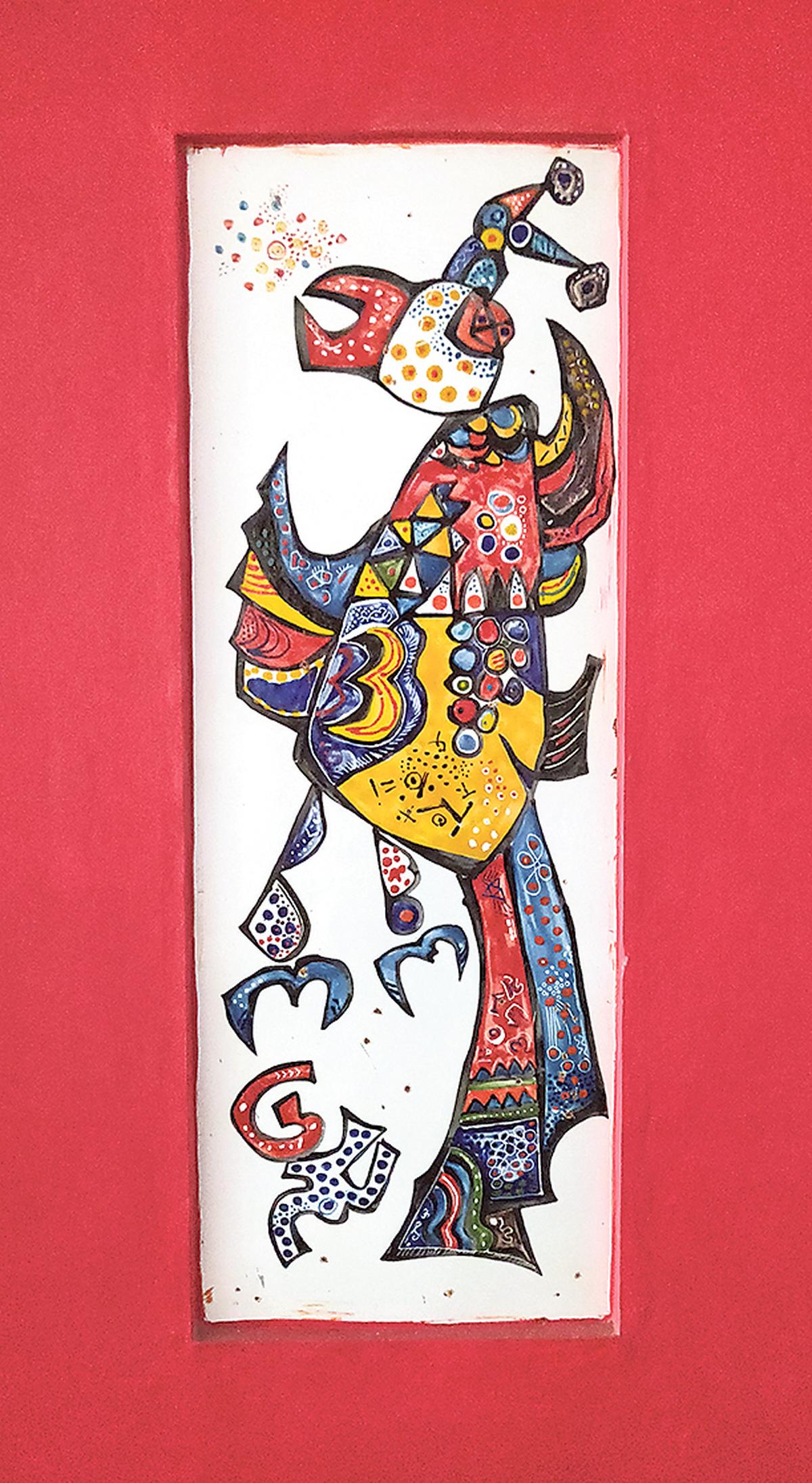
Art work at Owner’s Court
| Photo Credit:
Special Arrangement
After walking down several lanes in Egmore, hunting for 50-year-old buildings with rare paintings by famous artists of the Madras Art Movement, we arrived at Owner’s Court on Monteith Lane, where we finally traced the panels painted by SG Vasudev, a famed artist from the city. “I was interested in doing ceramic work because I was commissioned to do small-size paintings by the builder, but they insisted on enamel and put me in touch with the people at the factory. They were making signs like the ones that say ‘danger’. Instead of sticking to one colour like the workers at the factory, I experimented with many. It came out well in the oven. Seeing this work, I was also called to make a 24ft by 84ft mural at Satyam Cinemas in Royapettah,” he says. Vasudev asks one not to question the meaning of his work. “Is it possible to understand Mahabalipuram? Or Picasso’s Guerenica, or the sound of a bird? It is part of one’s education. It’s all for enjoyment, not for understanding,” he says.
Although most of the paintings remain intact, some have corroded over time. Gallerist Sharan Apparao says that this is because the paintings were likely to have been done on copper metal sheets which, when exposed in a coastal city like Chennai, tend to experience rusting. “These works of art are experimental and rare. Builders who commission public art; and painters who engage in creating the art, need to make decisions regarding the material they use so that the paintings are long-lasting,” she says.
Sugumaran N, secretary, Chesney Nilgiri, says that now that they know its importance, they are committed to taking the work seriously. “We are looking forward to maintaining them,” he says. “Until now, it was just another painting on the wall.”


