
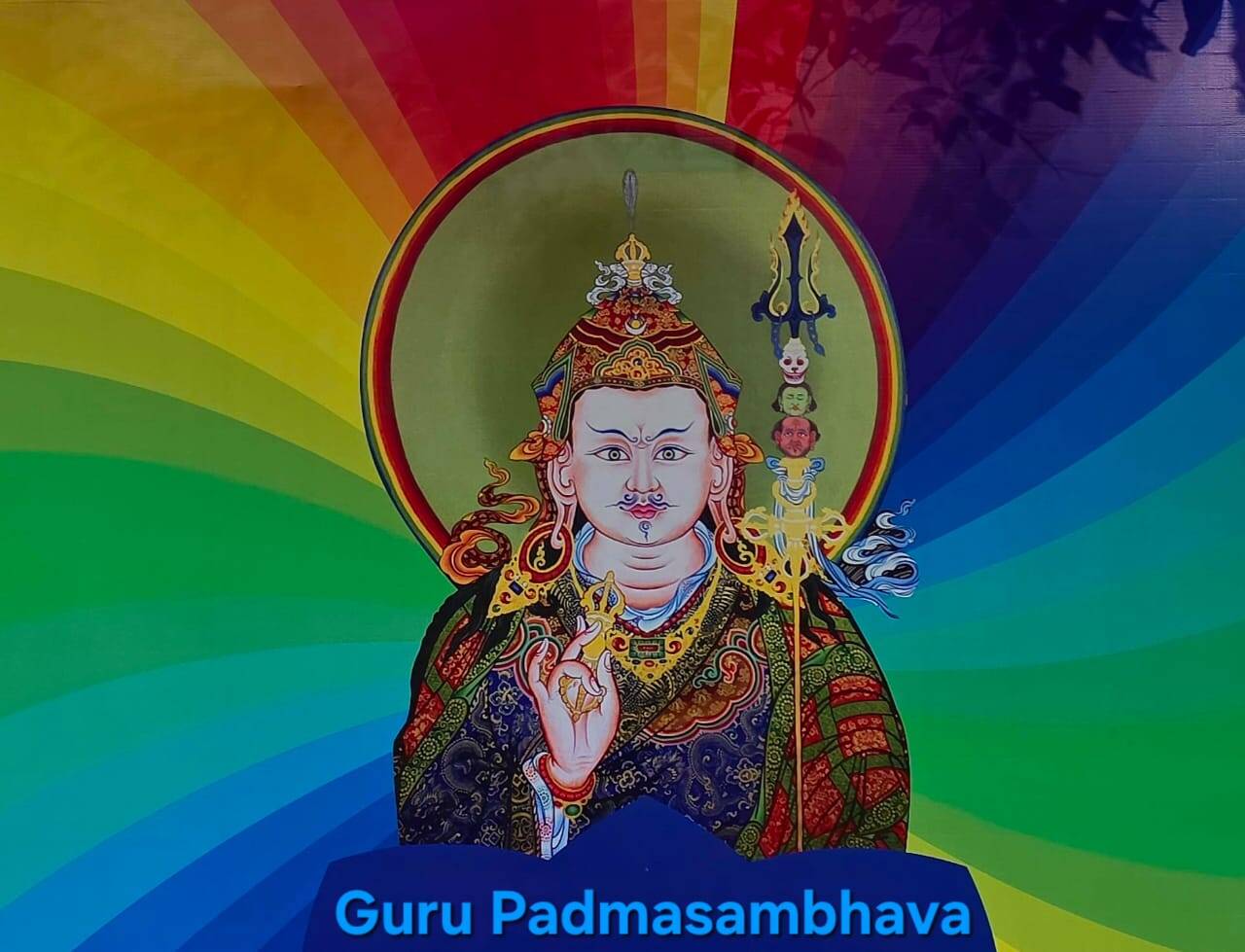
Last month, during my visit to Bodhgaya, I happened to see a banner announcing the 2nd Padmasambhava Conference at Odisha, being held from January 11–16, 2026. Excited to attend a conference dedicated to my sat-guru, I immediately registered. On reaching the venue, I was astonished to see nearly 2,000 monks, lamas, khempos, rinpoches, Dharma practitioners, devotees, scholars, historians, researchers, and Buddhist teachers from 13 countries gathered to celebrate the teachings and glory of Guru Padmasambhava. They represented three major traditions—Mahayana, Theravada, and Vajrayana. Mahayana focuses on the bodhisattva path for universal liberation, Theravada emphasises the arhat ideal of personal liberation, while Vajrayana includes esoteric practices such as mantras, mudras, mandalas, and deity visualisation, aiming for rapid enlightenment through tantric techniques. The venue was Udayagiri, part of the Diamond Triangle of Odisha which refers to an ancient Buddhist heritage circuit comprising three major archaeological sites. These sites are clustered within the Jajpur and Cuttack districts, about 100 km from Bhubaneswar.
Lalitgiri is one of the oldest Buddhist complexes in Odisha, with stupas, viharas (monasteries), and relics dating from the early centuries CE. A precious relic casket, believed by some to contain the remains of the Buddha, was discovered here during excavations. The site also houses a museum displaying Buddhist artefacts recovered from the area.
Ratnagiri, literally meaning the “Hill of Jewels,” features extensive ruins of monasteries, stupas, sculptures, and large Buddhist structures. It was a major centre of Mahayana and Vajrayana Buddhism from roughly the 5th to the 12th centuries CE.
Udayagiri, the largest of the three complexes, contains the remains of monasteries, stupas, and carved Buddha figures.
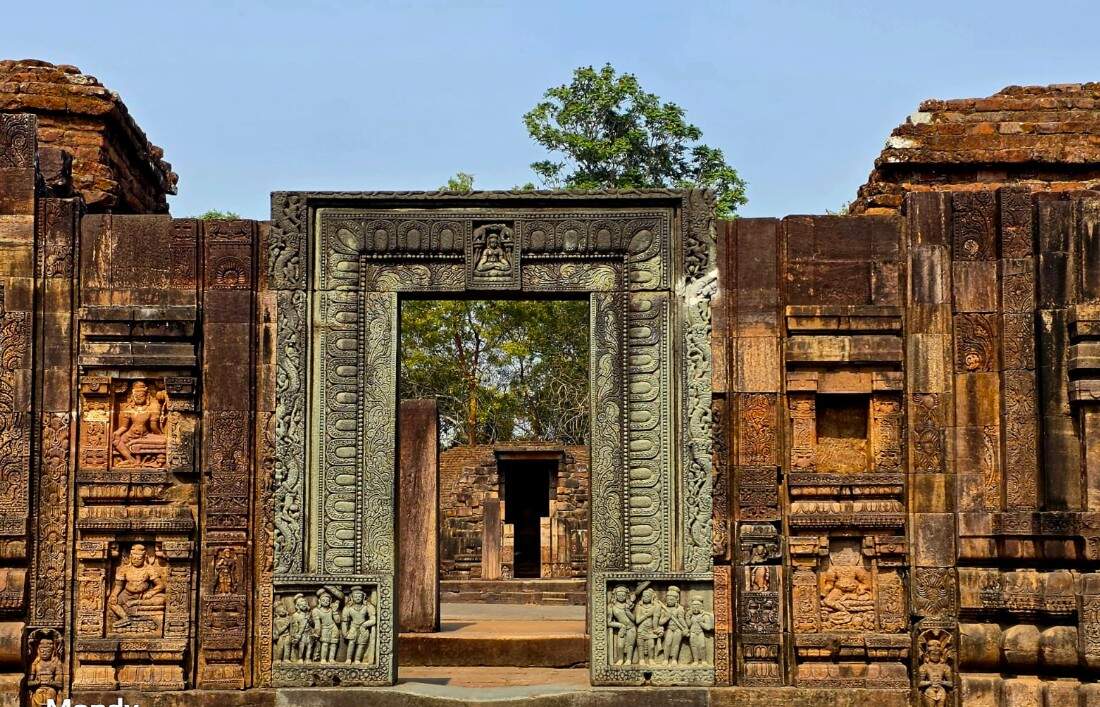

Together, these sites form the Diamond Triangle of Buddhism, showcasing Odisha’s rich Buddhist past, influenced by Hinayana, Mahayana, and Vajrayana traditions. The name “Diamond Triangle,” linked to Vajrayana—the “Diamond Vehicle” of Buddhism—highlights its importance in the spread and development of Tantric Buddhist practices.
The event was organised by California-based Light of Buddha Foundation, founded by Tarthang Tulku Rinpoche in 2002 to restore the Buddha’s teachings in their land of origin, India, and to promote peace, harmony, and spiritual revival across cultures. Its work includes supporting international Buddhist ceremonies and chanting, developing and beautifying pilgrimage sites, educating and training monks and followers, distributing Buddhist texts and Dharma books, preserving and restoring Buddhist shrines and cultural heritage, and reviving Buddhist traditions.
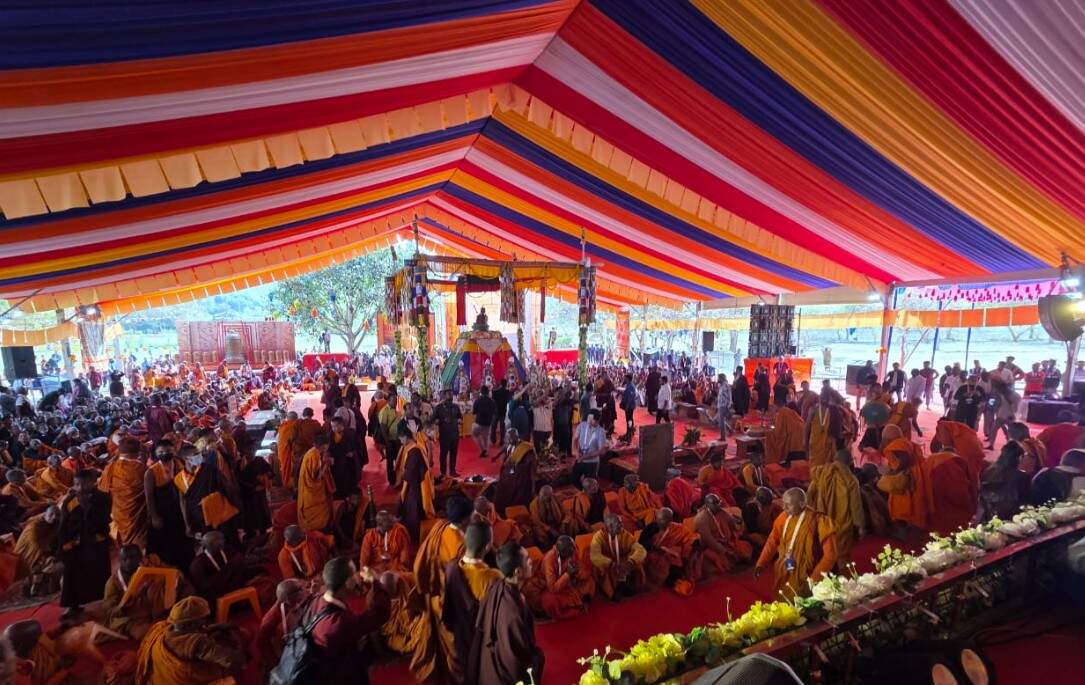

The event was initiated by Dr Wangpo Dixey, Executive Director of LBDFI, USA, along with Dr Richard Dixey. Jigmed Rinpoche presided over the five-day event, while Sonam Tashi Rinpoche served as the key organiser of all prayer and ceremonial activities.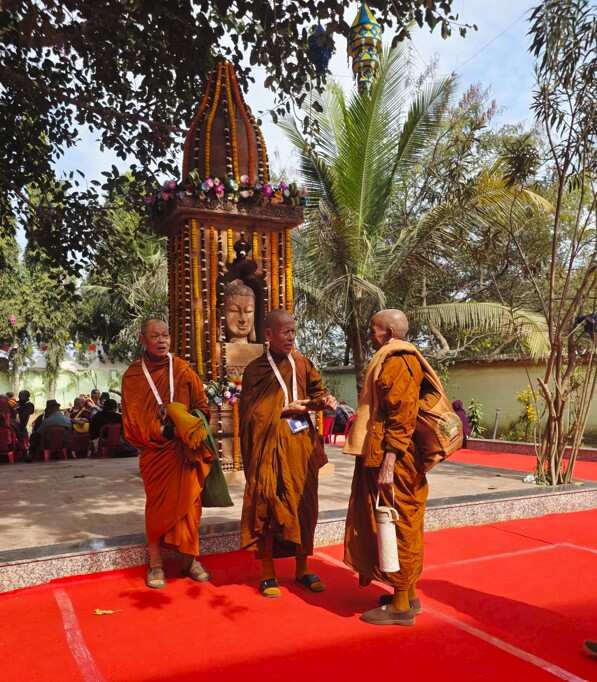

The entire event was profoundly inclusive, uniting the spiritual world with the ordinary social world and aiming at peace, harmony, and oneness—spiritual awakening irrespective of caste, creed, culture, or religion. Every soul present experienced the bliss of oneness. At the heart of the event were continuous sacred chanting and Vajrayana pujas, through which the ancient hills once again resonated with the living sound of the Dharma. As dawn and dusk embraced Udayagiri, the air itself became prayer. Monastic voices rose in unison, weaving the mantras of Guru Padmasambhava, the Lotus-Born, whose wisdom dispels fear and whose compassion awakens clarity.
Through mandala offerings, incense and fire rituals, butter-lamp offerings, torma pujas, long-life prayers, and peace invocations, the obstacles of the present age were symbolically dissolved, and aspirations for world peace, harmony among nations, and the awakening of all beings were offered.
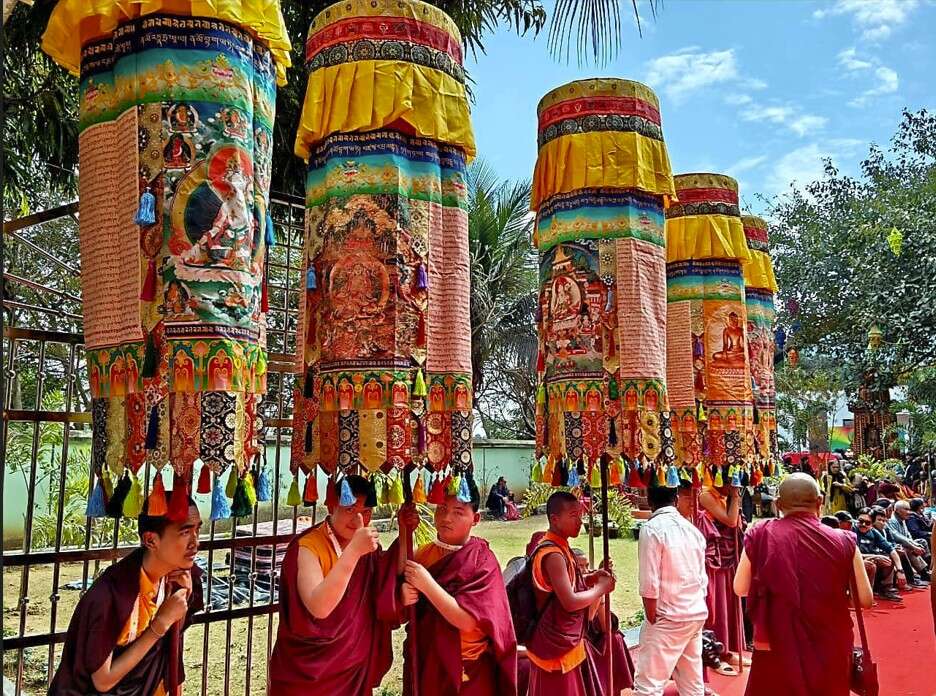

In these ritual observances, the past did not remain distant—it breathed again as a living presence. Udayagiri was consecrated not merely as an archaeological site but as a field of blessing, where ancient practice and contemporary devotion met in continuity.
The sacred chanting flowed like an unbroken river—each syllable a lamp of wisdom, each vibration an offering to awaken compassion in all realms. Through mandala offerings, fire and incense, butter lamps and tormas, earth invoked the sky to dissolve hidden obstacles. Through the pujas, the past breathed the living presence of the Buddhas and all sentient beings. The Diamond Circle was blessed, and Udayagiri consecrated anew—not merely as stone and ruin, but as a living field of blessing where Dharma once walked and now speaks again.
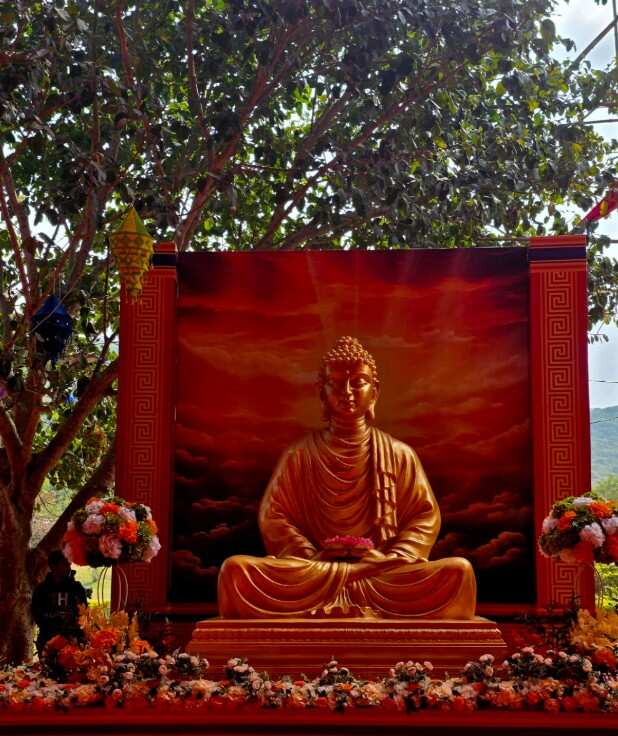

The sacred rituals, ritual offerings, Vajrayana pujas, and scholarly conference discussions came together seamlessly. Traditional practices such as mandala offerings, butter-lamp offerings, incense ceremonies, and torma pujas transformed each chanted syllable into a lamp of wisdom and each offering into a gesture of gratitude to the lineage of realised masters. These practices were dedicated to world peace, the removal of obstacles, harmony among nations, and the spiritual awakening of all beings, consecrating Udayagiri as a living sacred landscape and reviving ancient Buddhist practice.
Complementing the spiritual observances, the International Conference on Guru Padmasambhava provided an academic platform for scholars, rinpoches, and researchers to explore the historical, cultural, and spiritual dimensions of Guru Padmasambhava’s legacy. Discussions examined the deep connections between Odisha (ancient Odiyana/Uddiyana) and the Vajrayana tradition, the spread of Buddhism across Asia, and the need for renewed conservation and scholarly engagement with India’s Buddhist heritage.
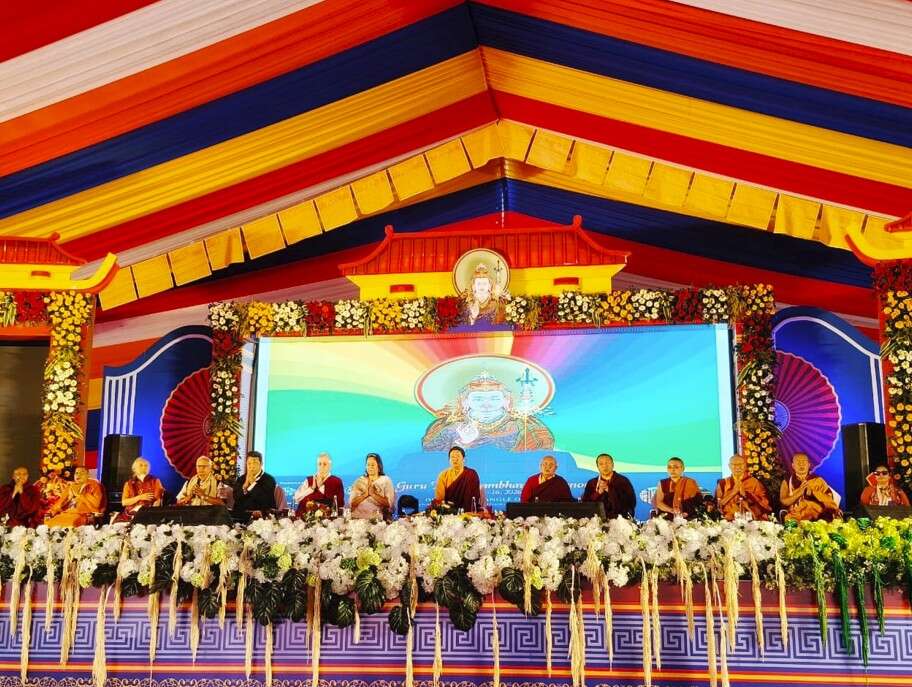

The ceremony concluded with collective prayers and aspirations that the blessings generated at Udayagiri may extend beyond geography and belief—calming restless minds, healing wounded hearts, and guiding humanity from confusion to clarity, from fear to fearlessness, along the luminous path revealed by Guru Padmasambhava.
In particular, one powerful message from the Nyingma monks and rinpoches resonated through the air: “The treasures of Guru Padmasambhava and His teachings are all from India. We have preserved His legacy and invaluable teachings in Tibet and are now reviving them in India as the lineage of Guru Padmasambhava. All of it belongs to India, has originated from India, and should be treasured by India. Long live Guru Padmasambhava.”
Truly, this was one of the most blissful and divine experiences of my life.
Disclaimer
Views expressed above are the author’s own.
END OF ARTICLE

