

Chennai has a studiolo (little studio). This is none other than Avtar Foundation for the Arts (AFTA), in MRC Nagar. The building also features a café. Founded by Jaiveer Johal, the foundation is named after his mother, Avtar Johal. This is not an art gallery; it is a “space for curiosity and conversation, somewhere between a reading room and a studio,” elucidates Johal.
Jaiveer Johal
While art galleries mean pristine white walls, shorn of furniture, and spaces that meander from one hall to the next, AFTA feels both intimate and inviting. It is essentially an apartment that lends itself to art, by opening up walls, covering up a few windows, and letting art take centerstage in a neutral setting. As you climb three flights of ochre-tinted stairs, you arrive at the office/art space/studiolo.
AFTA currently houses an exhibition titled Home, an homage to the sense of belonging — whether a home, city, continent, a feeling, or a sense of meaning in the universe. The space was carefully calibrated so you could pull up a chair in the centre of the room and be witness to the enviable objet d’art all around.

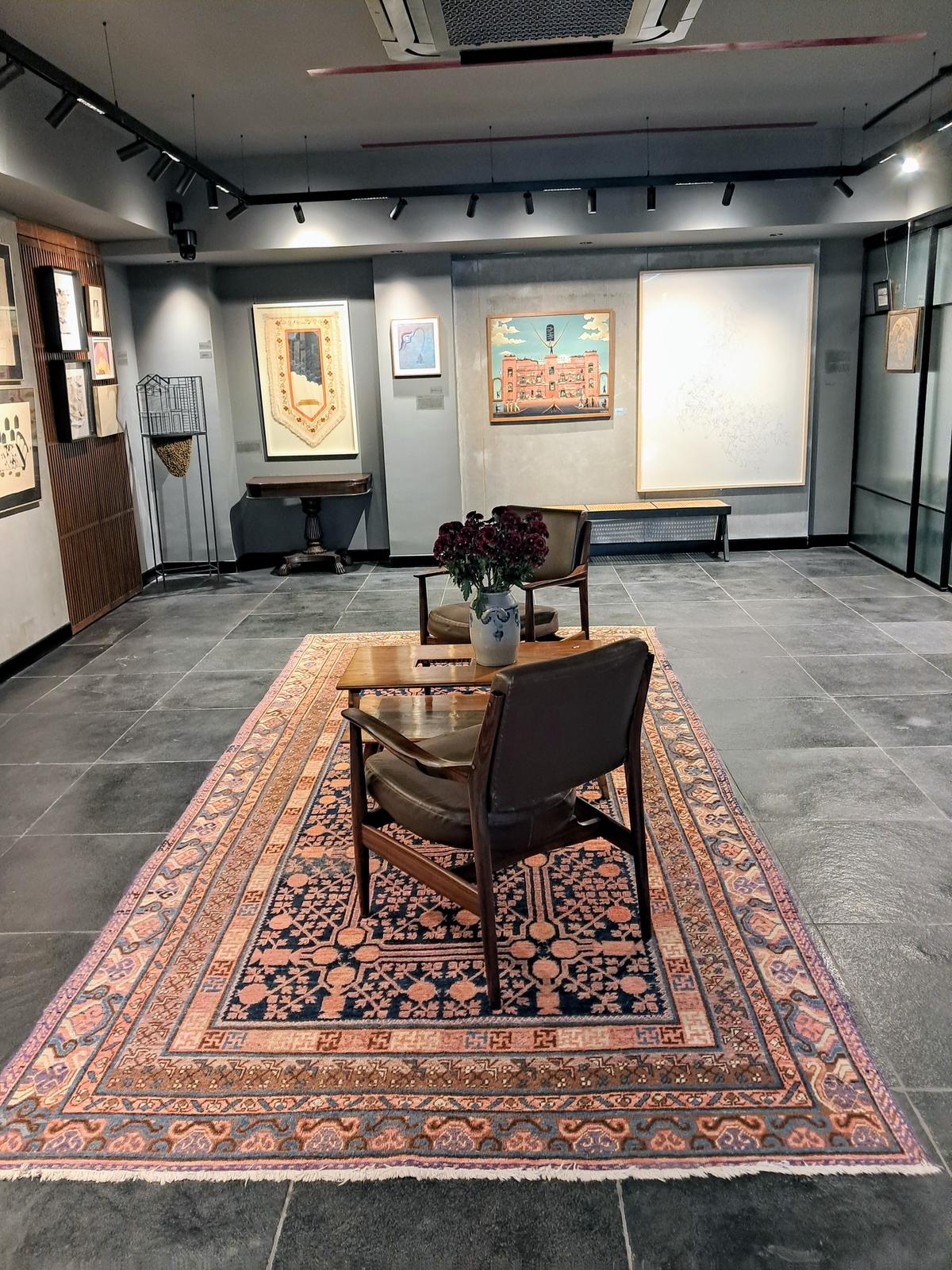
Each piece of furniture has been carefully curated.
Stories in shelves
Each piece of furniture has been carefully curated. “They have been bought because they are individually beautiful but not specifically for this space,” says the art collector, who has an expansive collection of contemporary and modern South Asian art. Each comes with an interesting backstory. Rare books on artists and history jostle for space on tall ebony shelves from Kolkata. Books on S.H. Raza, V.S. Gaitonde and M.F. Hussain share space with books on the Cholas, Bombay Deco and Art Deco.
One of the tall shelves used to belong to the Indian Museum (the oldest museum of the country, founded in 1814). There are all manner of local vases, vessels and lamps in bronze and brass, interspersed in different recesses, two bright dhrishti bommai masks (to ward off the evil eye), ceramic sea creatures, and the stunning AFTA symbol, in a dull brass finish, where its letters deftly form a tall gopuram, an ode to Tamil architecture.
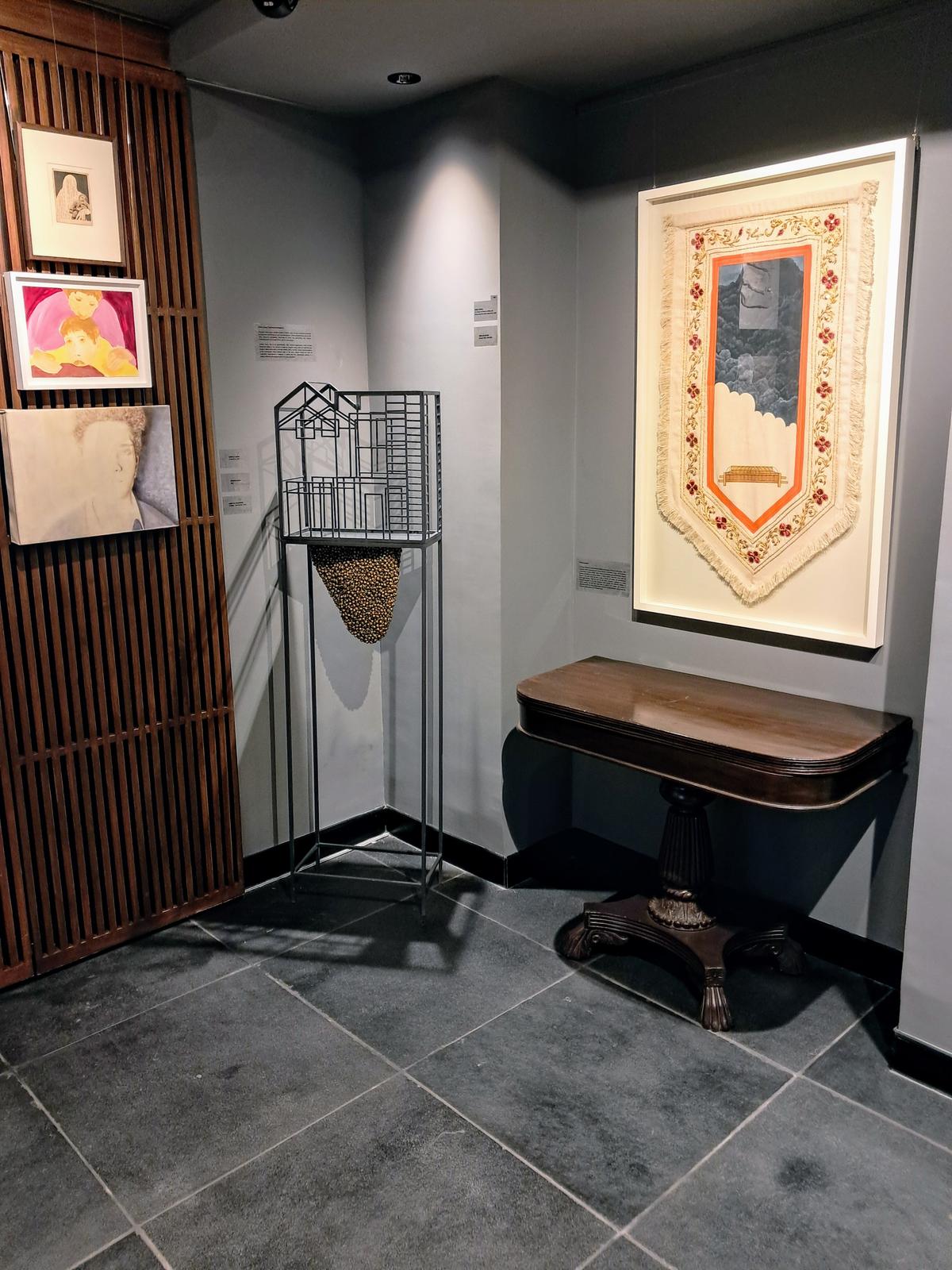
The black, undulating kadappa tiles are cool to the touch if you choose to leave your footwear outside. “This offers texture, instead of a slick floor,” shares Johal. The walls, some painted grey and others covered by Bison (composite cement) boards, offer a muted canvas for the art. Just beyond the large central space “there is room for storage, and maybe one day we could even open that up to display how art is stored. Of course, we would open a wall if we need space for display”, says Johal. The fluted glass sliding doors deftly do their job of opening up the room or keeping the attention within the main viewing area.
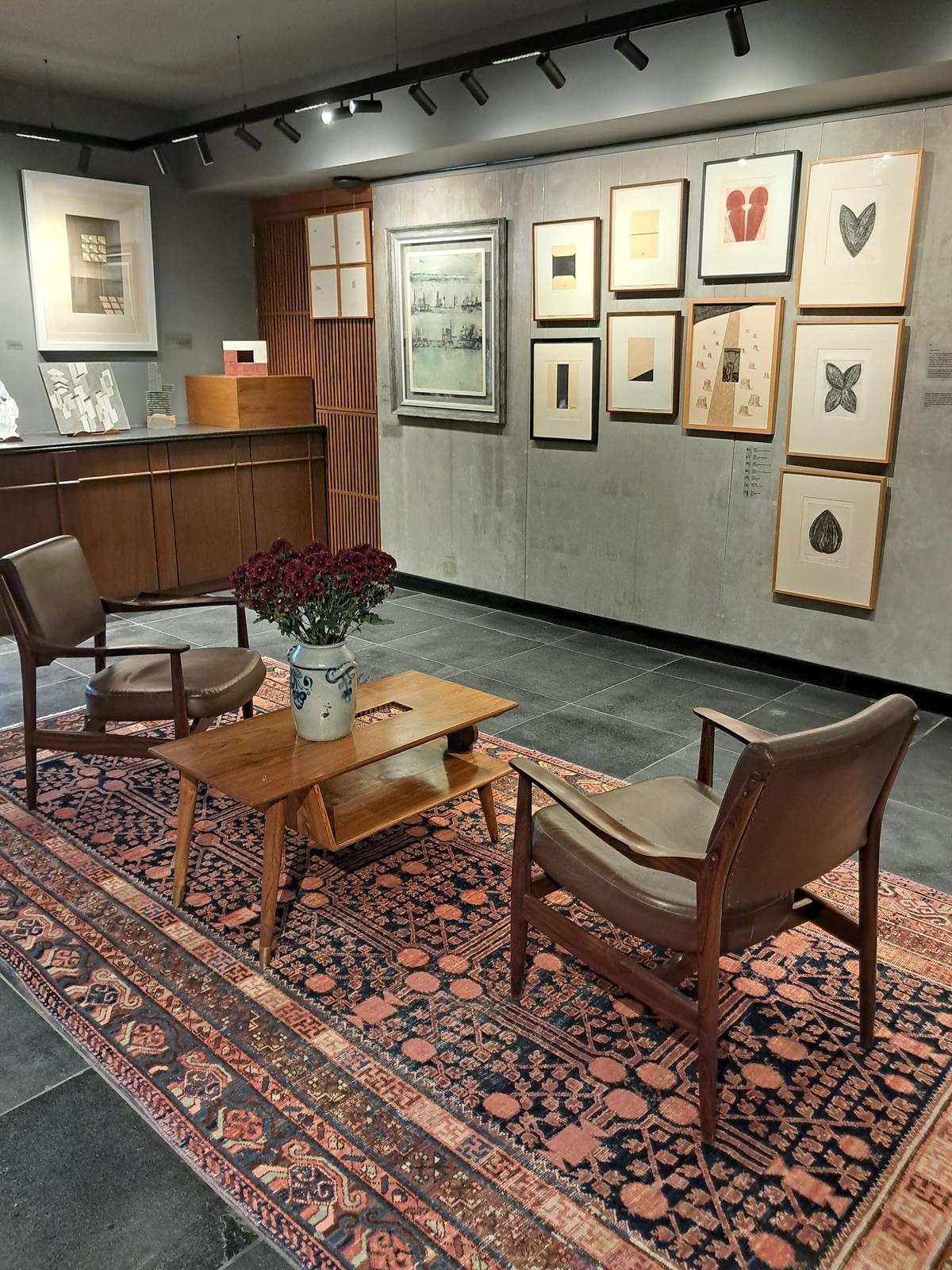
A centre table of late Art Deco design.
Design legacy
An eclectic selection of furniture sits within the space, each carefully picked through the years. The desk is a childhood heirloom, a Pierre Jeanneret piece made of teak with a storage area on one end and the Swiss architect’s classic cross design on the other.

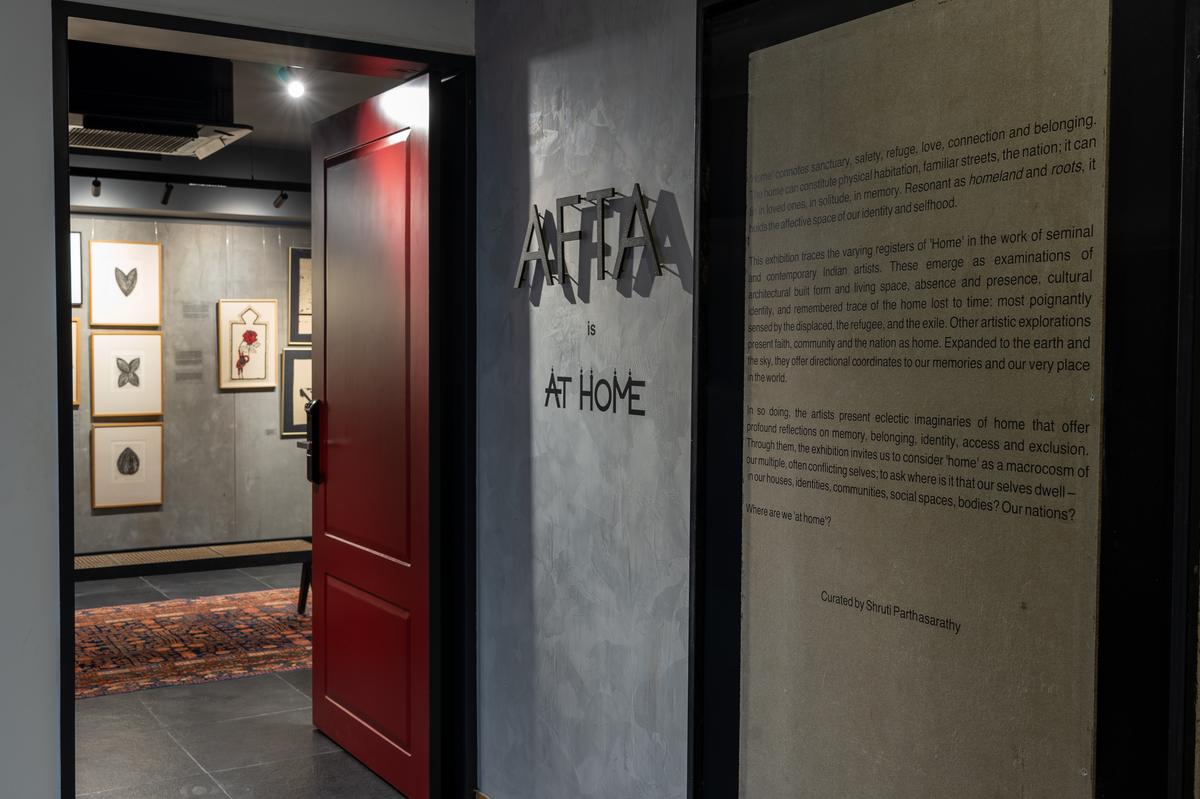
The entrance with grey tones mimicking the interiors.
The mustard-ochre leather chair that sits behind the table is another Jeannret classic, modelled on the original cane and Burmese teak chair, designed with the iconic V-shaped legs (inspired by an architect’s drafting compass). The basic cane version of the V-leg chair was never particularly comfortable, so Jeanneret designed a padded leather version, of which very few remain today. This one at AFTA is a prized possession.

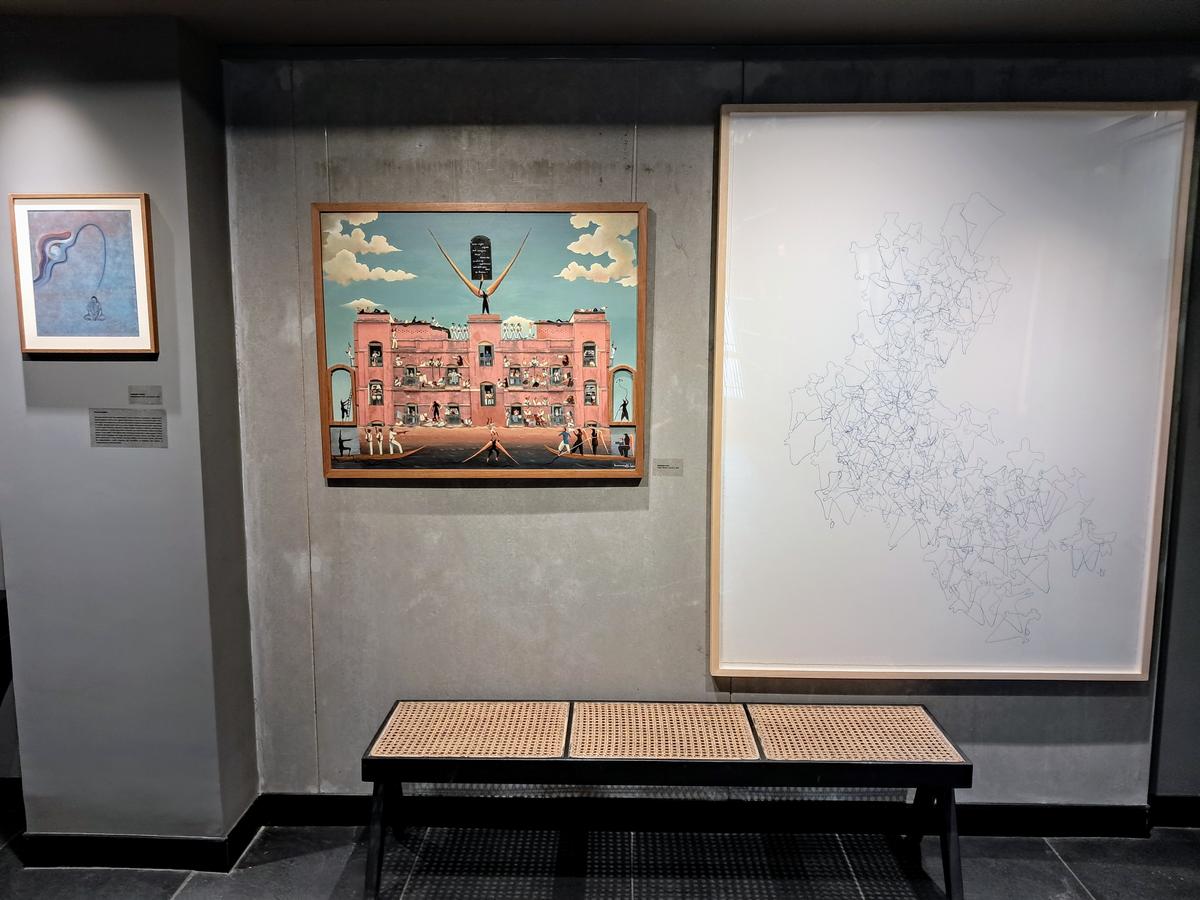
Rattan Bench
A Victorian rosewood card table at the far end of the room immediately draws your attention. A rattan bench designed by Johal and crafted by a local carpenter is next to it, but it can be pulled to the centre to offer additional seating. The central space is flexible, with a late Art Deco table between two (Dutch designer) Arne Vodder elbow chairs, offering comfortable seating on a crimson rug. “We would like to use this as a performance space as well, surrounded by the art, once we figure out the acoustics,” says the founder.
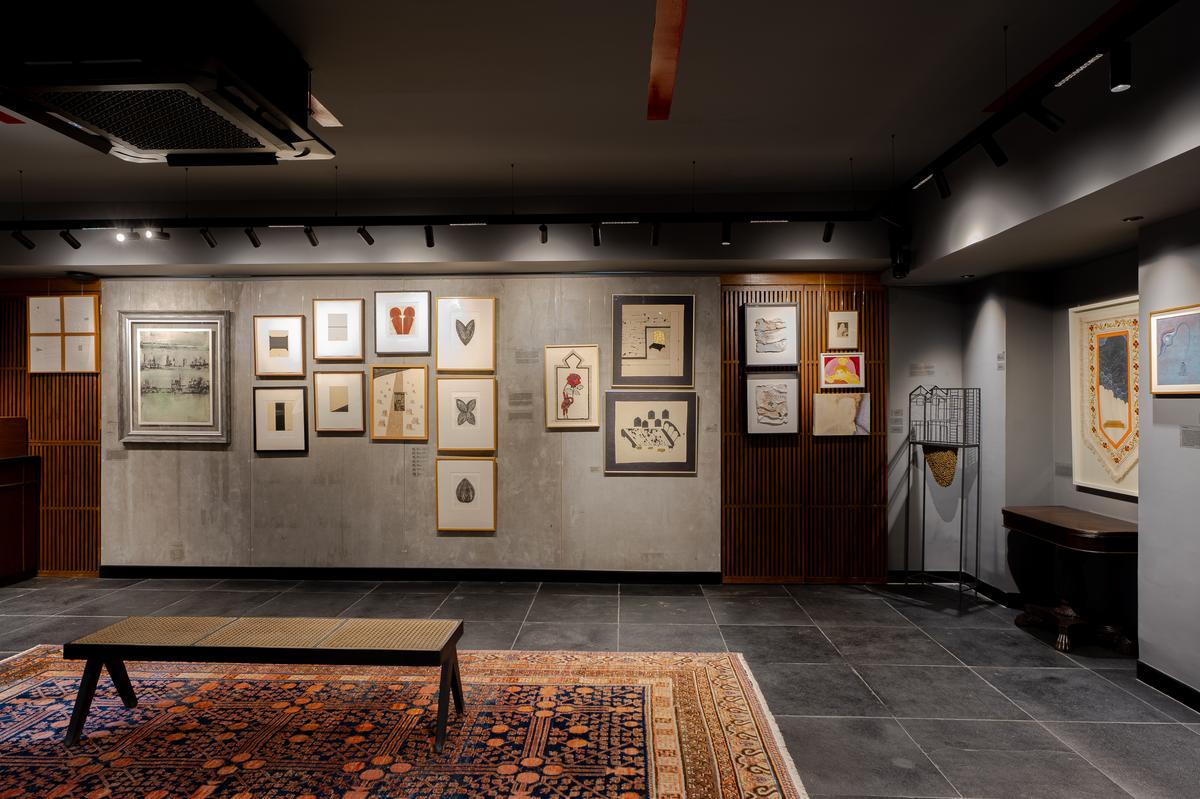
The lighting is intentional: track lighting highlights the art, while the rest of the room is warmed by light filtering through the vertical wooden panels behind the desk — “like the shuttered or louvered effect seen in many old Madras (Chennai) homes,” explains Johal. He adds that covering the windows opposite the door with black fabric controls the light, and using the wooden panelling over it creates a nice display area, offering a departure from the grey boards.

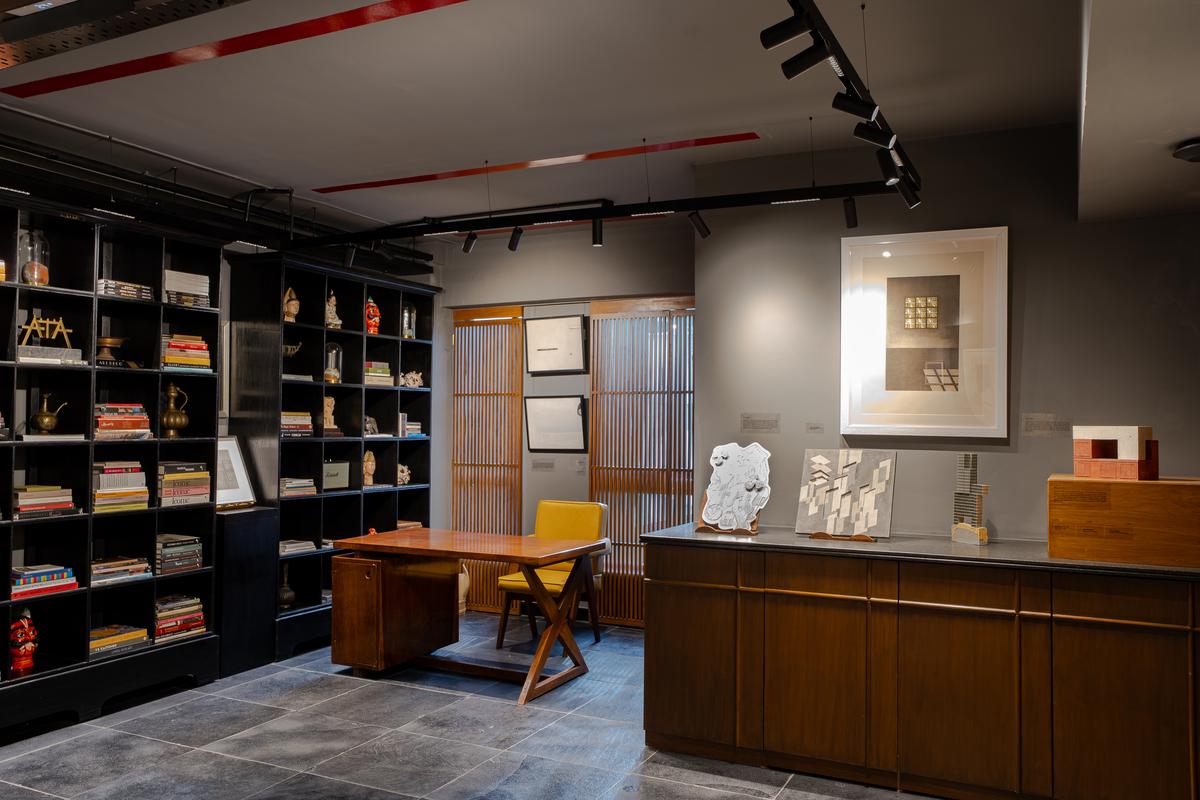
The desk is a childhood heirloom, a Pierre Jeanneret piece made of teak.
With the first show (as well as future ones), carefully curated works from Johal’s enviable collection will be on view in the city. “We are privileged in that we can show any kind of art in Chennai and there is an audience,” says Johal, who hosted students from the Government College of Fine Arts and KC High International School last year. “If we have a traditional art exhibition, we may put a day bed to go with the theme of the art on display,” he muses.
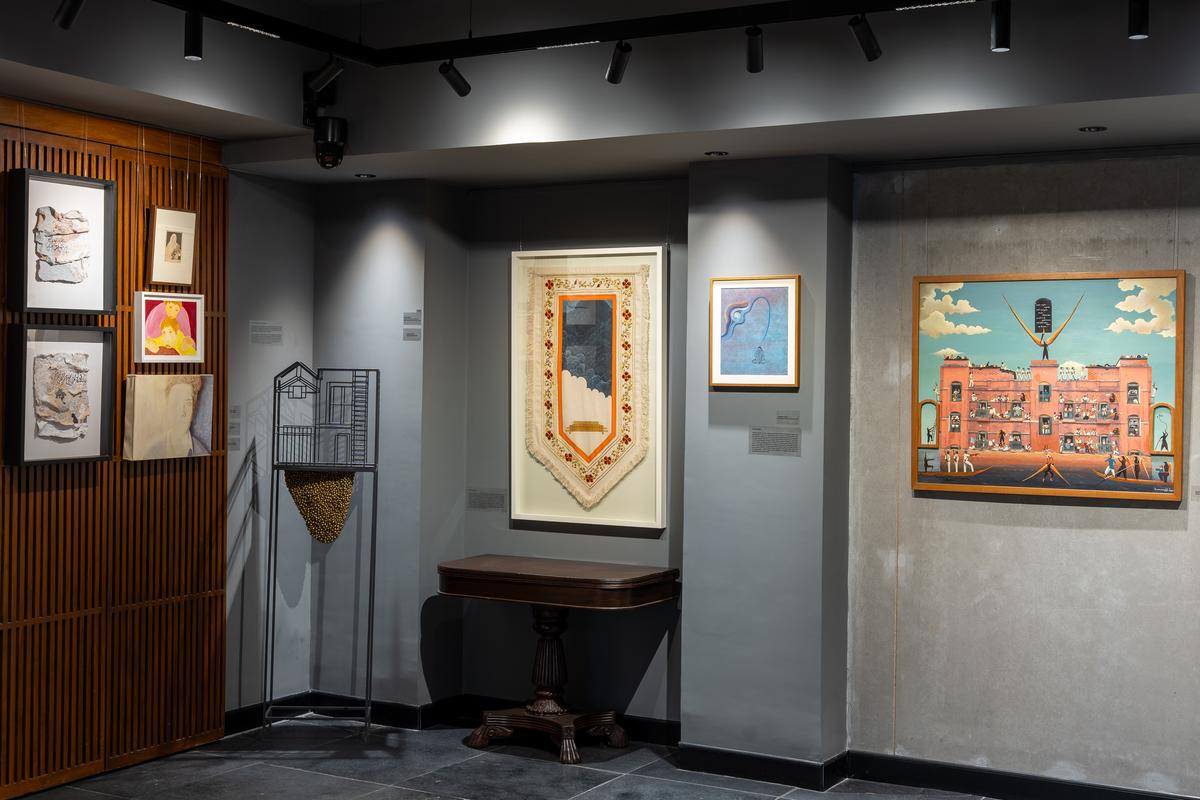
Victorian Cards Table crafted out of rosewood in Kolkata.
He is looking at a maximum of four shows a year, with wholesome breaks in between. “Once students start coming in, we hope the footfall increases. We are trying to do something that is meaningful, not necessarily Instagrammable,” concludes Johal.


