
New Year’s Day began earlier for me than any sane person deserves, as I hauled myself to the airport to get home after break and fulfil the miserable obligation of watching my teenage nostalgia dismantled by Netflix and the Duffers in real time. Somewhere 40,000 feet above the ground, where nobody should have to confront their childhood dying, I found myself consuming the long-promised 2+ hour cinematic climax exactly how Netflix dreamt their users would: half-awake, hunched over a smartphone inside a steel tube slicing through the sky. By the time we landed in Delhi, some cosmic force clearly decided enough was enough, because my phone slipped out of my hand and shattered on the spot, as if the ghosts of good sense had decided to stage an intervention for my small-screen crimes against cinema. I spent the entire evening running between repair counters, watching money and time evaporate, only to return home and sit down to complete the final humiliation of spending the last hours of one of the first days of the year writing about a bloated, empty, punishing and uninspired finale. I once wished Stranger Things would never end, but after today, it turns out the ending came for me instead.
Chapter 8 in Stranger Things Season 5, titled “The Rightside Up,” is a finale obsessed with the idea of epicness, yet terrified of consequence. A sprawling, lumbering beast of exposition circles, endless emotional monologues, hollow spectacle, and one of the most bizarre tonal pivots ever attempted in a supposedly world-ending climax — I sat through these stretched-to-breaking-hours watching a once-sparkling series treat its own climax like a contractual errand, and could feel the decade of accumulated Netflix money pressing down on every sentimental montage, every suffocating exposition huddle and every needle drop swinging its arms around like an overfriendly drunk hoping we still care.
Stranger Things Season 5 Volume 3 (English)
Creators: Matt & Ross Duffer
Cast: Millie Bobby Brown, David Harbour, Winona Ryder, Noah Schnapp, Finn Wolfhard, Gaten Matarazzo, Caleb McLaughlin, Sadie Sink, Maya Hawke, Natalia Dyer, Charlie Heaton, Joe Keery and more
Runtime: 128 minutes
Storyline: The Hawkins gang races against time to confront Vecna in one final, universe-saving showdown
The thesis is simple, and I will carve it into the marquee: this was simply brand management. There’s a safe, corporate empathy to the whole thing, engineered to keep the discourse warm without threatening anything. You can sense the fear of alienating viewers, the terror of decisive storytelling à la (and forgive the strained precedent) Game of Thrones. Friendship conquers fear, grief moulds resilience, the future is uncertain yet hopeful, yada yada, please tweet your feelings. A story of this calibre deserved something jagged, something unresolved and human, but this doomsday machine has been entirely baby-proofed.
We begin where the previous insufferable volumes left us: the 12 kids are still trapped inside Henry/Vecna’s hell-mind labyrinth while the increasingly nonsensical Abyss looms and the Hawkins gang prepares for war. Eleven, Kali, and Max storm Henry’s psyche to halt his universe-fusing god fantasy, and for about six and a half minutes, it feels like tension might happen. Then everything fractures into the show’s worst addiction: talking. Endless, frustrating talking. Talking in dream corridors. Talking inside shared consciousness. Talking in rooms flooding with hostile matter. Talking during battle. Talking instead of doing anything. The increasingly abysmal writing fetishises heart-to-heart therapy sessions, forcing every character into emotional TED Talks, confessing inner truths with a strained melodramatic intensity, forgetting the world is ending around them.
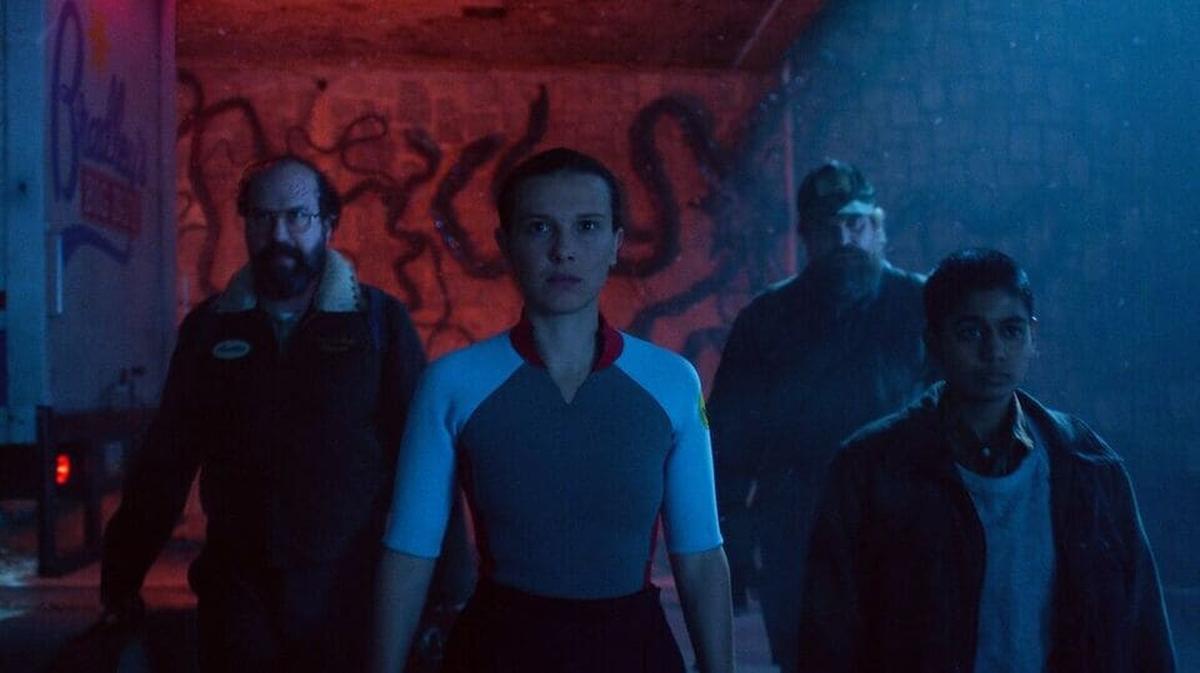
A still from ‘Stranger Things’ Season 5 Volume 3
| Photo Credit:
Netflix
Kali’s death is the first fatal punctuation mark in this volume. She is reintroduced only to be humiliated by plot mechanics and then lazily executed in what the show frames as a noble tragedy. The “brown girl martyr to fuel a white heroine’s rage” is an absolute eyesore and Eleven responds by vaporising soldiers in yet another drawn-out power tantrum.
Meanwhile, Holly — a literal afterthought for four seasons — somehow becomes one of the most important chess pieces in the story, ferrying kids out of Henry’s consciousness while the show congratulates itself on “passing the torch.” The tonal awkwardness is staggering. These children are fleeing cosmic psychocide while the direction stages some sort of demented motivational montage.

If you rewind to Season 1, Stranger Things genuinely flirted with something sharp and unnerving — a brooding True Detective-adjacent mood where the Eldritch horrors of the night actually felt dangerous. Then, almost imperceptibly at first, each subsequent season nudged the dial away from uneasy dread toward pop-event comfort-viewing until we eventually arrived at the Marvel-ification of Hawkins.
Visually, the parallel hellscape dimension that dominates most of this final episode collapses into that unmistakable early-2000s sepia apocalypse; the cracked, wind-gnawed wasteland straight out of the In the End music video, with swirling particulate storms, anonymous rocky monoliths, and a tired brown-on-brown colour philosophy that ends up looking like a PS3 cutscene. Soon, the Mind Flayer ascends like an arachnid kaiju god, Vecna wields metaphysical doom, the world is physically tearing, and yet the show immunises every emotional artery. Even in the face of the upscaled horror, fear and pain exist mostly as dialogue.
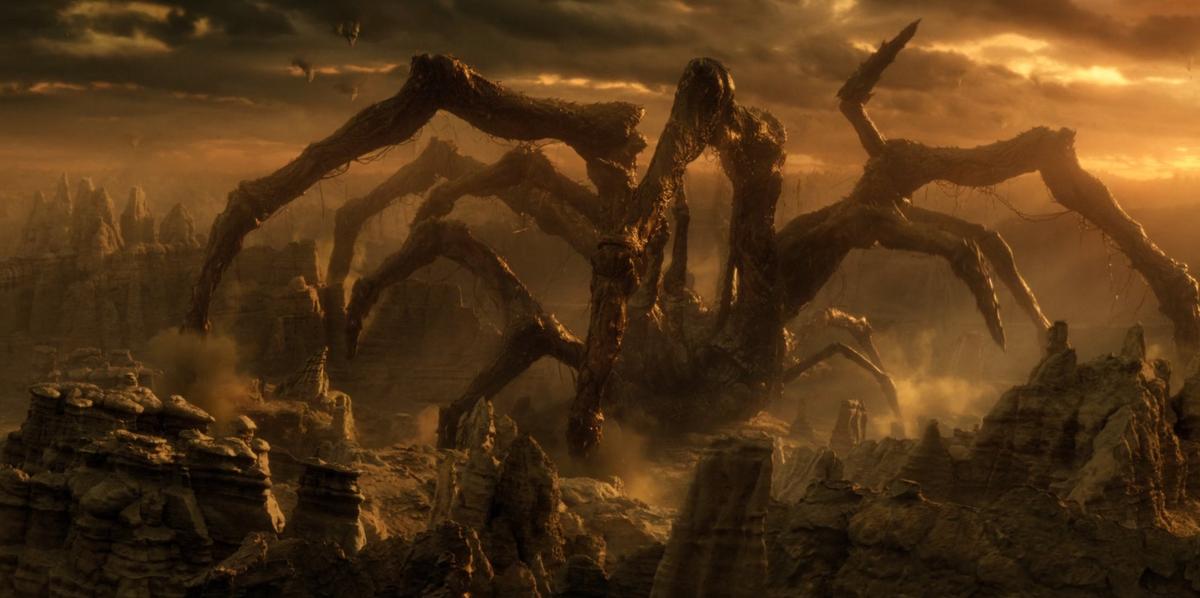
A still from ‘Stranger Things’ Season 5 Volume 3
| Photo Credit:
Netflix
Then comes Henry’s big reveal — years of villainy reframed around a tiny fragment of the Mind Flayer lodged inside him like malignant destiny, teased earlier in Volume 2. Will witnessing Henry’s past finally confronts the demon that colonised his trauma, and the scene is clearly designed to wring out some last-minute empathy, but instead simply evaporates into nothing. When the fates eventually collide, the show feels so desperate for “epic” closure that the impact of the final showdown is softened by sheer inevitability.
Since Stranger Things cannot resist stretching itself thinner, we then segue into the never-ending aftermath where Eleven finally gets to mythologise herself as a vague solemn legend. Eighteen months later, we are living in the world’s longest epilogue. Hopper proposes to Joyce. The older teens reunite in a Breakfast Club-style high school reunion. The younger ones toss dice, graduate, and rebel without a cause. Mike even imagines futures as if narrating a sizzle reel for potential spin-offs. There is finally lasting peace, but it feels like it was focus tested for optimal heartwarming.

Throughout Volume 3, I was conducting an involuntary quality control assessment, rapidly compiling a list of narrative crimes, much like a bored accountant forced to tally outstanding debts, which the Duffers clearly hoped we’d ignore. Because how, in a so-called decade-defining finale, do we never meaningfully acknowledge that Joyce, Hopper, and Henry literally shared a past in the same high school, and the show just refuses to touch it? What’s with the inexplicable obsession with exactly twelve kidnapped children (Why twelve? Why not five? Why not six thousand?). Why was November 6th framed like it’s some cosmic hinge on which the universe turns, only for the finale to treat it with a sheepish indifference? And WHY does Caleb McLaughlin get some of the worst one-liners in Netflix history? (“If it’s hard, I’ll soften it”, “Suck it Armstrong”).
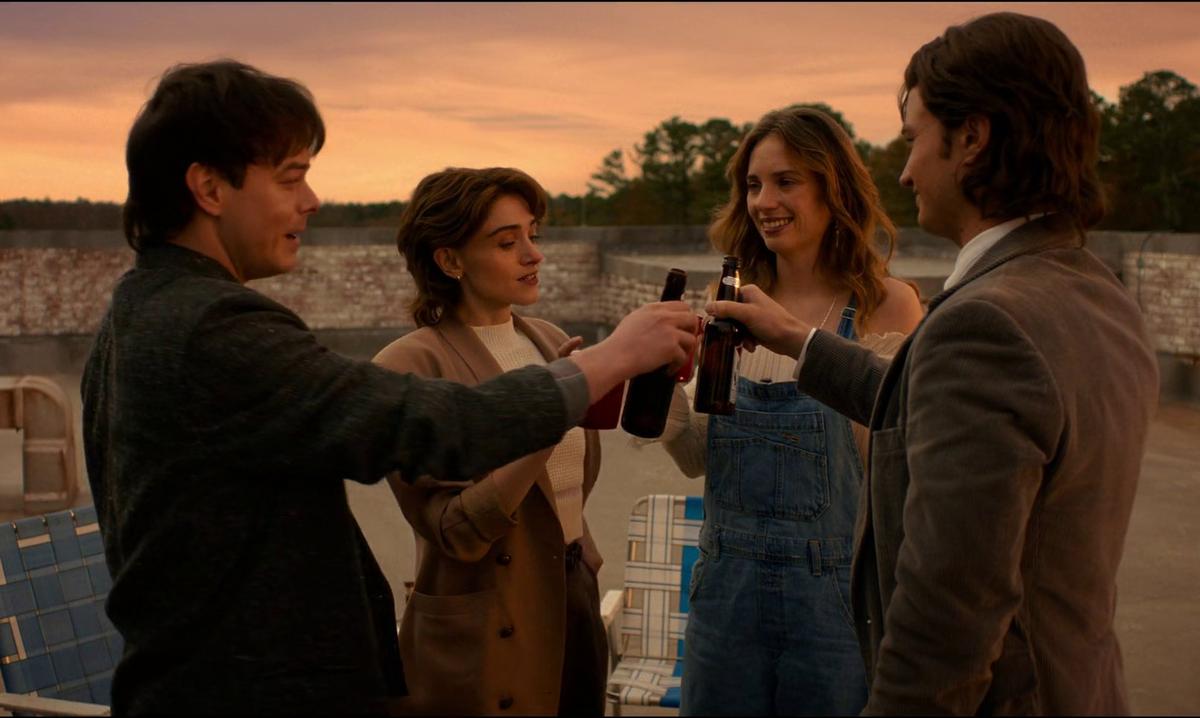
A still from ‘Stranger Things’ Season 5 Volume 3
| Photo Credit:
Netflix
The irony of a show about the terrifying rupture between childhood and adulthood refuses to grow up in its own final breath, is brutal, and Volume 3 concludes the decade-long cultural beast known as Stranger Things with the timidity of artists unwilling to fracture their own myth, delivering closure sterilised for mass comfort, coated in the glossy residue of nostalgia capitalism. I watched the last minutes roll with the hollow satisfaction of finishing a puzzle whose image you recognised before opening the box. What it proves vividly and relentlessly is that Stranger Things became terrified of itself. Afraid of cruelty, of grief, of permanent absence, fearful of every sharp edge that once made this thing one of the most captivating originals that Netflix ever produced.

There are brief moments of poignancy in its craft. There are also flickers of great acting buried under monologue avalanches. But emotionally? Spiritually? Culturally? This is a franchise funeral. After months of fan theories bracing for the supposed “big one,” after everyone nervously placing bets on which beloved character Netflix might finally have the courage to actually sacrifice (and heaven forbid it ever be Steve Harrington), the only permanent death Stranger Things truly commits to is the bombastic burial of creativity itself — the very instinct that once made this series feel alive, dangerous, and genuinely special almost a decade ago.
Stranger Things Season 5 is currently streaming on Netflix

