
The solo thematic presentation drew from Arunachala Kavirayar’s ‘Rama Natakam’ and verses from the ‘Kamba Ramayanam’, and was structured around Ahalya, Sita, Parashurama, Guha, Jatayu, Hanuman and Ravana.
Sowjanya Suresh’s solo thematic presentation Ramarasanubhavam traced a sequence of transformative encounters from the Ramayana, drawing from Arunachala Kavirayar’s ‘Rama Natakam’ and verses from the ‘Kamba Ramayanam’. Structured around seven characters — Ahalya, Sita, Parasurama, Guha, Jatayu, Hanuman and Ravana — the presentation examined how contact with Rama reshapes lives through grace, humility, devotion, and, at times, redemption through death.
Sowmya Suresh used a subdued golden-toned costume for Ahalya.
| Photo Credit:
B. VELANKANNI RAJ
The recital opened with Ahalya, whose long penance as a stone ends when Rama’s touch restores her to life, marking not merely release from a curse but an inner spiritual awakening.
This was followed by Sita’s episode, centred on the moment of recognition, where her first sight of Rama rekindles an eternal bond that transcends earthly love and sets the course for their shared journey.
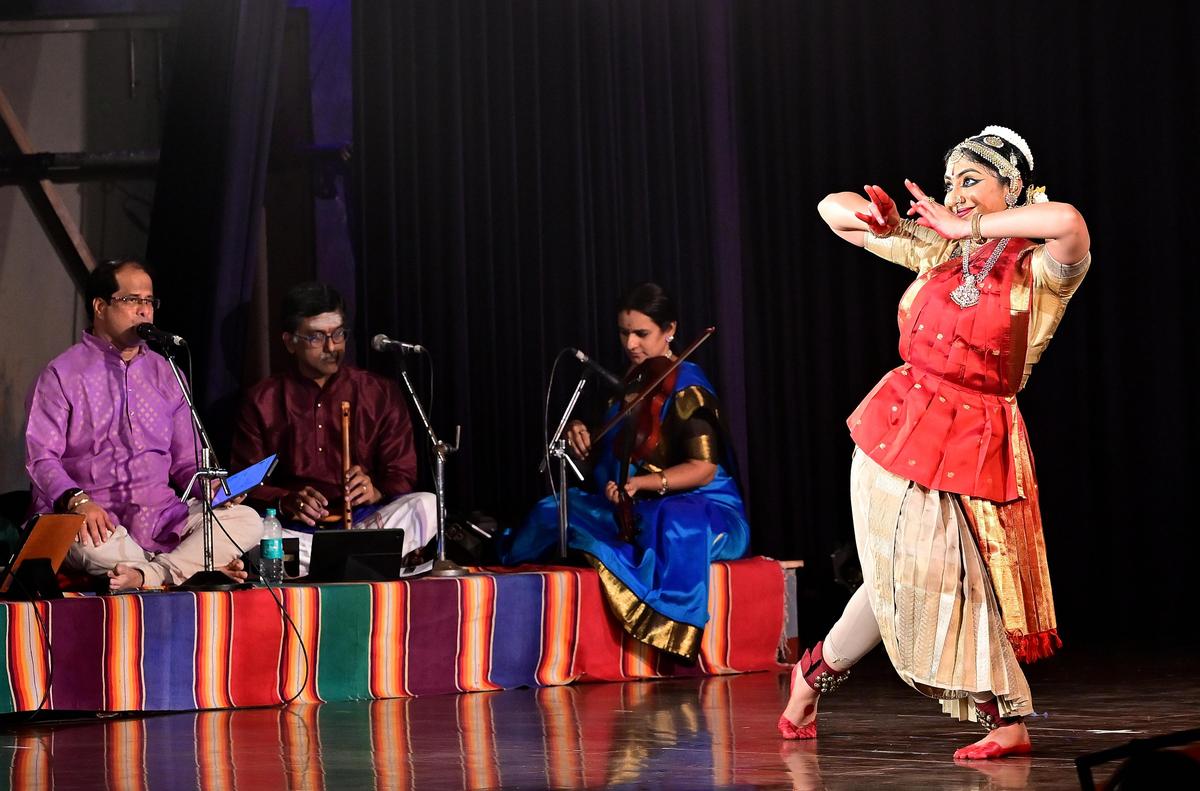
A red pallu drape with a small side-fan to showcase Sita.
| Photo Credit:
B. VELANKANNI RAJ
Next came Parasurama’s confrontation with Rama, unfolding as a turning point from arrogance to humility, as the warrior-sage recognises Rama’s divinity and retreats in repentance.
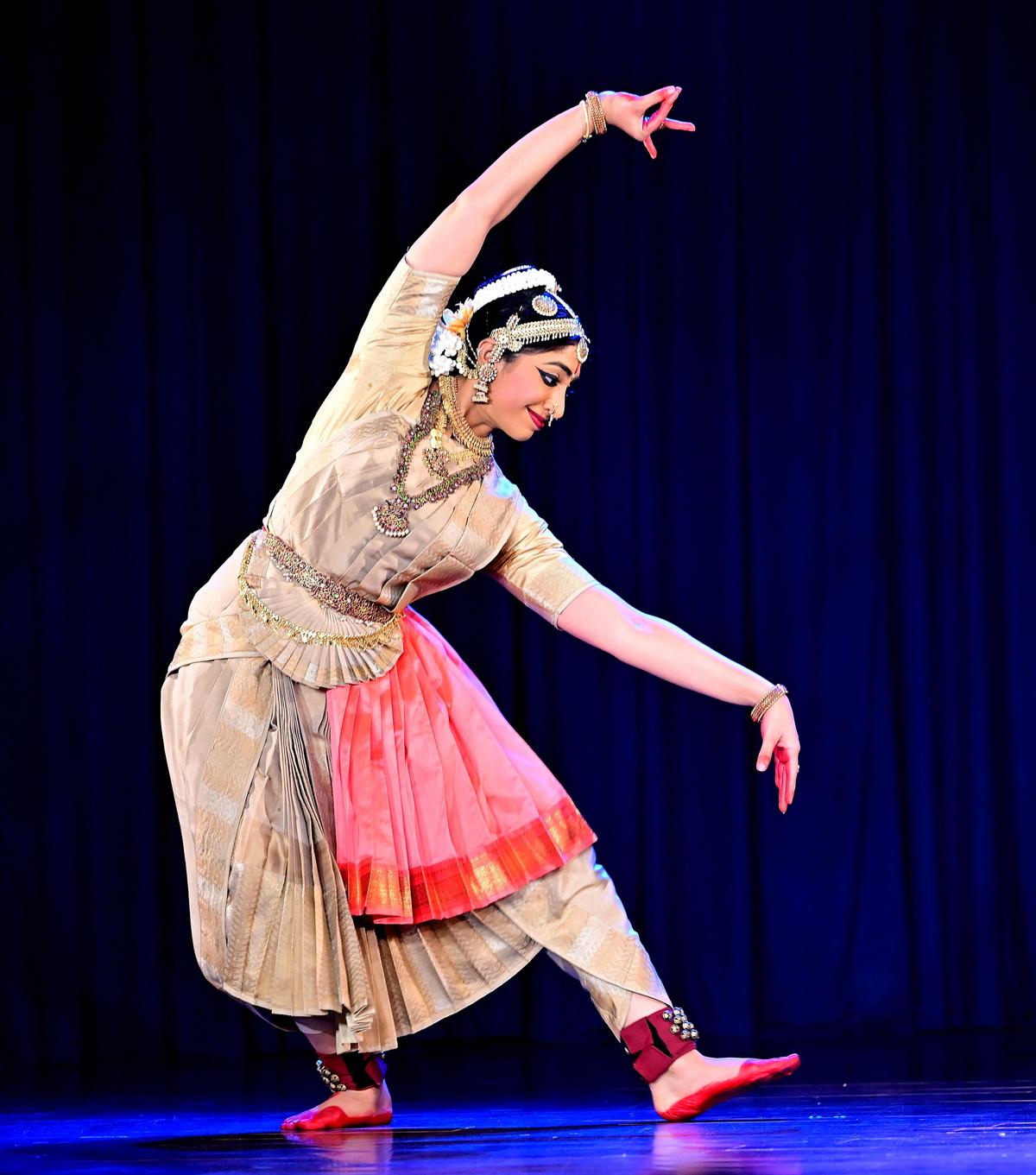
Sowjanya Suresh’s thematic presentation was based on Arunachala Kavirayar’s Rama Natakam.
| Photo Credit:
B. VELANKANNI RAJ
The narrative then moved to Guha, whose meeting with Rama highlighted devotion stripped of hierarchy, where simple love and surrender elevate the tribal boatman to the status of a brother.
Jatayu’s sacrifice followed, forming one of the recital’s emotional peaks, portraying how devotion expressed through selfless action attains liberation through Rama’s grace.
Hanuman’s encounter came next, moving from inquiry to surrender and showing the transformation of strength into service as he embraces his role as Rama’s devoted helper.
The concluding episode with Ravana explored redemption, suggesting that even defiance and downfall can culminate in liberation.
Each episode was marked by clear narrative intent, giving the thematic arc coherence and emotional continuity.
Across these portrayals, Sowjanya demonstrated a striking ability to shift swiftly between layered emotional states, often transitioning between multiple inner registers within a single character. Her facial expressions were precise and immediate, lending clarity to narrative progression, while her posture remained assured. In the Guha episode, a brief tribal-dance movement added texture to the portrayal, marking a clear shift in movement quality. The Jatayu segment stood out visually, with expansive vishwaroopam combined with focussed lighting to arrest audience attention.
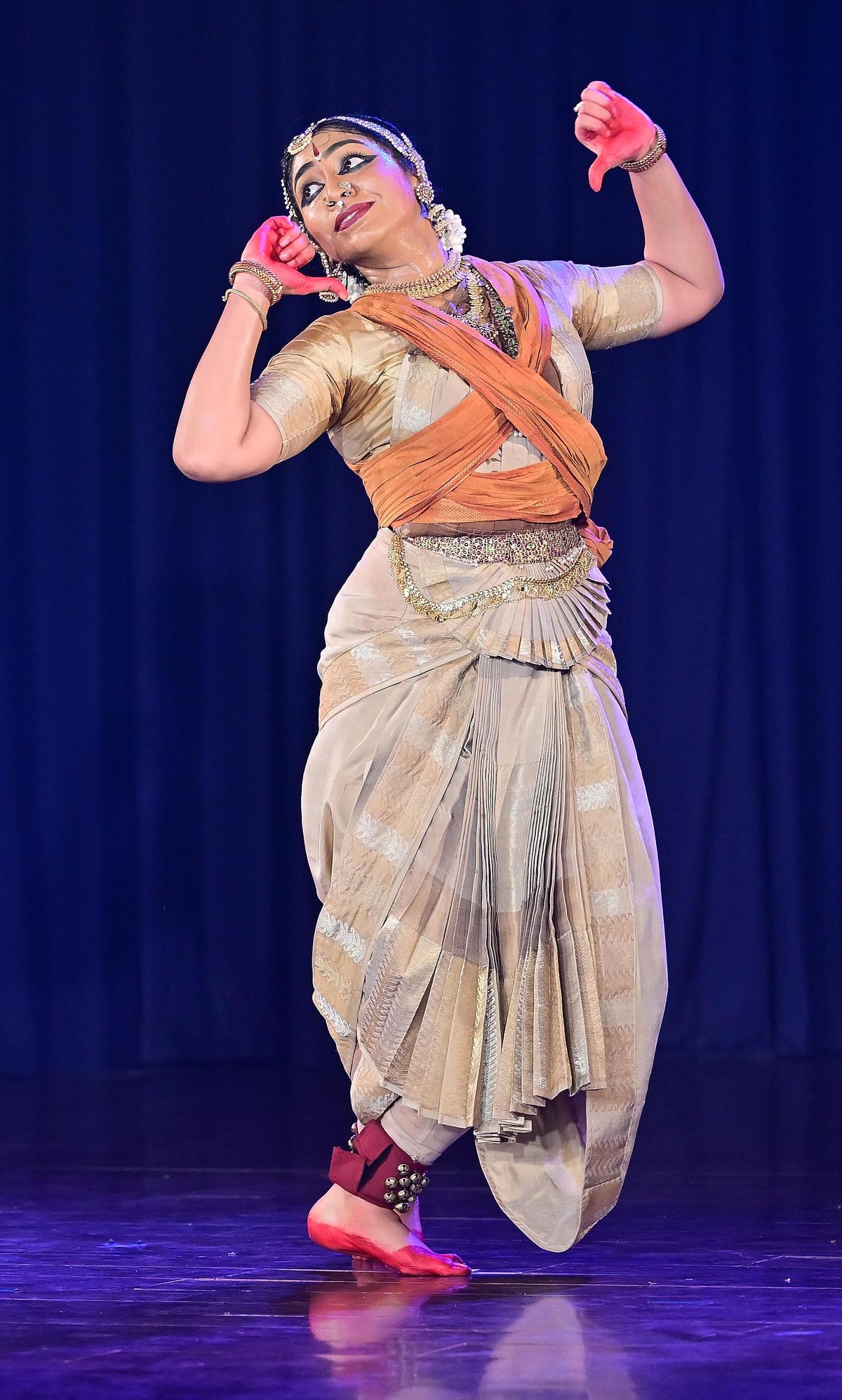
Sowjanya Suresh depicting Guha. The cross-worn kavi cloth is used to suggest Guha’s tribal identity.
| Photo Credit:
VELANKANNI RAJ B
A notable aspect of the recital was the thoughtful use of costume additions to delineate character. Without full costume changes, Sowjanya altered her appearance through selective draping: a subdued golden-toned costume for Ahalya, a red pallu drape and side small fans for Sita, a cross-worn kavi cloth suggesting Guha’s tribal identity, and a darker grey-black pallu around the neck for Hanuman. These subtle visual cues enhanced character differentiation while keeping the focus firmly on abhinaya.
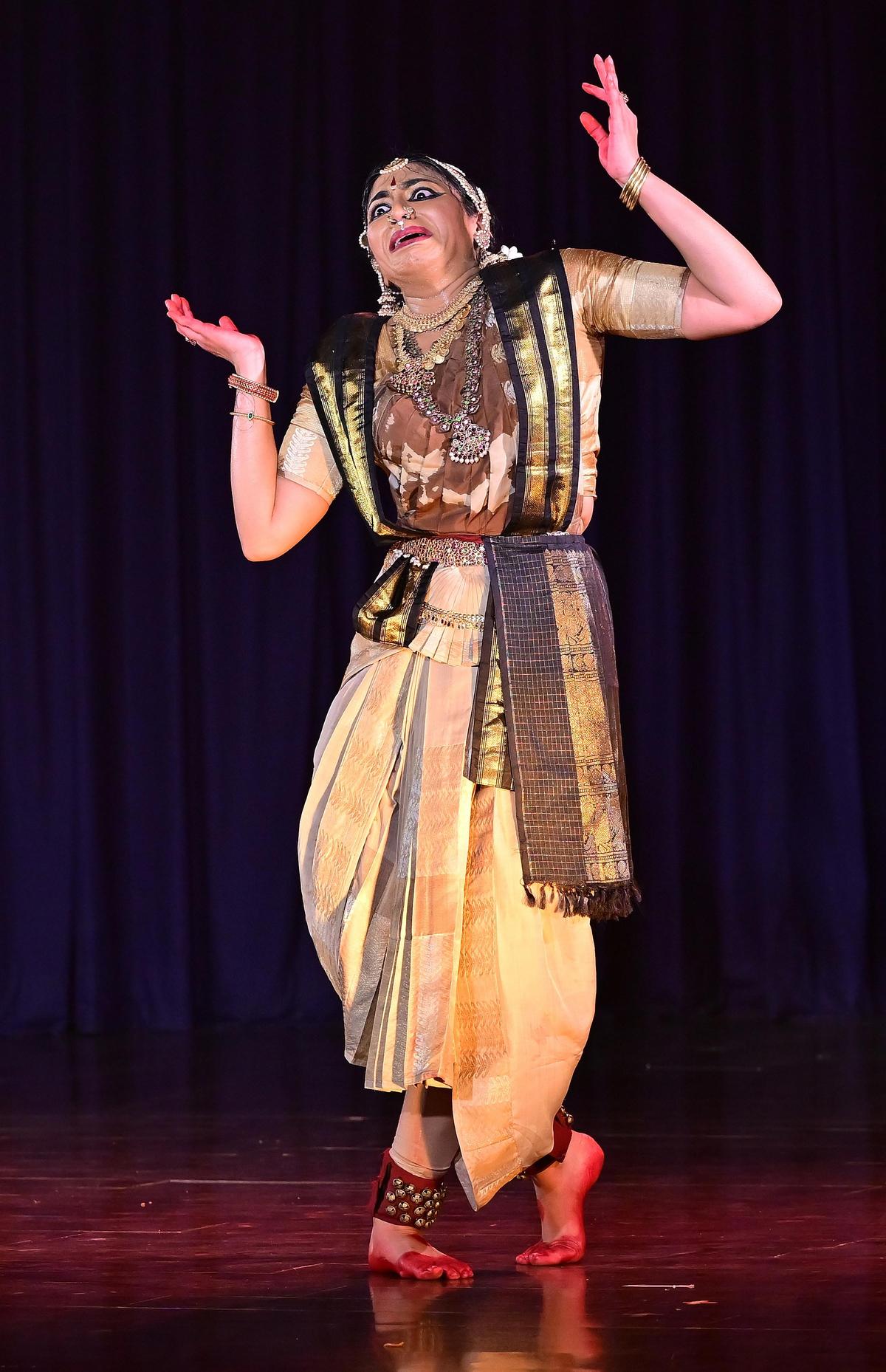
Sowjanya Suresh wore a darker grey-black pallu around the neck to depict Hanuman.
| Photo Credit:
B. VELANKANNI RAJ
The orchestra for the evening comprised G. Srikanth on vocals, Saikripa Prasanna on the nattuvangam, G.V. Guru Bharadwaaj on the mridangam, T.V. Sukanya on the flute, and B. Muthukumar on the violin.
Ramarasanubhavam emerged as a disciplined presentation that balanced narrative clarity with inward reflection, relying on controlled expression and observation rather than overt spectacle.

