
Even as cafes and soft drinks shape the food choices of people in Madurai, a steaming cup of paruthipaal continues to hold its own place. Made from cottonseed, the traditional drink is still enjoyed across generations, with several shops in the city keeping the practice alive. On one busy street, a small paruthipaal shop has been serving customers for nearly 90 years, drawing not just regular customers but also the younger generation.
K Santhanam, who now runs the shop, says the business was started by his father Karuppiah in the 1930s when paruthipaal was sold in the streets of Madurai on bicycles. Nearly 90 years later, the family continues the tradition, serving a drink that carries memories for many in the city. “We don’t just serve paruthipaal, we serve it with care,” he says, a sentiment he believes has kept generations of customers returning.
K.Santhanam serving hot Paruthipaal (cottonseed milk) at his shop in Madurai.
| Photo Credit:
G. MOORTHY
Explaining the process, Santhanam says the drink is still prepared at home, much the same way it was decades ago. Cotton seeds and raw rice are soaked for hours, ground together and carefully filtered to extract the milk. The mixture is then cooked slowly, stirred without pause, allowing the flavours to settle. Sweetened with palm jaggery, the paruthipaal is finished with a measured blend of herbal powders — dry ginger, chitharathai (lesser galangal), cardamom powder, thippili (Indian long pepper) and some grated coconut — ingredients valued not just for their flavour, but for their medicinal warmth.
Recalling the early days of the business, he says his father would sell paruthipaal from a bicycle, carrying a small stove and pot. “He would call out as he moved through the streets, and people would come to buy,” he says. Over the years, the makeshift setup gave way to a proper shop, where today customers come for the familiar taste that has been passed down generations.
He adds with a smile that in the early days, his father sold a glass for one or two paise. Today, the drink is priced at ₹20–25, and for customers who take it home, it is served in parcels for ₹40.
S Govindaraj, Santhanam’s son, says the paruthipaal is valued not just for its taste but also for its medicinal benefits. The herbal powders in the drink are believed to boost immunity, manage cholesterol and support heart health. Palm jaggery helps maintain blood sugar levels. According to him, the drink also aids women by regulating menstrual cycles, easing labour pain, and supporting lactating mothers.
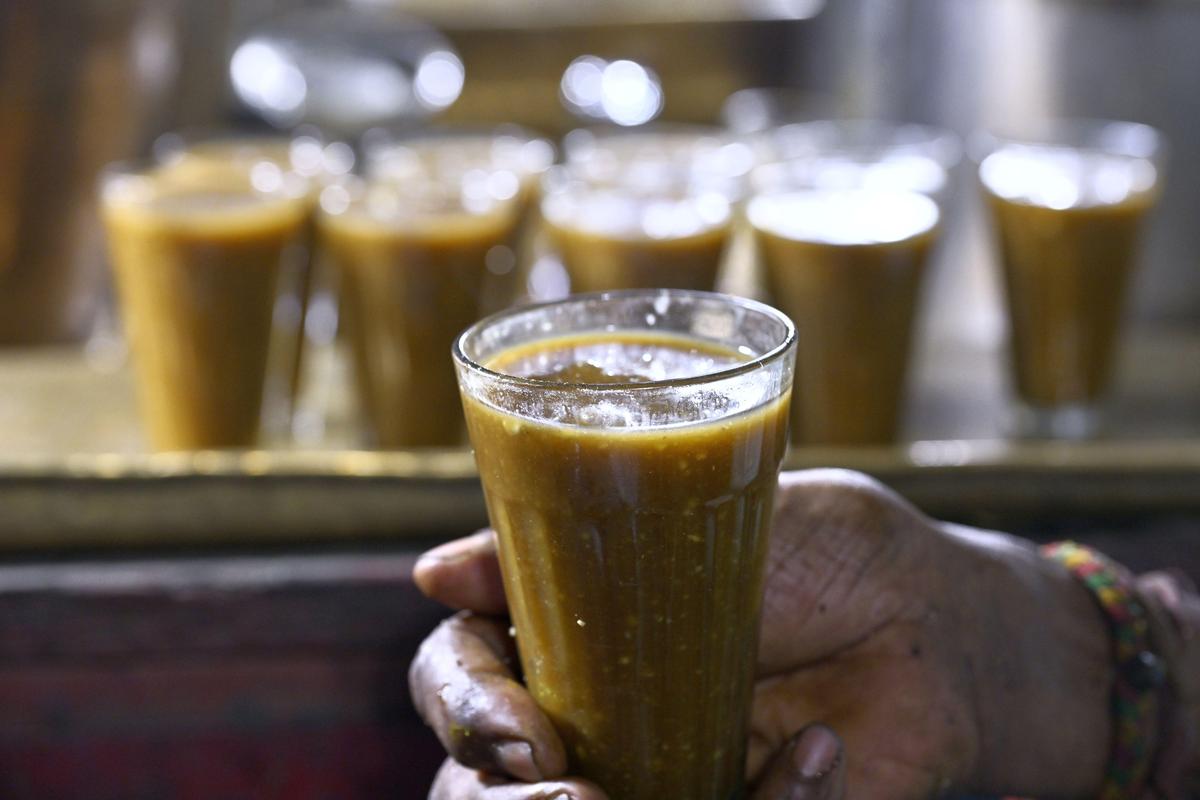
K.Santhanam serving hot Paruthipaal (cottonseed milk) at his shop in Madurai.
| Photo Credit:
G. MOORTHY
He adds that the preparation begins early in the morning at home, before the shop opens around 9am. “My father learned it from his father, and I am learning it from him,” he says.
S Kowsalya, Santhanam’s wife, supports his business, managing the household and the shop. She says, “It is not easy, but this shop has been part of our lives for so long that it feels like our second nature,” she says. “I make sure everything at home runs smoothly, while also keeping an eye on the paruthipaal preparation and serving our customers. My husband, son and I work in turns, helping each other throughout the day. It’s hard work, but seeing familiar faces return makes it all worthwhile.”
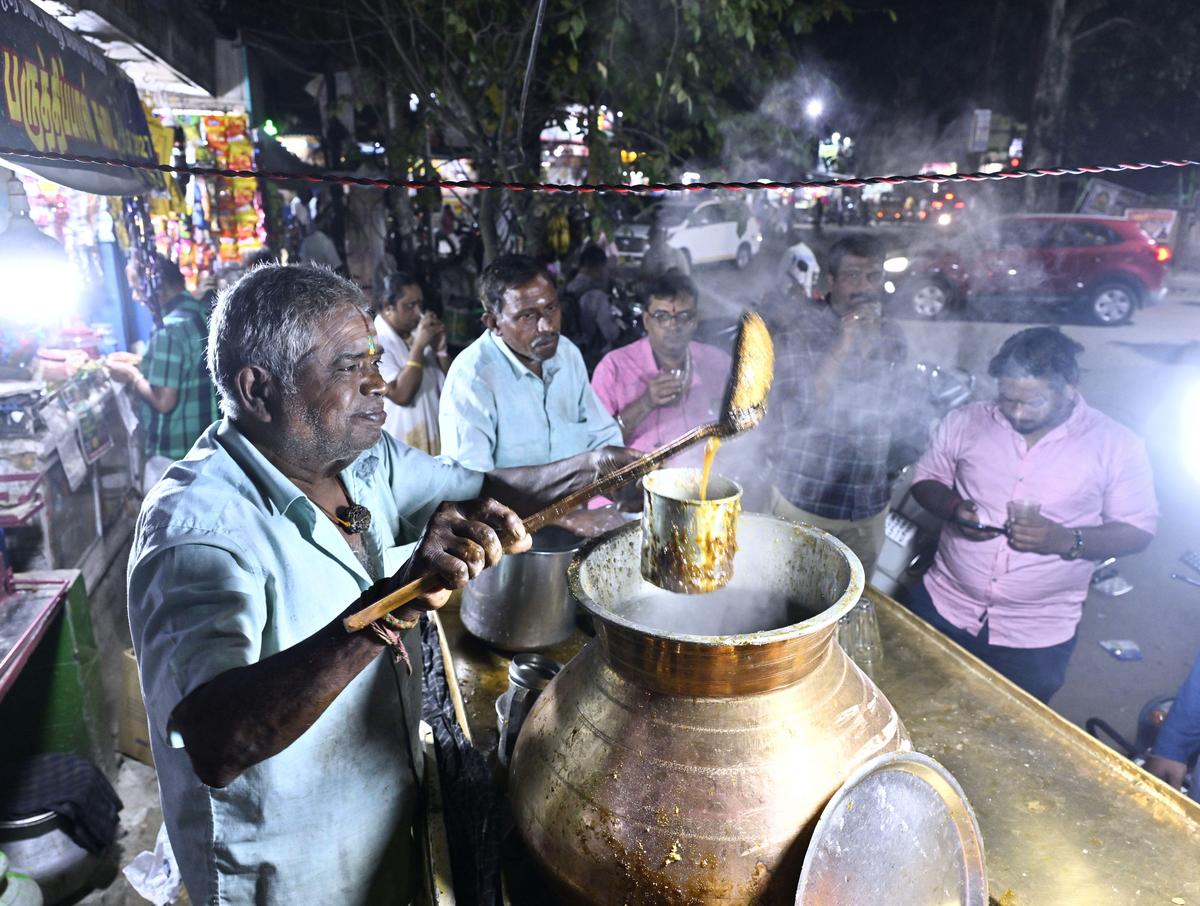
K.Santhanam serving hot Paruthipaal (cottonseed milk) at his shop in Madurai.
| Photo Credit:
G. MOORTHY
“I often stop by after college,” says S Vinoth. “Paruthipaal is different from anything else — warm and comforting.”
From a bicycle in the 1930s to a busy little street shop today, this paruthipaal has travelled through generations, proving that some flavours only grow richer with time.
Located at Chairman Muthuramaiyer Road, Munichali, Navarathinapuram, Madurai

