
Ahead of nu-metal legends Linkin Park’s first-ever show in India, bassist Dave Farrell sounds grounded and slightly astonished that the band is standing where it is again.
After a seven-year silence following Chester Bennington’s death in 2017, the band’s future once felt suspended in grief and unanswered questions, but that ambiguity made their surprise 2024 livestream comeback land with seismic force, introducing a new lineup, a new album in From Zero, and a world tour that felt like a hard-won continuation of the legend. When the band announced they would finally bring that tour to India early last year, die-hards like myself responded with collective disbelief and unfiltered euphoria at the prospects of our childhood dreams finally coming true.
Alongside Mike Shinoda, Emily Armstrong, Joe Hahn, Brad Delson and Colin Brittain; Farrell will step onto an Indian stage for the first time in Bengaluru, followed by headlining slots at Lollapalooza India in Mumbai this weekend. Three decades into a career that once seemed closed, he speaks about grief, patience, and the slow, uncertain walk back to music that felt alive again.
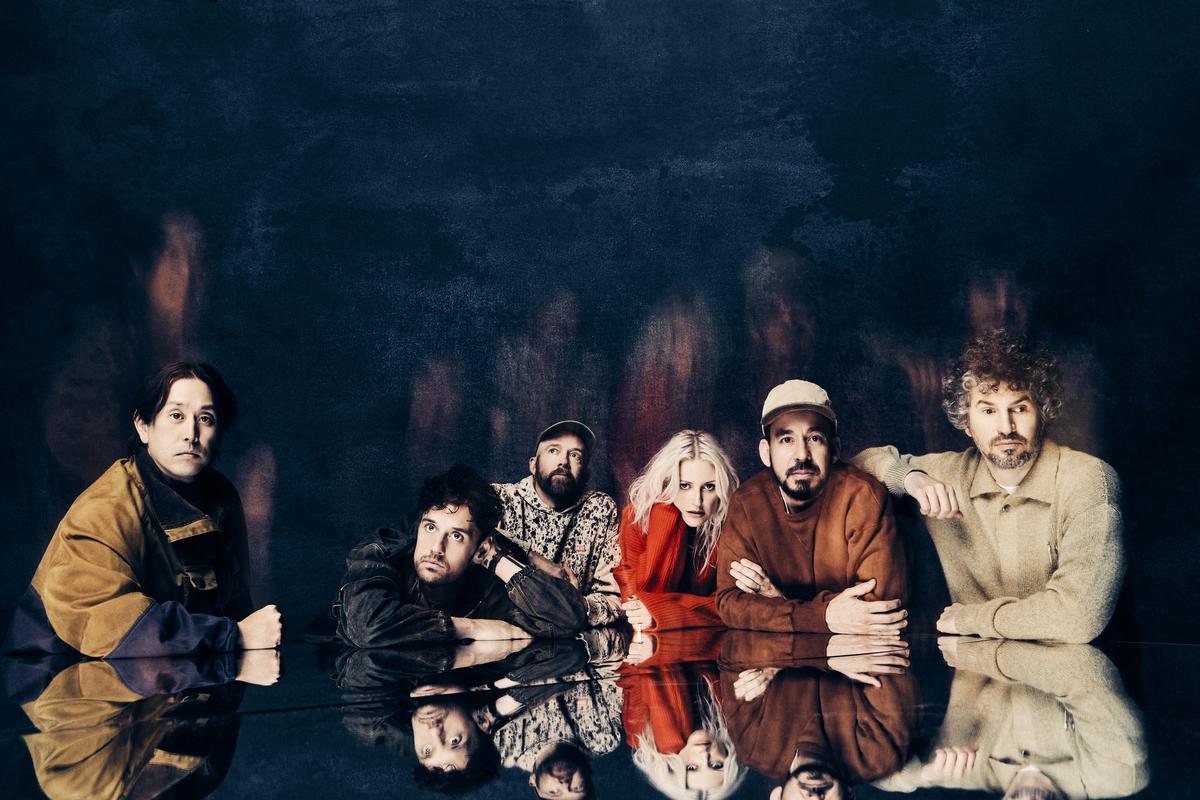
Linkin Park
| Photo Credit:
Warner Records/ Jimmy Fontaine
“This will be my first time in India and I’m excited,” he says over a video call from Abu Dhabi. “I’m excited not only to play the shows but even just to get to experience a tiny bit of Indian culture, the feel of being there.” For a band with a global fanbase that has followed them across continents for years, the fact that India remained out of reach stayed with them. “They [Indian fans] have come and seen us at places all around the world but it’s finally time for us to come and see them there.”
The sense of serendipitous timing comes up again when Farrell talks about the band’s return in 2024. The surprise livestream was not the result of a clean decision or a neat roadmap, rather it followed years of emotional uncertainty after Bennington’s death. “From 2017 to 2021, there was a lot of stuff to figure out and work through,” he says. “Obviously, losing Chester was really hard for all of us.” The early years were about family, mourning, and recalibrating life away from the band. Public questions came faster than internal answers, and Farrell recalls how his stock response became a way of protecting that uncertainty: “I’d be really surprised if we do anything in the next year. And I’d be really surprised if we don’t do anything in the next 10 years.”

The prodigious return began devoid of ambition. Farrell had started meeting with the band’s founder and vocalist Mike Shinoda, and turntablist Joe Hahn, simply to write. “We were just having fun,” he says. There was no pressure to revive the band name, nor any sense of obligation to recreate its legacy. “It was more just, let’s just make stuff and see what that becomes.” That openness allowed something familiar to re-emerge naturally. “It was undeniably for us; it had the Linkin Park sound and it had our soul.” When the band’s fresh lead vocalist Emily Armstrong and drummer Colin Brittain entered the picture, the chemistry was immediate. “We couldn’t get rid of Colin and Emily,” Farrell laughs. “They were the people that we gravitated towards.”
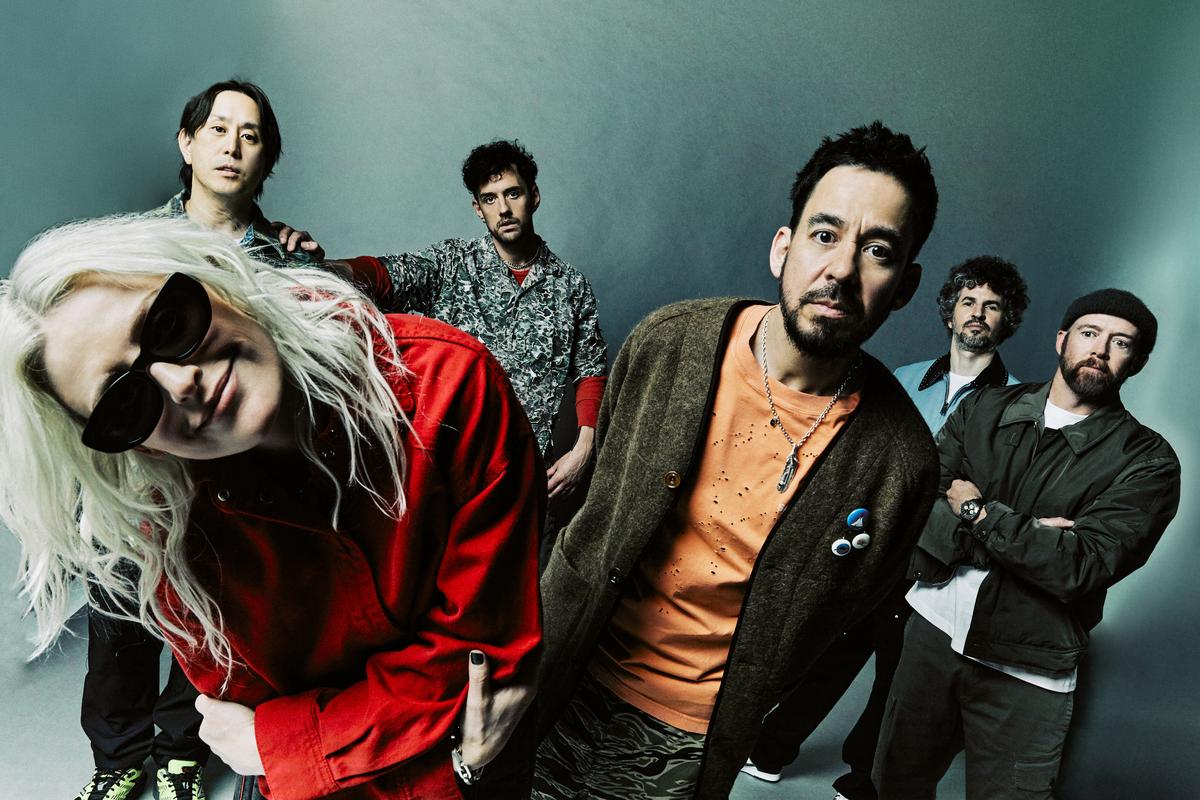
Linkin Park
| Photo Credit:
Warner Records/ Jimmy Fontaine
There is an unmissable irony in Farrell’s long-standing nickname, ‘Phoenix’, resurfacing during this chapter. He acknowledges it with a chuckle, “a total rising from the ashes”, though he explains how the nickname itself has faded with time. “More and more now I’m just Dave than ever before.” What hasn’t faded is his awareness of how rare this second life of the band feels. “We got a chance to do something on a scale that is insane and unimaginable, and I feel so fortunate for that. For it to work a second time almost feels like winning the lottery twice.”
From Zero carries the weight of the band’s history without sounding trapped by it, folding together the heaviness, electronics, and melodic instincts that defined different phases of their catalogue while leaving room for new voices to reshape the contours. Looking back, Farrell resists the idea that the band had clarity early on. “It feels like you’re wandering around in the wilderness until you reach this awesome spot,” he says.
Armstrong’s arrival marked the most visible change. Formerly the frontwoman of Los Angeles rock band Dead Sara, she came in with a raw, high-voltage vocal style built on grit and emotional swing, stepping into a role defined for nearly two decades by Bennington’s singular presence. Farrell speaks about her with care and specificity, steering away from comparisons. “You never know until you really sit down with somebody and work with them how much they can deliver,” he says. What surprised him was her range. “She can sing heavy, she can sing stuff that’s emotive and strong, and then in the next line, sing something that’s so beautiful and soft.” Beyond technique, it was her magnetic presence that seemed to have an immediate effect at home. “My three teenage daughters… Emily was immediately to them the coolest person in the world.” Farrell laughs that whatever lingering credibility he had at home vanished the moment Armstrong entered the picture, dropping him several notches down the coolness ladder overnight.
Returning to the road brought its own recalibrations. Farrell says the challenge wasn’t remembering how to play together, but remembering how to endure touring itself. “You grow older, and you grow a little less resilient.” Early routing was punishing by design, a way to reintroduce the band globally. He recalls jumping from New York to Germany, then the UK, on to Korea, back through Texas, and down to Brazil in rapid succession, a stretch of dates that barely allowed the body to catch up. “It was just bonkers.”
Their evolving setlists had also become a tricky balancing act. Farrell calls it “a dance” between what the band loves and what the audience hopes for. Perfection, he admits, is impossible, and someone was always bound to miss their favourite song. But the goal was consistency and intention. “We want to put our best foot forward and play the best presentation of our music that we can.”
Even after decades, nerves still find their way in — sometimes through muscle memory misfiring. Farrell recalls recently playing the outro of ‘One Step Closer’ in a way he had not done in over a decade. “There’s no reason why my brain decided to do that.” He laughs, calling it “control alt delete”.
With the Grammys on the horizon just after the India shows, Farrell sounds appreciative and self-aware. From Zero is nominated for Best Rock Album, while ‘The Emptiness Machine’ is up for Best Rock Performance, adding to a history that has already seen the band win multiple Grammys earlier in their career. “It’s always nice to be nominated,” he says, before admitting that his excitement is largely for the band’s newest members. “I especially hope we win for Colin and Emily’s sake. They don’t have a Grammy yet.” The ceremony itself however, sits outside his comfort zone. “I sometimes get nervous and stressed out and anxious about putting on Grammy clothes and walking red carpets,” he adds. What steadies him is simpler. “I get excited about being in [countries like] India and playing shows for the first time.”

As for what comes next, Farrell keeps expectations deliberately loose. Touring pauses in June, after which the band plans to retreat back into the studio, writing and experimenting without deadlines hanging overhead. He is candid about the pace. “Our creative process is not fast, to say the least” he says, chuckling at the understatement. Here’s hoping it arrives sooner rather than later, though Linkin Park fans have learned their patience clearly finds meaning in the end.
Linkin Park is bringing the From Zero World Tour to Bengaluru for a special standalone concert on January 23, at Brigade Innovation Gardens. It will then headline Lollapalooza India 2026 in Mumbai on January 25, at Mahalaxmi Race Course. The events are produced and promoted by BookMyShow Live.

