
It was in 2009 that a disgruntled Sachin Khedekar stirred the conscience of the Marathi-speaking commoner with Mahesh Manjrekar’s punchy, deeply felt social-drama, Mi Shivaji Raje Bhonsle Boltoy. When Khedekar invoked the glory of the charismatic Maratha king to display the decay of Marathi language and culture, the concerns felt instantly palpable; the actor’s ability to merge collective anguish into his singular, hefty voice touched hearts and sparked a thought. The approach was theatrical; the fourth wall blurry. Cinema became a direct carrier of concerns.

Khedekar circles back to the same space with Hemant Dhome’s Krantijyoti VidyalayMarathi Madhyam. The anchor point here, however, is not anger but worry. He plays Shirke, the sensitive headmaster of an old, frail Marathi-medium school in the coastal town of Alibag, Maharashtra. The film opens with glimpses of the school’s final day, as it is soon to be demolished to make way for an English-medium international institute. Shirke is visibly unsettled and calls upon his old students to save the school, but they are taken in more by nostalgia, not realising the larger socio-political implications.
Krantijyoti Vidyalay Marathi Madhyam (Marathi)
Director: Hemant Dhome
Duration: 149 minutes
Cast: Sachin Khedekar, Amey Wagh, Prajakta Koli, Siddharth Chandekar, Kshitee Jog, Kadambari Kadam, Harish Dudhade, and Pushkaraj Chirputkar
Synopsis: As a 90-year old Marathi-medium school in coastal Maharashtra faces closure due to preference for English education, the dedicated headmaster calls upon former students to save their beloved institution
It is in these early portions that the film struggles to find its footing. The interpersonal stories of these childhood friends gets more attention, as we are transported back in time to grainy, obscure flashbacks establishing their connection with the school. It often feels like two films, where the thread about the reunion of friends doesn’t quite merge with the social drama that it also aims to be. The co-existence is jarring, as some of these exchanges end up becoming didactic without resolve. An extended discussion takes place early on between the bunch about the practicality of having Marathi schools and the directness in the dialogues lessens the charm.
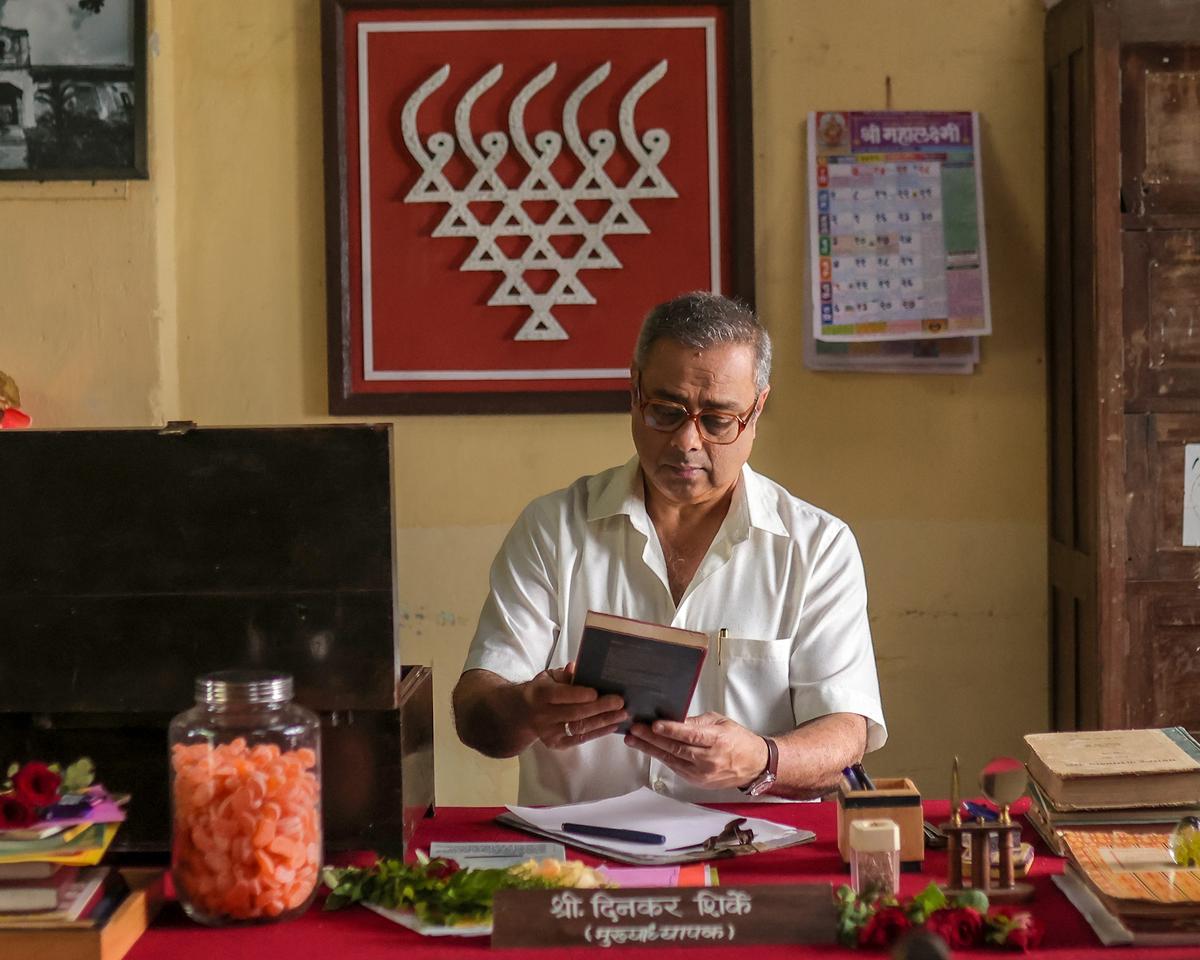
Sachin Khedekar in the film
| Photo Credit:
Special Arrangement
All the while, the film maintains its rhythm with recurring gags, particularly those involving Amey Wagh, who amusingly plays Baban, a charming townsman with a distinctive Marathi accent. His conversations with his son, who is in kindergarten at an English-medium school, are as delightful as they are introspective, highlighting the importance of primary education in the mother tongue.
Along with Khedekar, Wagh binds the film together with his crackling presence. Even the visuals bring in a sense of warmth, coupled with a mindfully designed background score. It is also music that fuels the film back from rough patches. Like the song, ‘Swargat Akashganga’, whose poetic verses later become part of a conversation, sending the characters down a path of realisation.
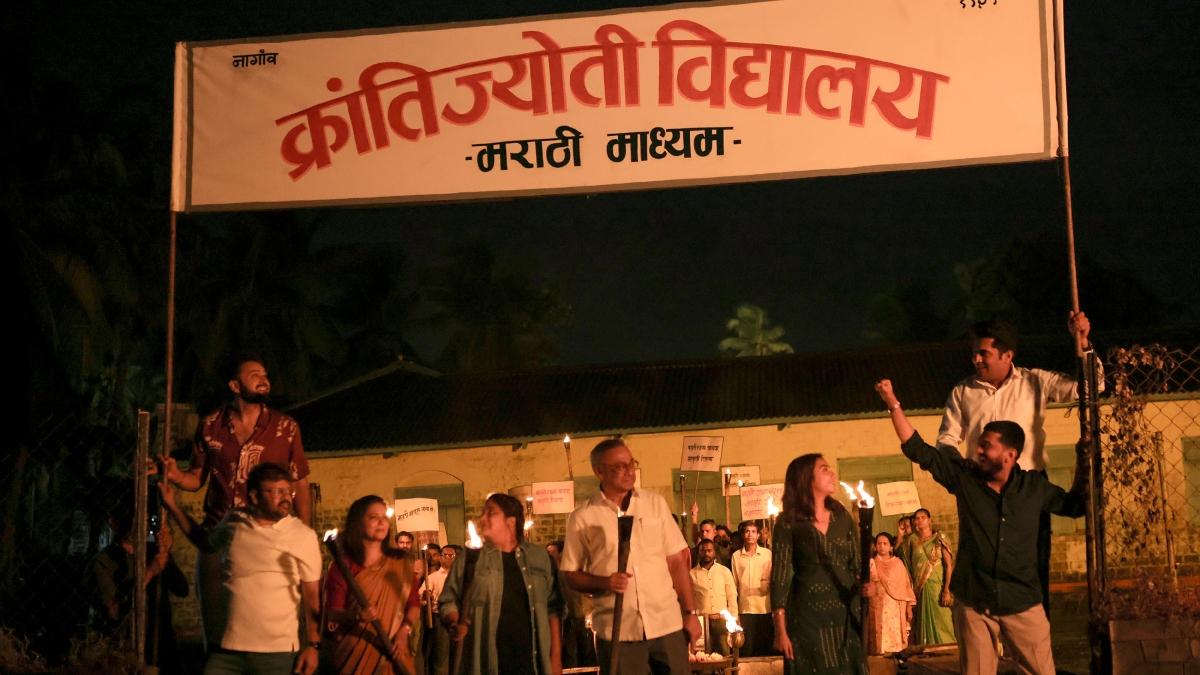
A still from the film
| Photo Credit:
Special Arrangement
The film picks up momentum late into the second half with another haunting melody, ‘Haakamari’ that prepares for an emotive final act. Khedekar gets into action as Shirke, explaining the decline of Marathi language and Hemant brings a host of timely, evocative points. A long monologue follows, and this time the substance carries real weight, as Shirke addresses us with unwavering firmness. It is popular, message-driven cinema at its optimum: talky, assertive and effective.

Krantijyoti Vidyalay begins to really open up in the glorious finale. Composers Harsh-Vijay place their music as a subtext to let the themes reverberate through their frantic mix of folk sounds and sweeping vocals. The intensity of the music takes the film to an almost epic-like quality. It ends on a hopeful note, passing the baton to take the conversation ahead, despite the grim reality of regional schools across the country. More than fifteen years after Mi Shivaji Raje Bhonsle Boltoy gave a provocative lesson about embracing local identity, the reality has changed little for the upkeep of the language. Social cinema can be thoughtfully propulsive, but when the lights come on, how long does the impulse survive?
Krantijyoti Vidyalay is currently running in theatres

