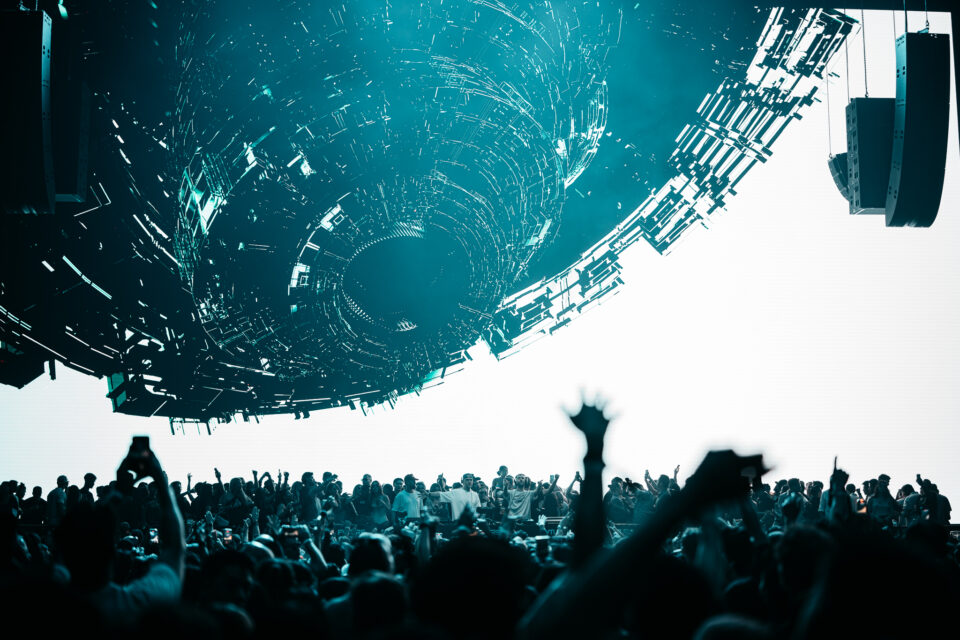
As soon as I step onto the concrete floor of Bangkok’s FVTURE hyperclub on its opening night, the bass thrums beneath my feet, while the pulsing flash of LED lights keeps my eyes in a near-perpetual blinking state. Its scale hits as hard as the bass pounding through the L2 and L2D acoustic system, with snaking, labyrinthine levels leading backstage, where a massive LED screen stretches from floor to ceiling.
Even as hostesses in shiny silver costumes slink past customers jostling for drinks at the bar, the walls remain bare, the ceilings expose hanging sockets, and the whole space has this unfinished, industrial ruggedness that almost feels intentional. And as co-founder Victor Wang points out, it is. “This is not the final version of FVTURE,” he tells Rolling Stone India. “What you’re seeing now is FVTURE 1.0 that everyone can experience in a more raw industrial look and feel.“
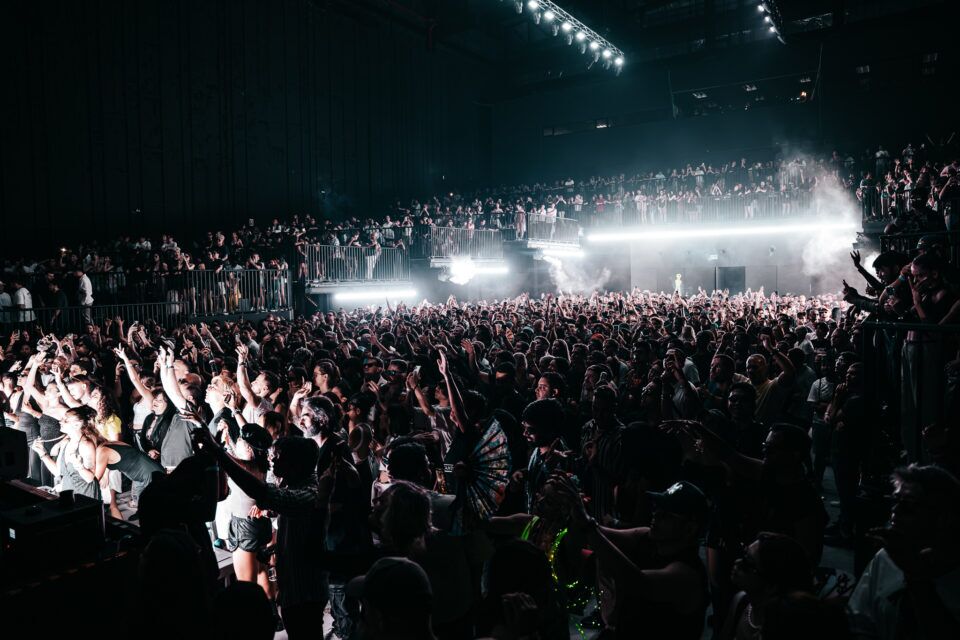
Referring to FVTURE as an evolving stage isn’t simply a design strategy. Bangkok, once known for its backpack-slingers, beer pong battlers, and nightlife that thrived on excess and the illicit, has been steadily undergoing an upheaval, one that’s pushed major EDM festivals like Tomorrowland, Creamfields, and EDC to consider it a serious stop in their global expansion plans. As the city grows into its own, FVTURE feels like an attempt to catapult that culture forward without erasing the often unruly, DIY energy that makes its nightlife simultaneously notorious and magnetic.
“We saw a lot of potential and a big gap in Bangkok: a large-scale club to put Bangkok on the world stage of electronic music was missing,” Wang says. The process of building the club, from assessing the market to locking the venue, was fairly swift, likely owing to the founders’ decision to roll it out in stages.
FVTURE also positions itself as a “hyperclub,” a cross between a high-capacity nightclub and an arena-style event space, interpreting it as a format that uses cutting-edge technology to dismantle the barriers between the artist and audience. “Hyperclubs have their own story, personality, and future, and also have a lot to do with the geographical location,” Wang says. “FVTURE has its own unique story that can’t be associated or compared to any other hyperclub. I think what will define FVTURE is the team, the ideas, and the dedication in the months and years to come.”
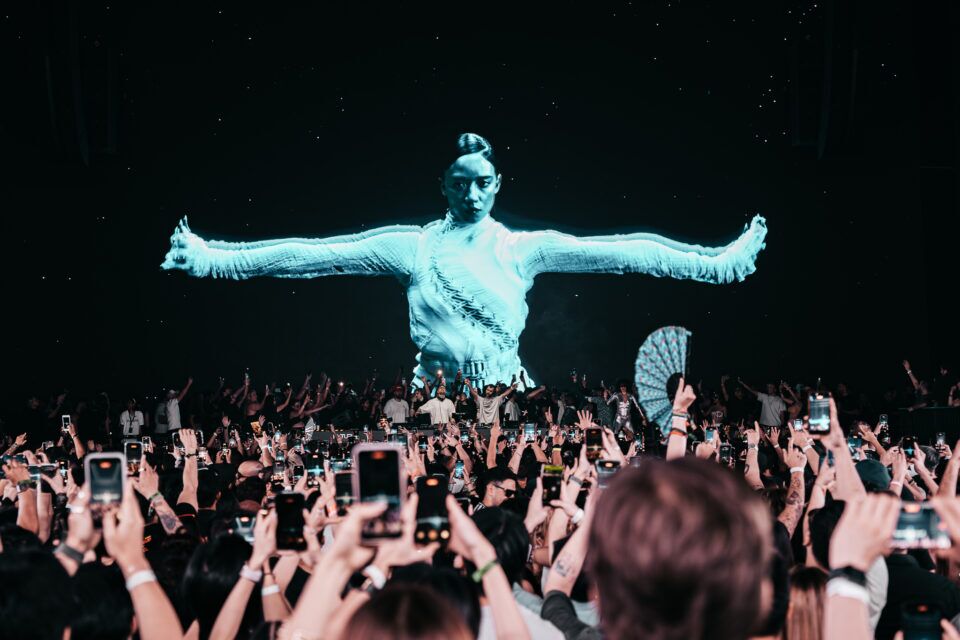

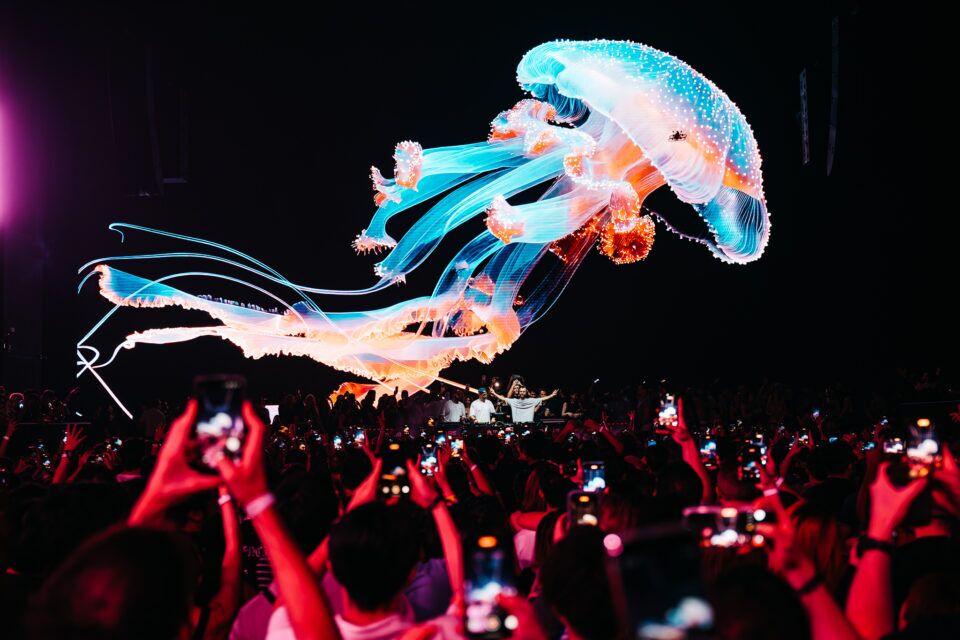
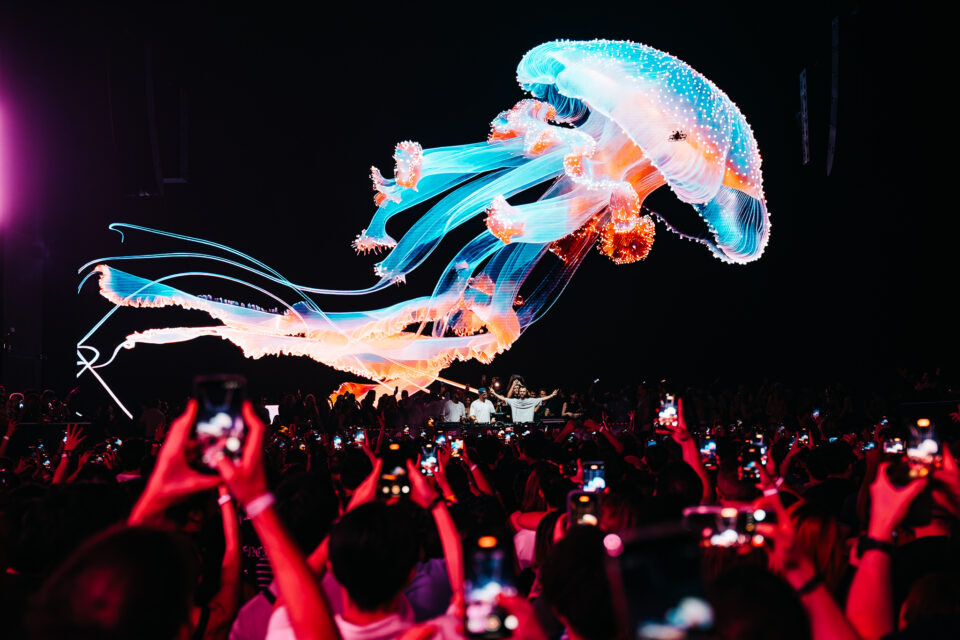
It’s on the dance floor that FVTURE’s hyperclub vision truly materializes. Backstage, opening DJ Axl Stace helms the decks, firing up breakneck jolts of EDM that set the night’s pace. By the time headliners Artbat arrive, the sprawling 4,000-square-foot venue, capable of holding 6,000 people, is packed with ravers ready to be beamed up in the DJ duo’s visual vortex.
Enlisting Artbat, the Ukrainian duo of Artur Kryvenko and Vitaliy “Batish” Limarenko, feels like yet another strategic bet. Known for sensorial performances that play out like an interdimensional interplay of sound and visuals, their humanoid figures and cyber-futuristic avatars move fluidly across FVTURE’s 360° LED canvases as the duo tears through familiar bangers like their remixes of Camelphat’s “Cola,” Monolink’s “Return To Oz,” and Gotye’s “Somebody That I Used To Know.” The set ends on a turbulently emotional high, before deck duties are handed over to Thai DJ Nakadia, who keeps the momentum going with her built-for-blast-off techno.
FVTURE’s roster mixes global dance music heavyweights like Nina Kraviz (slated to perform sometime in 2026), Camelphat (performing on Jan. 23, 2026) and Danny Avila (who performed on Jan. 10, 2026), with rising electronic acts, including Spain’s Prophecy and Brazilian‑Italian DJ/producer Nobilee. “Our main goal is diversity in music and sound. We will have a bit of everything for everyone.” From D&B to trance, everything seems to be on the table. “In general, we like to approach music by feeling as an art, not as a science.”
FVTURE doesn’t exist in isolation. Its opening reflects a recalibration happening across Bangkok’s club landscape, where size and production value are becoming just as important as lineups. Large-scale venues and superclubs like Atlas and MUIN have begun cropping up across the city, each leaning into high-impact sound systems and larger-than-life visual environments. Some are even experimenting with multi-format rooms that mirror the logic of festivals. These are spaces designed to hold bigger crowds and multiple moods at once, drawing in locals, expats, and globe-trotting ravers who want something that feels closer to a festival without leaving the city.
In the broader context of Asia, where electronic music audiences are growing faster than the infrastructure built to serve them, this shift feels consequential, especially as global touring circuits look eastward. Clubs like FVTURE feel built to absorb the city’s energy and push it back out with the bass cranked all the way up.