
As the India-US rift enters its sixth month, many continue to treat it as an aberration in an otherwise successful strategic partnership. They blame the crisis on US President Donald Trump, arguing that he has needlessly departed from decades-old American policy to pick a fight with India.
This reading is flawed. The shape of the current crisis is indeed uniquely Trumpian, thanks to his bullying tactics. However, the underlying stressors are not of his making. In fact, India and the US have been arguably headed for some kind of rupture for the past few years, regardless of who occupied the White House.
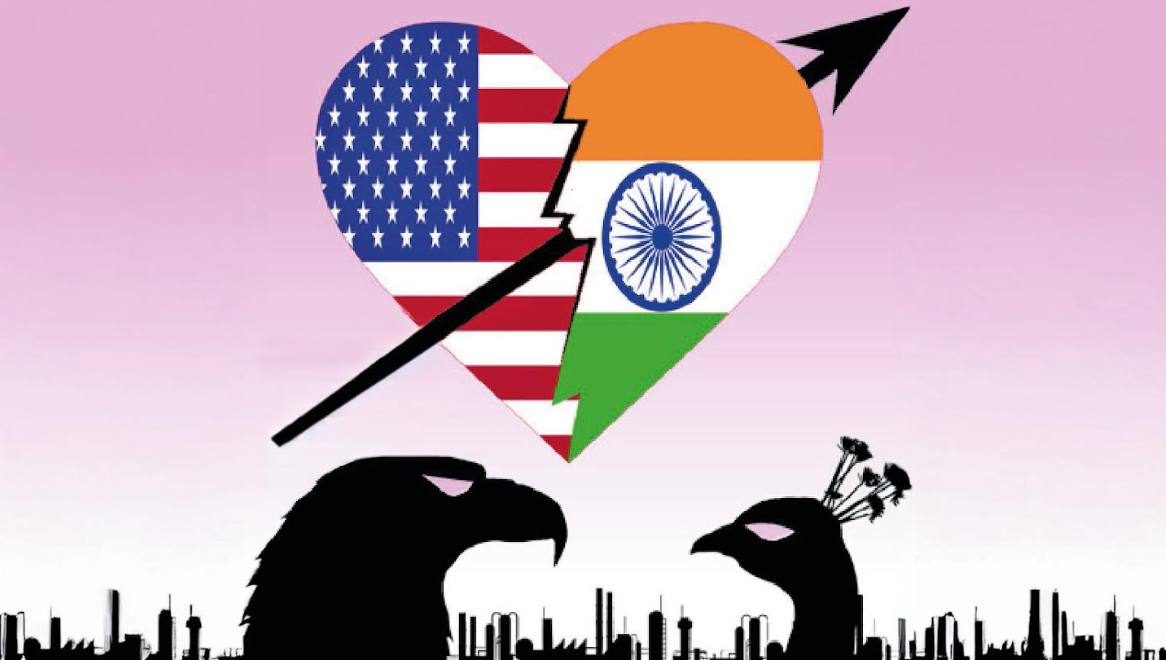
Dangerous illusion: US was never as generous with India as it likes to believe, and that belief is hurting ties
A major strain on the relationship is the American belief that it has been generous with India without getting anything in return. US policy circles often use the term ‘strategic altruism’ to describe Washington’s approach towards India. The narrative goes that the US has supported India’s rise since the mid-2000s without seeking any quid pro quo, because the emergence of India as a democratic counterweight to China would have anyway served American interests in the long run.
Countries often tend to believe that they give more to their partners than they receive. But the ‘strategic altruism’ narrative escalates this tendency to a dangerous delusion. While India has certainly benefited immensely from the partnership, Washington has never shied away from demanding reciprocity. Moreover, it has always been willing to employ a variety of tools to get New Delhi to do what it wants, including behind-the-scenes persuasion, political and diplomatic pressure, and the threat of sanctions.
The US indeed wooed India into a strategic partnership in the mid-2000s with an open-handed suite of diplomatic concessions. It gave access to advanced technology, promised to de-hyphenate India and Pakistan, and made the deal to recognise India as a de facto nuclear power. It also committed to “help India become a major world power in the 21st century.”
However, the US expected much in return. Besides encouraging India’s rise as a counterweight to China, it wanted New Delhi’s cooperation on Afghanistan, Iran and Russia, greater access to Indian markets, and a way into India’s defence imports and nuclear sector. It also hoped that New Delhi would eventually share some of its burden in maintaining security in Asia.
Washington expected recompense almost as soon as the nuclear deal concluded. It grumbled loudly when India opted for French Rafales over American fighters. It was incensed when India passed the Civil Liability for Nuclear Damage Act which the US nuclear industry didn’t like. A series of bitterly fought trade disputes broke out over Indian protectionism, foreign investments and intellectual property rights.
The Obama administration expressed its displeasure by letting the relationship cool, threatening to revoke India’s trade benefits under the Generalized System of Preferences (GSP) and consistently hammering New Delhi on trade issues. The newly elected Modi govt repaired ties only by conceding on several points such as significantly increasing its defence purchases from the US, reaching an understanding on the nuclear liability question and agreeing on key trade issues.
The US also pressed India to align with American geopolitical projects, not just in China but also elsewhere. For instance, it systematically pried New Delhi away from Tehran. The Bush administration cajoled India into voting against Iran in the International Atomic Energy Agency and pressured it to kill the India-Pakistan-Iran pipeline. The Obama administration pushed the Indian govt to scale down purchases of Iranian oil. The first Trump administration launched a “maximum pressure campaign” to further restrict India’s trade with Iran. As a result, Iran went from supplying 17% of Indian crude oil imports in 2007 to nearly zero in 2020. The US has been less successful in pulling India away from Russian defence exports, although not for lack of trying.
Yet, complaints of Indian “ingratitude” have been rising in Washington for the past couple of years. This narrative of ‘strategic altruism’ has dovetailed with the growing frustration over India’s insistence on preserving its strategic autonomy. The American establishment was dismayed when India did not seek out an alliance with the US even after its clash with China in the Galwan Valley in 2020. It was piqued at New Delhi’s refusal to side with the West in the Russia-Ukraine War.
Trump’s heavy-handed style has made the rift particularly distinctive, but his demands are the same as those of his predecessors – greater market access, lesser dependence on Russia (and Iran), and greater support to the US in its competition with China.
Throughout the current crisis, both New Delhi and Washington have signalled that they value the partnership and desire to preserve it. However, the myth of strategic altruism endangers the relationship by encouraging unrealistic expectations and resentment. The sooner Washington lets go of this illusion, the better it will be for the long-term health of the partnership.
Disclaimer
Views expressed above are the author’s own.
END OF ARTICLE

