
DakshinaChitra Museum opens Looking Southwards: The DakshinaChitra Vision of Craft, Art, and Cultural Heritage on January 9 at the Varija Gallery, offering a timely reflection on how South India’s craft traditions and modern artistic practices intersect, influence, and reshape one another.
Curated by Chennai-based art historian Shruti Parthasarathy, the exhibition draws attention to DakshinaChitra’s long-standing commitment to regional cultural heritage while questioning the conventional divide between “fine art” and traditional craft. Instead of treating these as separate or hierarchical categories, Looking Southwards places them in active dialogue, underscoring their shared social histories and material concerns.
“At its core, the exhibition seeks to historicise DakshinaChitra Museum as an institution, foregrounding its sustained commitment to the arts, crafts, and visual traditions of South India since its founding in 1996. Over nearly three decades, DakshinaChitra has consciously built a substantial collection spanning modern and contemporary art,” says Shruti.
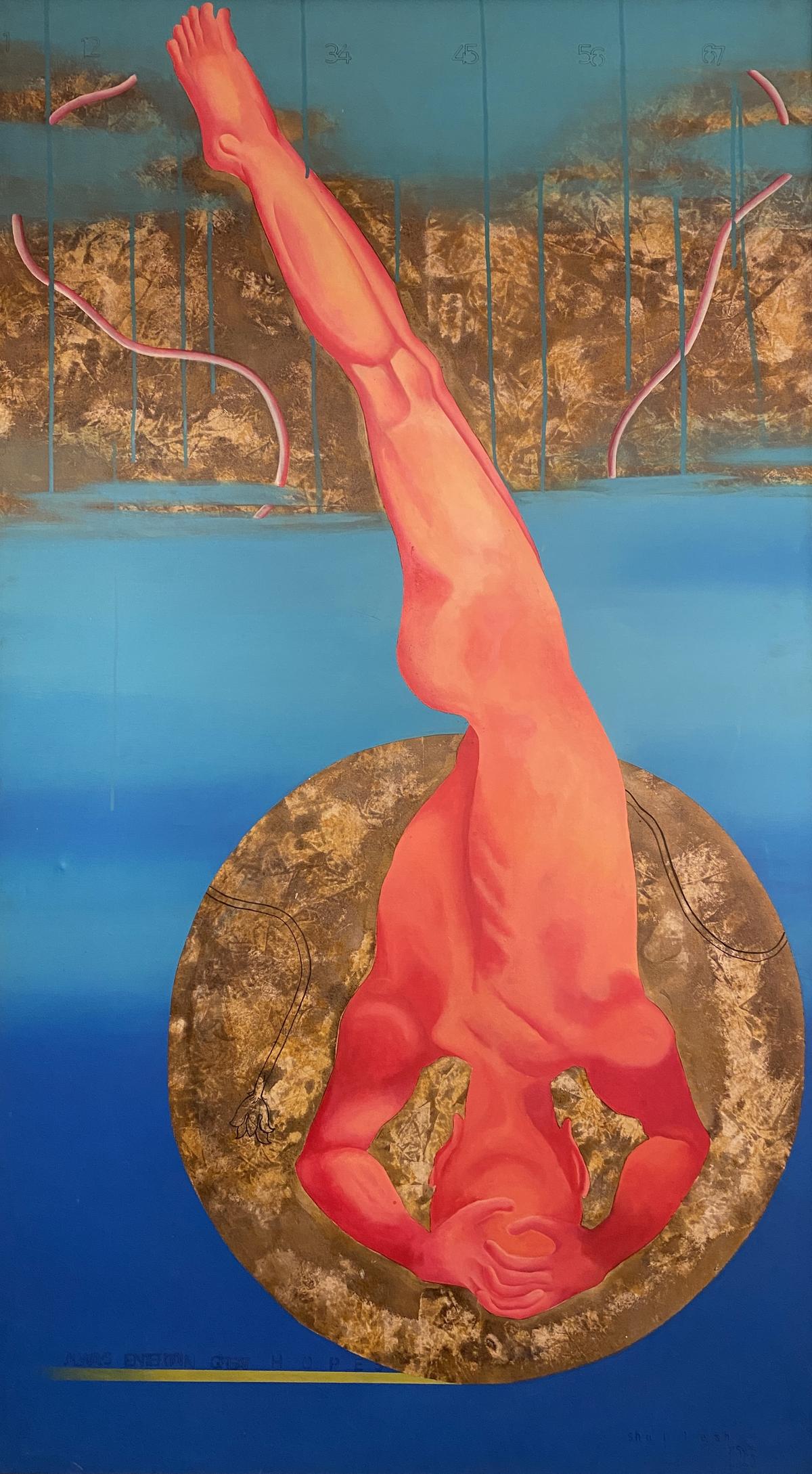
A contemporary artwork from Tamil Nadu engages with South India’s craft traditions
| Photo Credit:
Special Arrangement
At the heart of the exhibition is DakshinaChitra’s modern and contemporary art collection, developed with a conscious South Indian focus. Works by artists associated with the Madras Art Movement—key figures in the region’s mid-20th-century modernism—appear alongside later Indian contemporaries and a select group of international artists. These are illustrated through conversations with living craft practices, including secular and ritual-votive traditions, revealing the range and vitality of South India’s visual culture. ”What is particularly compelling is DakshinaChitra’s sustained engagement with artists through its various artist camps and the outcomes that emerged from them. This long-term nurturing of artistic practice by an independent institution is remarkable,” she points out.
The curator frames the exhibition through a textile metaphor: enduring craft traditions form the warp, while modern and contemporary art constitute the weft. Together, they produce a single fabric—suggesting that cultural identity is not static, but continuously woven through continuity and change. Shruti goes on to explain that the exhibition brings together a wide spectrum of South India’s craft and artistic traditions, presenting the work of traditional craft practitioners alongside artworks by artists ranging from the Madras Art Movement to contemporary practitioners from Tamil Nadu and the wider South Indian region. A key highlight is a travelling shrine dating to early-mid 20th Century, from Telangana — a box-like structure richly adorned with vibrant traditional paintings and housing an idol of a devi. Historically, such shrines were carried by nomadic musicians as they travelled between towns and cities, serving as mobile sites of devotion, performance, and storytelling.
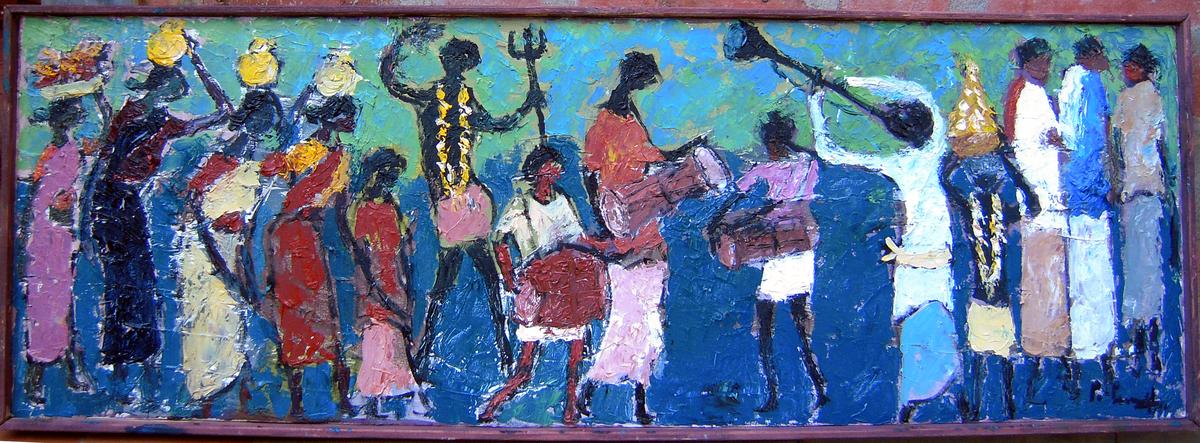
Old Man by Artist Perumal
| Photo Credit:
Special Arrangement
The exhibition also features Adivasi art forms such as Gond and Warli, presented not as static or archival traditions but as living practices that continue to evolve, responding to contemporary forms, ideas, and contexts
Looking Southwards highlights DakshinaChitra’s vision of dissolving the often rigid distinction between art and traditional craft practices, treating them not as separate categories but as interconnected modes of creative expression. Within this framework, sculpting, painting, textile weaving, and indigenous craft practices are brought together under a shared artistic continuum. As an institution, DakshinaChitra has also played a significant role in the conservation and preservation of these diverse artistic traditions of South India, while actively ensuring their relevance within contemporary cultural discourse.
The exhibition promises to be of particular interest to students, researchers, and visitors keen to understand how South India’s artistic past and present remain deeply entwined.
@DakshinaChitra Museum, Muttukadu. Varija Gallery, 10 am to 5 pm. Closed on Tuesdays. The exhibition will be on view from January 9 to February 15, and again from March 9 to March 30. Phone: 98410 20149

