
Legendary Hungarian auteur Béla Tarr, whose radical rethinking of cinematic time reshaped international arthouse practice, has died at 70 after a prolonged illness, his family confirmed through Hungary’s national news agency. Across nine feature films made between 1979 and 2011, Tarr constructed one of the most formally consistent bodies of work in postwar European cinema, defined by extended tracking shots, minimal narrative causality, and an insistence on duration as an ethical condition.
Born in Pécs in 1955 and raised in Budapest, Tarr entered filmmaking through amateur documentary work, often focused on workers and urban poverty. His debut feature, Family Nest (1979), was produced with the support of Béla Balázs Studio and shot in six days using non-professional actors. Rooted in the Budapest School’s commitment to social realism, the film depicts housing precarity with an unvarnished immediacy. Tarr later distanced himself from this period, but its material concerns never disappeared.
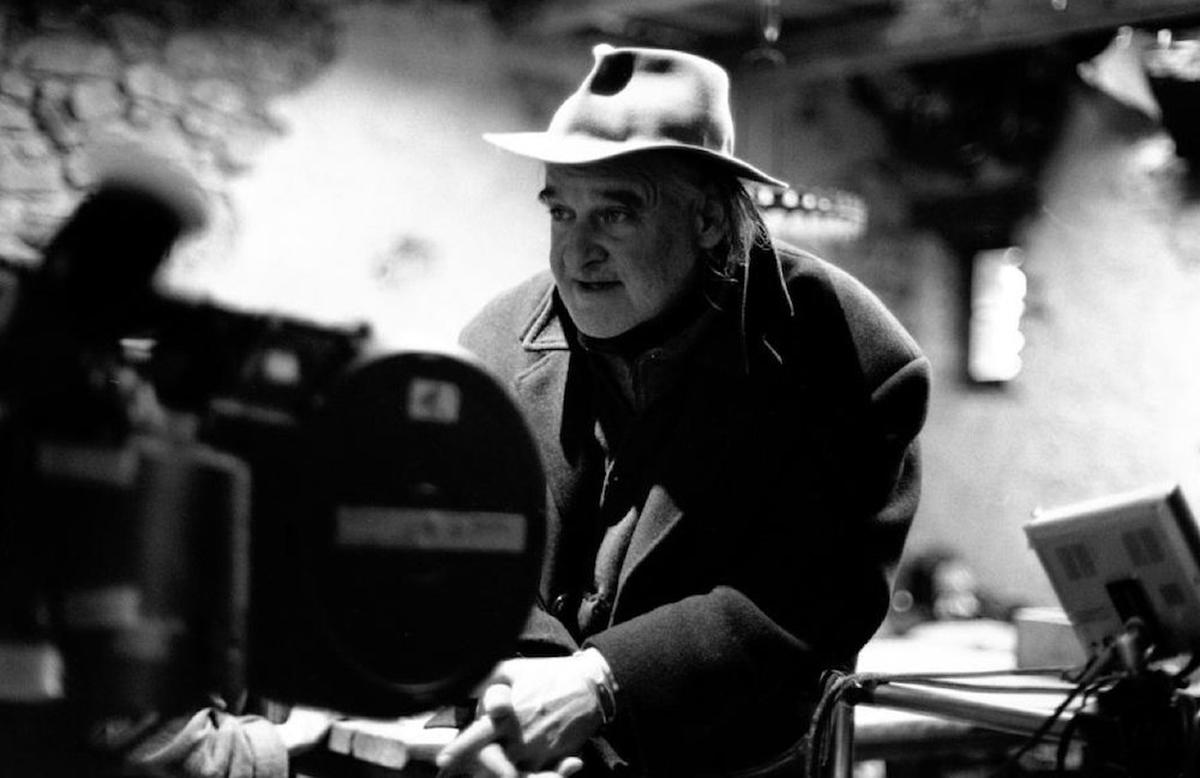
Béla Tarr
| Photo Credit:
MUBI
The decisive shift arrived in the mid-1980s, beginning with Almanac of Fall and consolidating with Damnation (1988), his first collaboration with novelist László Krasznahorkai. From this point onward, Tarr abandoned psychological motivation and conventional plotting in favour of spatial choreography and temporal pressure.
That approach culminated in Sátántangó (1994), a gargantuan 450-minute adaptation of Krasznahorkai’s novel, produced over seven years. Structured as a circular progression rather than linear narrative, the film tracks the collapse of a collective farm through prolonged observation of walking, waiting, and drinking. Tarr conceived its duration as inseparable from its meaning, refusing compression as a form of falsification. The film’s reputation grew slowly through festival circulation and critical advocacy, most notably from Susan Sontag, who championed it as a corrective to modern cinema’s impatience and famously declared she would gladly watch it once a year.
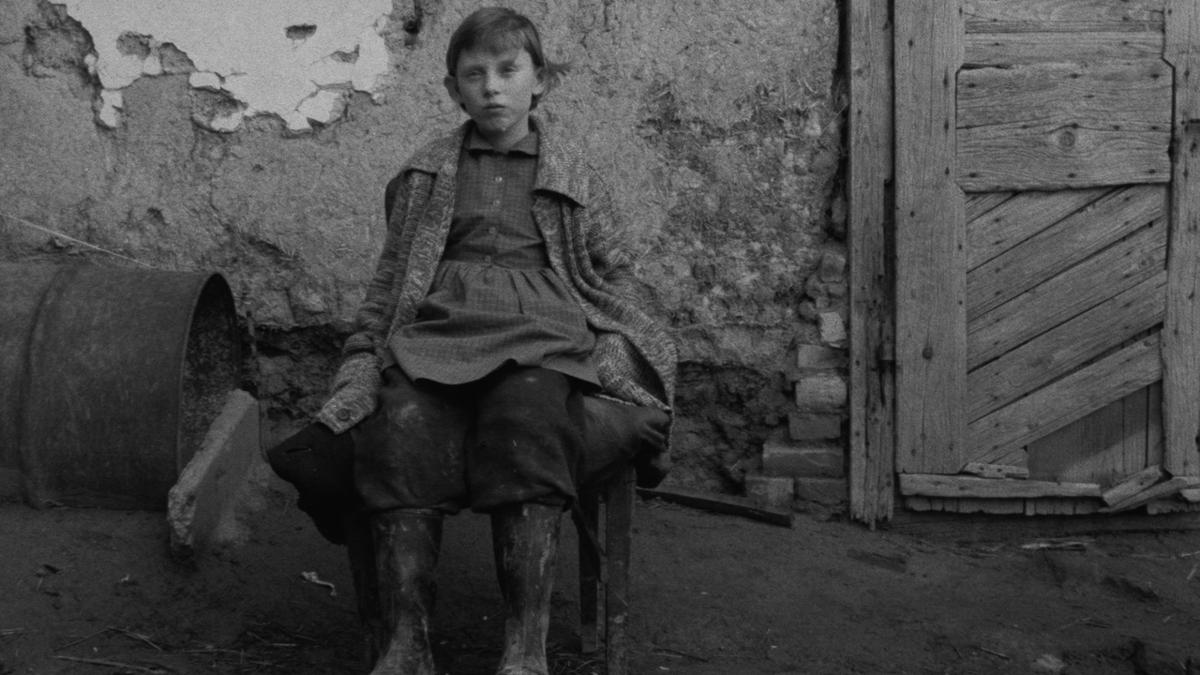
A still from ‘Sátántangó’
| Photo Credit:
MUBI
Tarr’s later films maintained the same formal approach established in the 1990s. Werckmeister Harmonies followed the arrival of a traveling exhibition in a provincial Hungarian town and culminated in a violent riot, filmed through extended tracking shots and minimal cutting. The Man from London, adapted from a novel by Georges Simenon, was his first direct engagement with crime fiction. Production on the film was interrupted by financing disputes and the suicide of its producer, Humbert Balsan, leading to delays before its eventual premiere at the Cannes Film Festival.

His final feature, The Turin Horse, premiered at the Berlin Film Festival, where it won the Silver Bear Grand Jury Prize. Shortly after its release, Tarr announced his retirement from feature filmmaking, stating explicitly that repetition held no interest for him.
In the years that followed, Tarr redirected his attention toward pedagogy and expanded forms. He founded film.factory in Sarajevo in 2012, an unconventional film school structured around mentorship rather than curriculum. He continued to work across installation and performance, including Till the End of the World at Amsterdam’s Eye Filmmuseum and Missing People, a large-scale participatory project involving Vienna’s homeless population.
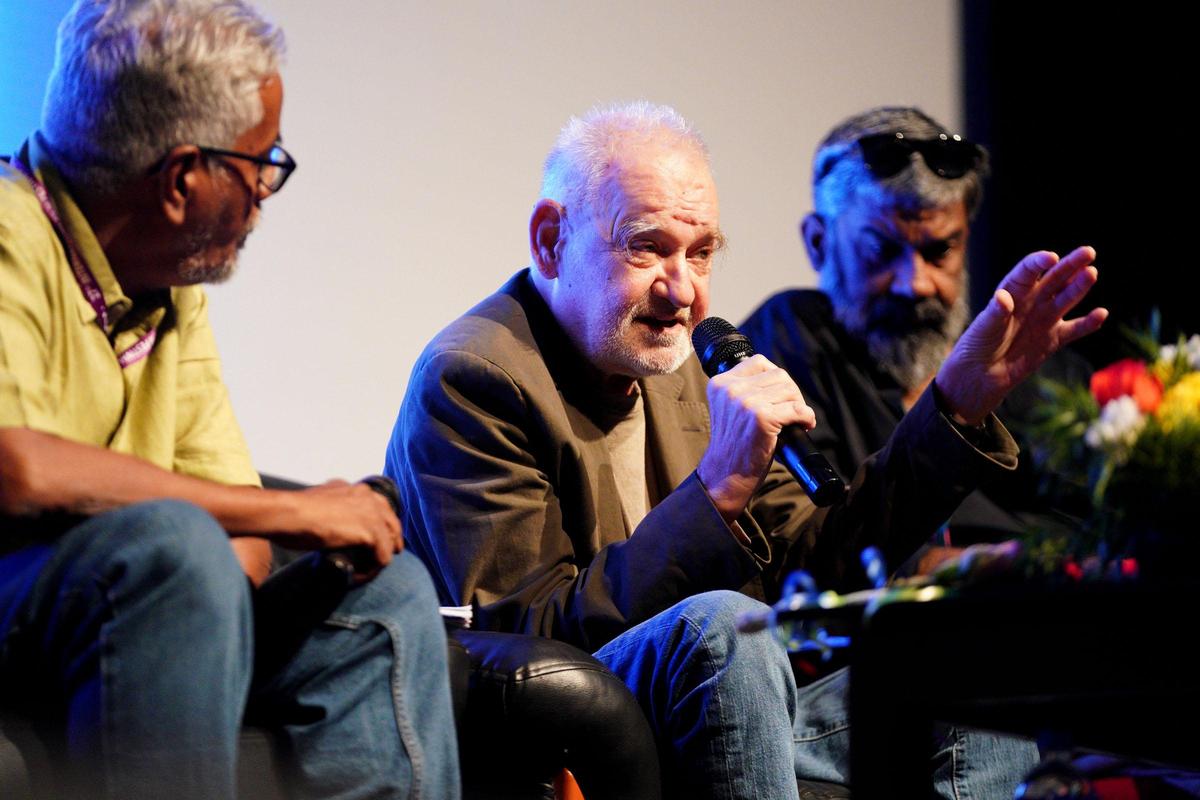
Hungarian Director Bela Tarr delivering the Aravindan Memorial Lecture as CS Venkateswaran and Renjith look on at the 27th IFFK in Thiruvananthapuram
| Photo Credit:
Special Arrangement
Tarr’s formal approach has been cited directly by several filmmakers working in European and American arthouse cinema since the 1990s. Gus Van Sant has repeatedly named Tarr as a key influence on his so-called death trilogy — Gerry, Elephant, and Last Days — particularly in their use of long takes, minimal dialogue, and reduced narrative emphasis. Jim Jarmusch’s later films have similarly adopted extended observation and deadpan pacing associated with Tarr’s work.
Directors linked to the contemporary slow cinema movement, including the likes of Pedro Costa, Carlos Reygadas, and Apichatpong Weerasethakul, have acknowledged Tarr’s influence, either through direct collaboration at film.factory or through public statements and curatorial writing. His teaching role formalised that influence, placing Tarr in direct contact with younger filmmakers. My own first real encounter with his influence came indirectly, through Lullaby for the Mountains, the debut feature by his former student Hayk Matevosyan. The method was clear, practical, and unromantic, bearing the unmistakable mark of Tarr’s pedagogy, trusting the weight of time to do the work.

Politically, Tarr remained outspoken, identifying as an anarchist and publicly criticising nationalist leaders across the world. He condemned Hungarian prime minister Viktor Orbán, whom he described as a national disgrace, and extended similar denunciations toward Marine Le Pen in France and Donald Trump in the United States. These statements were part of a long-standing position shaped by Hungary’s post-communist drift toward authoritarian governance, which Tarr viewed as a betrayal of both historical memory and moral obligation.
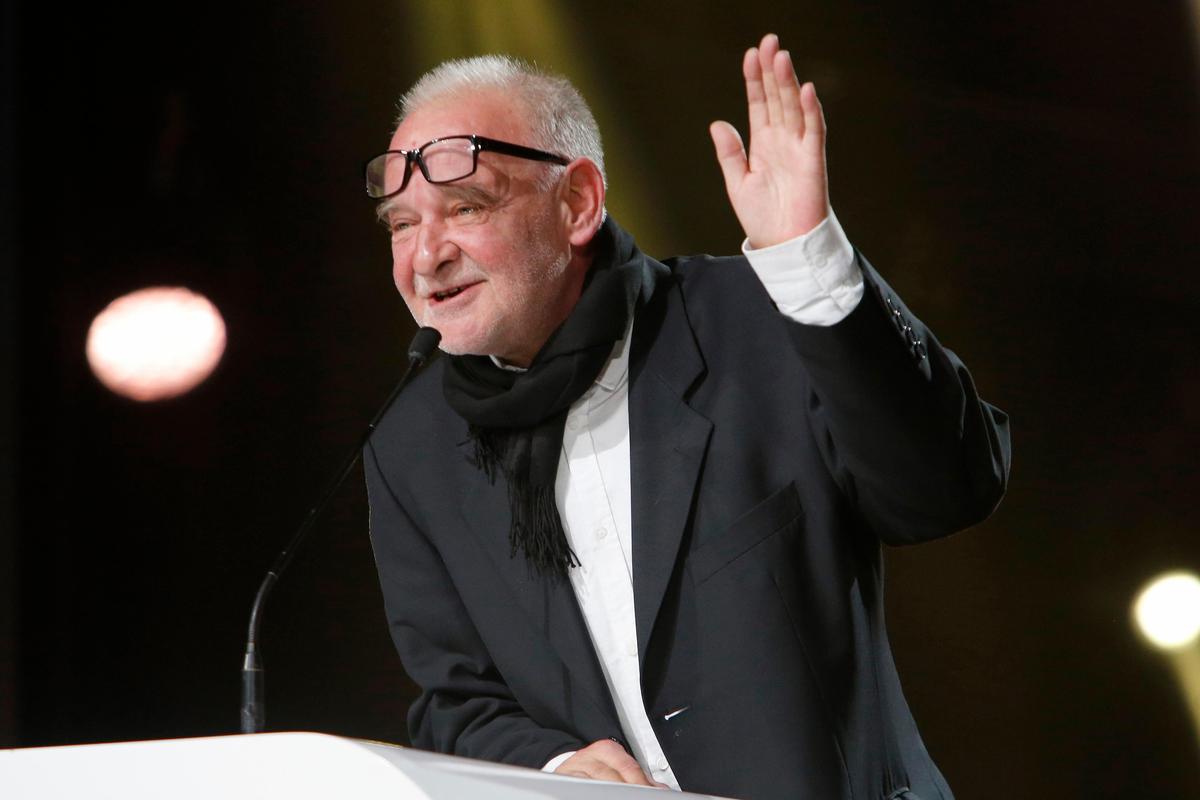
Bela Tarr attends the closing ceremony of the the 16th Marrakech International Film Festival in Marrakech, Morocco, 2016
| Photo Credit:
AP
For Tarr, cinema was inseparable from moral responsibility, and this belief found its clearest articulation in 2011, when he joined the board of Cine Foundation International and issued a forceful public statement protesting the imprisonment of Iranian filmmakers Jafar Panahi and Mohammad Rasoulof. In the statement, Tarr framed filmmaking as an essential component of universal human culture and described state repression of artists as an attack on humanity itself. He characterised Panahi’s crime as nothing more than honest depiction, insisting that such honesty carried an obligation shared by all filmmakers.
In later years, Tarr continued to align himself with international political causes. In December 2023, he joined dozens of filmmakers in signing an open letter published in Libération calling for a ceasefire in Gaza, the protection of civilians, humanitarian access, and the release of hostages.

For over a year, a friend of mine has been trying to convince me to watch Sátántangó. Seven hours, uninterrupted — the scale of the commitment is self-evident and beyond negotiation. I have delayed each time, aware of what the film demands and wary of beginning something whose reputation has long eclipsed casual viewing; Béla Tarr occupies a strange place in film culture where watching his work is treated as a test of stamina rather than a decidedly normal act of cinephilic curiosity. With his death, that long avoidance stops serving any purpose. If (when) I finally commit to Sátántangó now, it would mean stepping into a formative work that helped set the terms for slow cinema as we know it. The time he asked of us now feels like the only proper way to meet him.

