
Rima Das returns to the A-lister festival, Berlinale, for a third time, since Bulbul Can Sing (2019) and Village Rockstars 2 (2025). The Berlin International Film Festival, now in its 76th year, has been an alma mater of sorts for her alongside the Toronto International Film Festival (TIFF). Her latest feature, Not a Hero, is set to have its World Premiere at the 76th Berlinale 2026, taking place from February 12 to 22, in the Generation Kplus Competition.
Generation Kplus (formerly Kinderfilmfest) and Generation 14plus, two competition programmes, screen international cinema for young audiences and others. With contemporary films exploring the lives and worlds of children and teenagers, Berlinale Generation was first presented in 1978, as the Kinderfilmfest (“Children’s Film Festival”).
This year, two Indian-origin filmmakers are premiering their films in Generation Kplus; along with Das, there is the London Film School’s Amay Mehrishi’s graduation film, the UK-India produced short film Abracadabra, shot entirely in a school bus. “It feels like a magical dream to premiere our film at the prestigious Berlin International Film Festival,” says Mehrishi.

A still from the feature film ‘Not a Hero’, by Rima Das.
| Photo Credit:
A Flying River Films Production
Das, who is excited for her premiere in this category, says, “The Generation section understands cinema about young people, films where emotion leads the way, and meaning unfolds slowly, in its own time.” She adds, “Returning to Berlin for the third time feels deeply special. Berlinale has been an important part of my journey, and to be back with Not a Hero is both humbling and exciting. This film speaks to a new generation, and I’m grateful to share it once again with Berlin’s incredibly open and engaged audience.”

A still from the short film ‘Abracadabra’, by Amay Mehrishi.
| Photo Credit:
Special Arrangement
Mumbai-based Das’s humility is her strongest feature. She says that since she’s not from a film school, she hasn’t watched many films. And, perhaps, that’s why what she brings to us is fresh, not formulaic. She writes, directs, and edits. For a one-woman army, ensuring that Assamese cinema consolidates its pride of place globally, is nothing short of an impeccable achievement.
Local is global
Her National Award-winning feature film Village Rockstars (2017) has inspired many amateurs to pick and wield the camera at their own roots and surroundings, finding stories within and around them. The impact of Das’s soft realism in cinema is everlasting. Since then, she hasn’t paused from exploring the stories of her region through a socio-environmental lens. The locational, thematic, and linguistic continuation of her films is a larger and deeper commitment than just a one-time hit and moving on to the next saleable idea. Her films, too, have since continued to gain international limelight, with awards in tow.
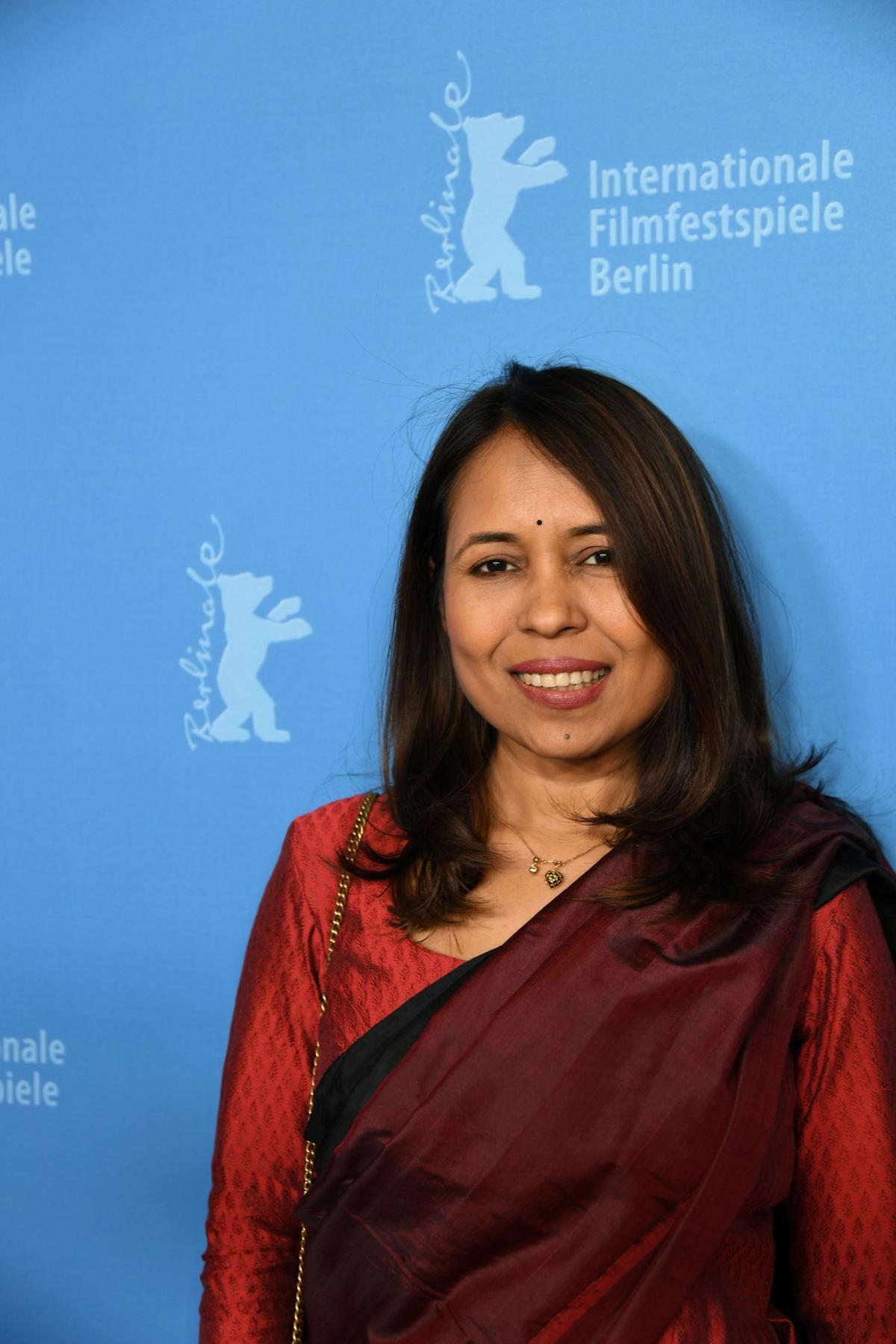
Rima Das at Berlinale 2025.
| Photo Credit:
Getty Images
In 2023, she was nominated for the prestigious Asia Pacific Screen Awards (APSA) for Best Director, along with Celine Song, Liang Ming, and others. APSA is the region’s highest accolade in film, with films from 78 countries and areas that year. APSA is endorsed by foundation partners, the Paris-based UNESCO, and the FIAPF (International Federation of Film Producers Associations).
In 2024, her Village Rockstars 2 won the Kim Jiseok Award at the 29th Busan International Film Festival.The same year, she was picked as a member of the Academy of Motion Picture Arts and Sciences (AMPAS).
ALSO READ: ‘Village Rockstars’ breaks many stereotypes
About ‘Not a Hero’
Set between the city and the countryside, Not a Hero follows a young boy who navigates an unfamiliar world that quietly reshapes his understanding of strength, masculinity, and belonging. The film’s logline notes: “Exiled from city comforts to his ancestral village, a boy encounters his bitter aunt, befriends a horse, and joins wild local children on untamed adventures — discovering the beauty of life and a courage he never knew he had.”

A poster for Not a Hero, by Rima Das.
| Photo Credit:
Courtesy A Flying River Films Production
Written, directed and edited by Das and produced by her A Flying River Films Production, in association with Akanga Film Asia, Not a Hero features Bhuman Bhargav Das, who previously appeared in Das’s pandemic film Tora’s Husband (2022), alongside actors Sukanya Boruah, Mrinmoy Das, and a cast of non-professional performers. Aditya Varma has helmed the camera; sound design is by Shreyank Nanjappa and music by Pallab Talukdar. She has co-produced the film with Fran Borgia and Jaya Das.
About her latest film, Das says, “Not a Hero grew from my curiosity about how children understand strength when they are not guided by fear or expectation. I wanted to explore a different kind of courage, one rooted in kindness, awareness, and the ability to adapt and coexist with the world around us. The film opens a space for reflection across generations.”
World through the child’s gaze
With Tora’s Husband, the two-time National Award-winning filmmaker left the village and entered the urban landscape. During the film’s making, she lost her father to COVID-19. Personal grief shaped that film. With Not a Hero, she returns to the village and to an adolescent protagonist — a demography we have come to associate with her films. Much like how we remember the child protagonists — who were never precocious — in Satyajit Ray’s cinema, we recall Das’s adolescent characters. Das’s films in Assamese, besides a handful of Marathi and Kannada independent cinema, have kept the Iranian cinematic tradition alive of probing the adult world through a child’s gaze.
The filmmaker had earlier said to this writer that she’s seen five-six-year-olds coming to the cinema halls, adding, “If we encourage children and youngsters in India as well, in a few years we will have audiences with evolved taste. The indie film community, while telling the stories they love, will also need to work on building the audience and an ecosystem.”

Of identity and guilt
Mumbai-resident Mehrishi previously worked on a short documentary, Shadows That Speak, featuring Drew Colby, the only hand-shadow artist in the UK. His short Abracadabra is based on a school bus ride home, about a 12-year-old Agastya who is left adrift when his best friend chooses to sit elsewhere. A small shift quickly spirals into a quiet storm of identity, guilt, longing and a magic trick.
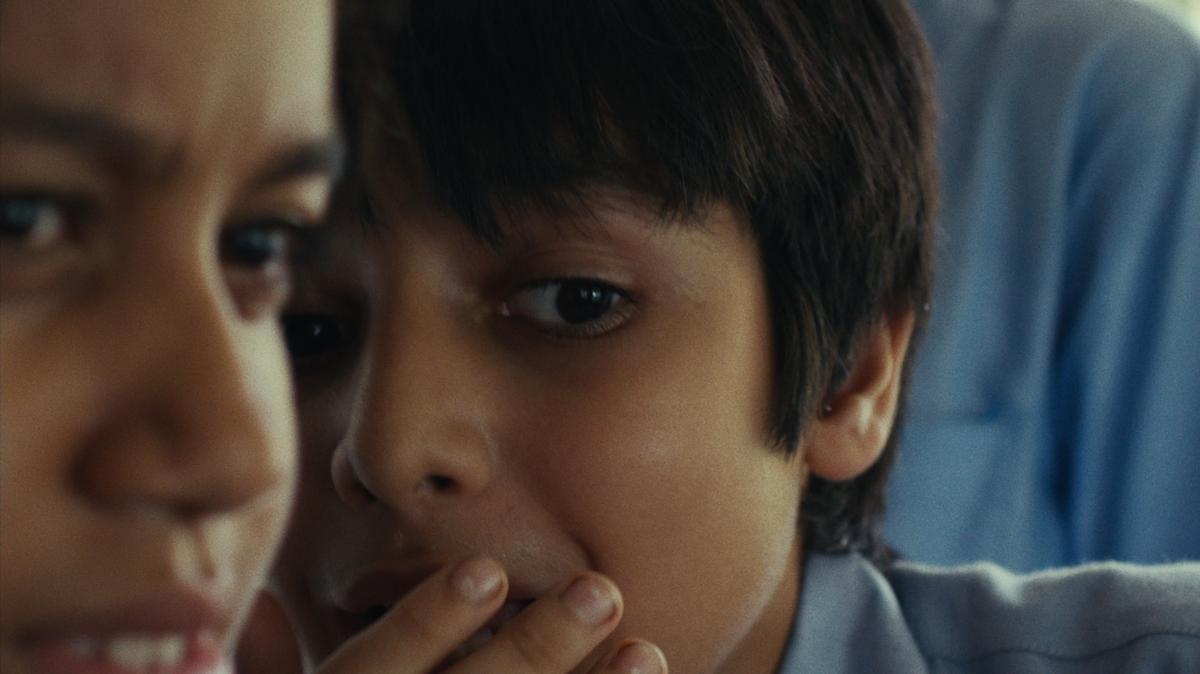
A still from the short film’ Abracadabra’, by Amay Mehrishi.
| Photo Credit:
Special Arrangement
He dived into his personal experience to write this story. “I was always the last kid left on my school bus home and this idea stemmed from that journey of chaos to silence,” says Mehrishi. “I wanted the film to present an intimate, observational portrait of a microcosm that brings out the transient nature of movement, of how an everyday activity could have a plethora of stories embedded within. It reveals tenderness, rituals of masculinity, and small, quiet acts of rebellion.”
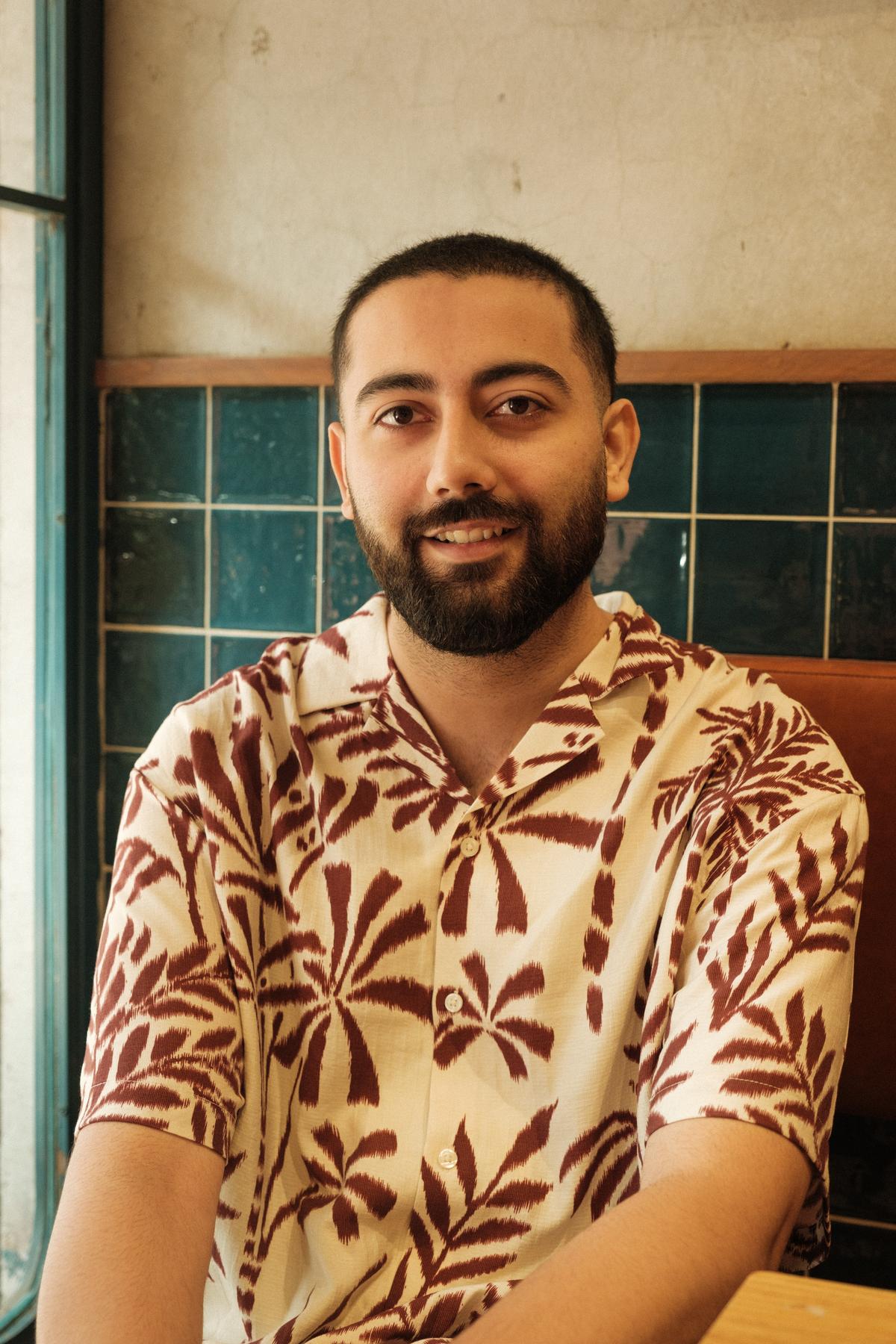
Amay Mehrishi.
| Photo Credit:
Aditya Sharma
The young filmmaker, who is writing a feature documentary, says, “Through the eyes of young children, I hope to capture the complexity of how they absorb the world around them and carry a sense of longing before they have the words for them.”
tanushree.ghosh@thehindu.co.in

