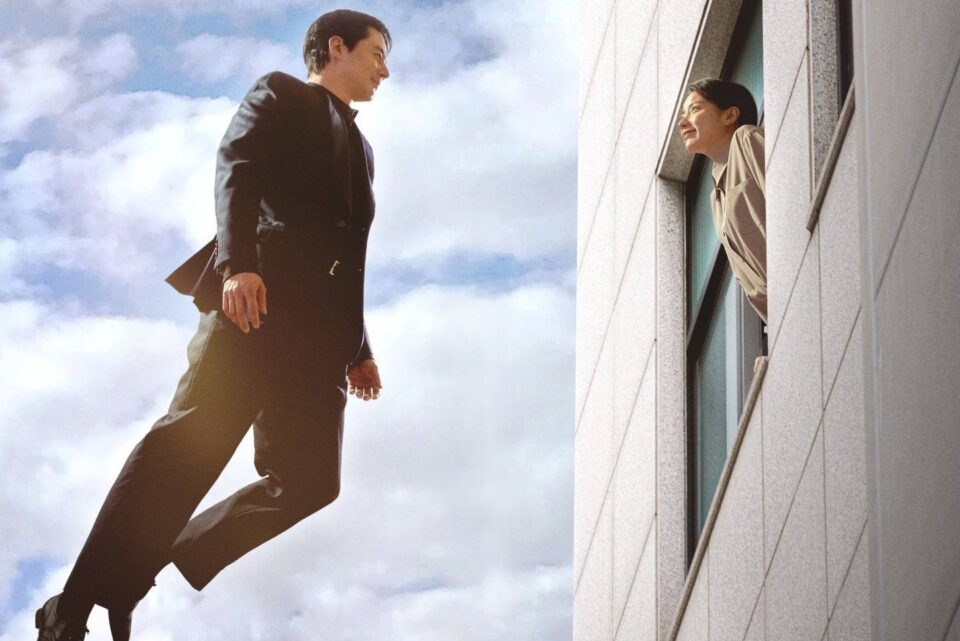
Forget the capes and spandex because the best K-drama “superheroes” are often everyday people wrestling with extraordinary gifts. Unlike their Western counterparts, who usually punch their way through problems, these characters personify the messy, compelling interplay between power and the very human struggle to control it. The real struggle, though, is watching them deal with the fear of hurting someone, the heavy emotional burden of their powers, and just being plain exhausted from trying to live a normal life while totally bending the rules of science. They feel real and exposed, like a reminder that being a true hero isn’t about being invincible. It’s about surviving the personal battle with the amazing (and crazy) power you have inside.
The Burden of the Gift
In K-dramas, some heroes don’t have super-strength; they have super-sensitivity, which is often more of a burden than a blessing. In I Hear Your Voice (2013), Park Soo-ha’s (Lee Jong-suk) ability to read minds makes him a “superhero” in the courtroom, but a victim in the real world. His ability isn’t a strategic advantage; it’s a mix of human malice and hidden insecurities that made him grow up too quickly. The constant noise of human dishonesty is a sensory overload that makes him profoundly lonely, while his power makes him a target for a vengeful killer, proving that knowing the truth doesn’t always make you safe.
It’s a similar story in He Is Psychometric (2019). Just like Soo-ha, Lee Ahn (GOT7’s Jinyoung) can see the past just by touching someone or something. The problem is he can’t really control his power, which turns him into a total loner. He can’t even hold hands without being hit by a wave of someone else’s memories. His vulnerability is his inability to connect with people without the “filter” of his power, and his touch-based visions are a curse of unwanted intimacy, revealing the darkest secrets of those he loves.
These characters are essentially vulnerable because they cannot “turn off” the world. Their abilities are a breach of their own boundaries, proving that knowing everything or being extraordinary is often the quickest way to lose your peace of mind.
The Physicality of Vulnerability
Strong Girl Do Bong-soon (2017) went against the grain by linking morality to power. Bong-soon (Park Bo-young) is very strong, but she is afraid of losing that strength if she uses it for selfish reasons or hurts someone innocent. This makes her feel tense all the time because she has to check her morals and ego before every punch she throws. Her “weakness” is her conscience, and her “vulnerability” is her strong desire to be “delicate” for the man she loves. This shows the classic K-drama struggle between who she really is and what society expects of her.
Likewise, the “Counters” in The Uncanny Counter (2020–2025) are literally dead-adjacent; they only have power because they are in a coma or on the brink of death, literally given a second lease on life in exchange for hunting demons. Their vulnerability is their mortality: if they break the rules of their “Yung” (the line between this world and the next) partners, they lose their second chance at life. This team-up is driven by shared grief and the collective trauma of being outcasts, with their vulnerability acting as a ticking clock that makes every attack a gamble with their existence.
On the other hand, the 2023 megahit Moving took a visceral approach. Healing factors and flights aren’t used for flashy battles in this drama adaptation of Kang Full’s super-successful webtoon of the same name; they are used to endure torture and protect one’s family. Here, the weakness lies in the role of parents. The “super” parents are terrified, not for their own lives, but that their “super” children will inherit their “curse” of being hunted by the state. So, the vulnerability, again, isn’t just physical; it’s the desperate need of parents to hide their children’s gifts so they can lead a “normal” life. Their greatest strength, their love for their family, is also used as a leverage chip by those in power.
The Next Chapter: Economic Heroism
As we look at the latest sensation in K-drama superheroes, Cashero (2025), we see a hero whose strength is proportional to how much cash he has. The show makes the fight between “power and vulnerability” real. Kang Sang-woong’s (Lee Jun-ho of 2PM) strength depends entirely on the amount of cash he carries. To be a hero, he must literally bankrupt himself. It’s a brilliant but cynical metaphor for modern life. His power is based on actual capital, but his weakness comes from financial vulnerability and his bank account, a deeply relatable modern anxiety. The K-drama brilliantly transforms the superhero genre into a critique of late-stage capitalism — you can save the world, but only if you can afford the bill.
Simply put, K-drama superheroes aren’t interesting because they can fly or catch bullets; they are interesting because they still have to face the NIS, the local bully, or an empty bank account. They bleed, they go into debt, and they cry over cold noodles. And by 2026, the genre has mastered this “interplay”—reminding us that true heroism isn’t the absence of vulnerability, but the choice to act even when your power makes you more exposed than ever.