
The Indian art market has matured greatly in the last few years. It is evident from the increased interest of galleries and institutions abroad in the country’s art fairs. Taking stock of 2025, the Indian art world made a headway, and Mumbai had a role to play in it, too. From the Bombay Progressives’ artworks selling at high prices at auctions to global interest in art fairs such as Art Mumbai as hubs for talent acquisition in India.
According to news reports, M.F. Husain’s Gram Yatra sold at Christie’s for a historic for a whopping ₹118 crore ($13.7 mn), making it the most expensive modern Indian painting ever sold at an auction. V.S. Gaitonde’s Untitled (1970) work sold for ₹67.08 crore as Saffronart’s 25th anniversary evening sale in Delhi achieved a record ₹355.77 crore ($40.2 mn) — the highest total ever for a South Asian art auction globally. Tyeb Mehta’s Trussed Bull (1956) sold for Rs 61.8 crore, setting a career-high auction price for the late artist in his centenary year.
And, Art Mumbai 2025 emerged as a turning point for the Indian art market, bringing South Asian and international art into a global-facing dialogue. As the Art Mumbai weekend unfolded, a team from the Los Angeles County Museum of Art (LACMA) flew down to Mumbai for a visit that coincided with the fair. This visit, in an official capacity, was a first for LACMA in India. Two key announcements made were artist Bharti Kher’s show in 2027 at LACMA and the acquisition of Bhasha Chakrabarti’sartwork which will be displayed at the museum.
A view of David Geffen Galleries at LACMA, including Pavilion for Japanese Art with La Brea Tar Pits’ Lake Pit and mammoth sculptures.
| Photo Credit:
© Iwan Baan
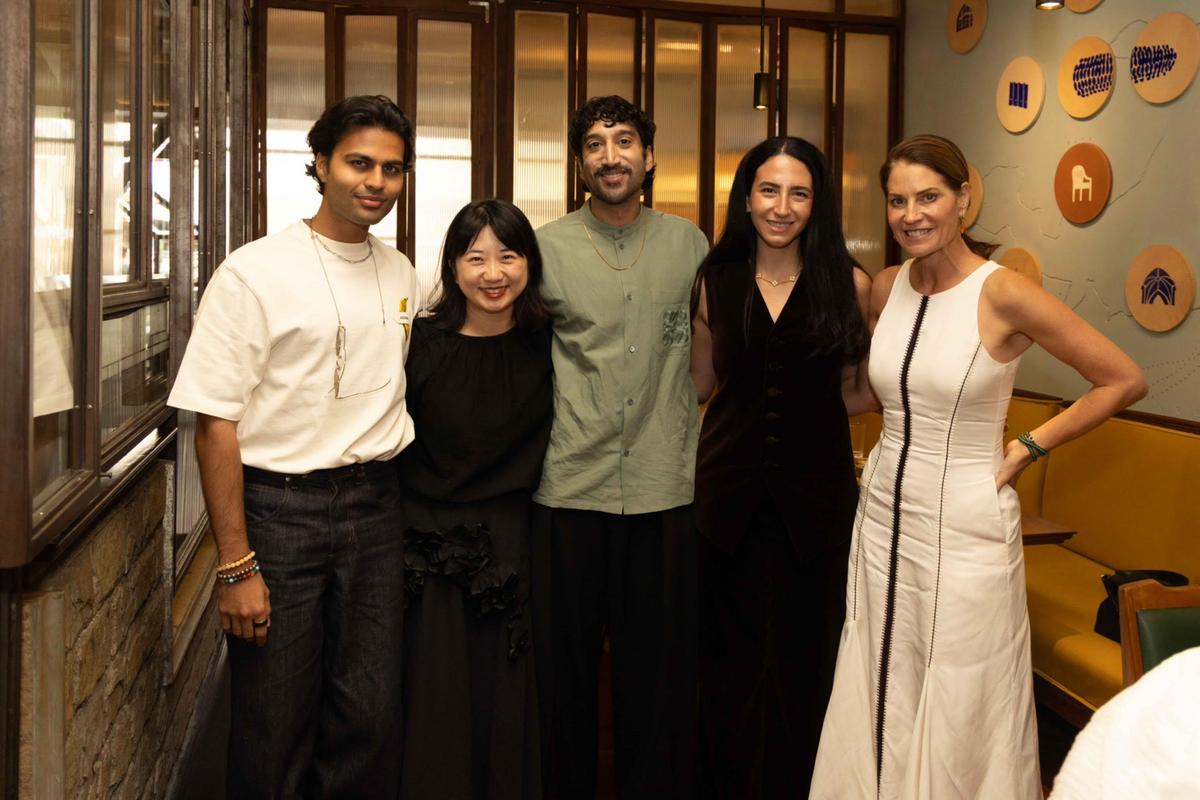
(From left) Akshat Rajan, Rachel Du, Rajiv Menon, Nina Regenstreif, and Tracy O’Brien.
| Photo Credit:
Courtesy of Saurabh Das
Platforming Asian diaspora
Led by Michael Govan, CEO, and Wallis Annenberg, director of LACMA, the trip kicked off with a dinner hosted by Isha Ambani, one of the museum’s trustees. Later, art collector Akshat Rajan hosted a dinner to spotlight LACMA’s Asia and Asian Diaspora Initiative (LAADI), a new enterprise which aims to build community.
The city of Los Angeles is home to over 1.5 million Asian-Americans and is home to one of the largest South Asian diasporic communities. LAADI, then, is both recognition of that diaspora and an opportunity. Rachel Du, principal gifts officer at LACMA says, “LAADI was conceived as a dynamic support system to formalise and amplify this commitment [to the diaspora], ensuring that Asian and Asian diasporic art plays an integral role in both our galleries and our community engagement.”
Rajan, an early supporter of the initiative, elaborates, “It helps the presence of the Asian community at LACMA’s global cultural offerings and art fairs. From a strategy lens it even helps decide what LACMA is going to acquire.” On that front, it was announced that Bhasha Chakrabarti’s Self-Portrait as Mumtaz Mahal on a Carpet from the Shah Jahan Period at the Frick (Untimely Death) 2023 had been acquired by the museum.
The Honolulu born-artist graduated from the Yale School of Art and has been an artist in residence at Hampi Art Labs. Dhyandra Lawson, Andy Song associate curator of contemporary art at LACMA notes, “[The painting] resonated at LACMA because it directly challenges the hierarchies between European ‘fine art’; and Asian ‘craft’; that have been established by Western trained scholars and reinforced by museums for generations. The artist’s choice to paint on burlap is particularly compelling — it’s both a traditional carpet-making material and a classical oil painting support.”
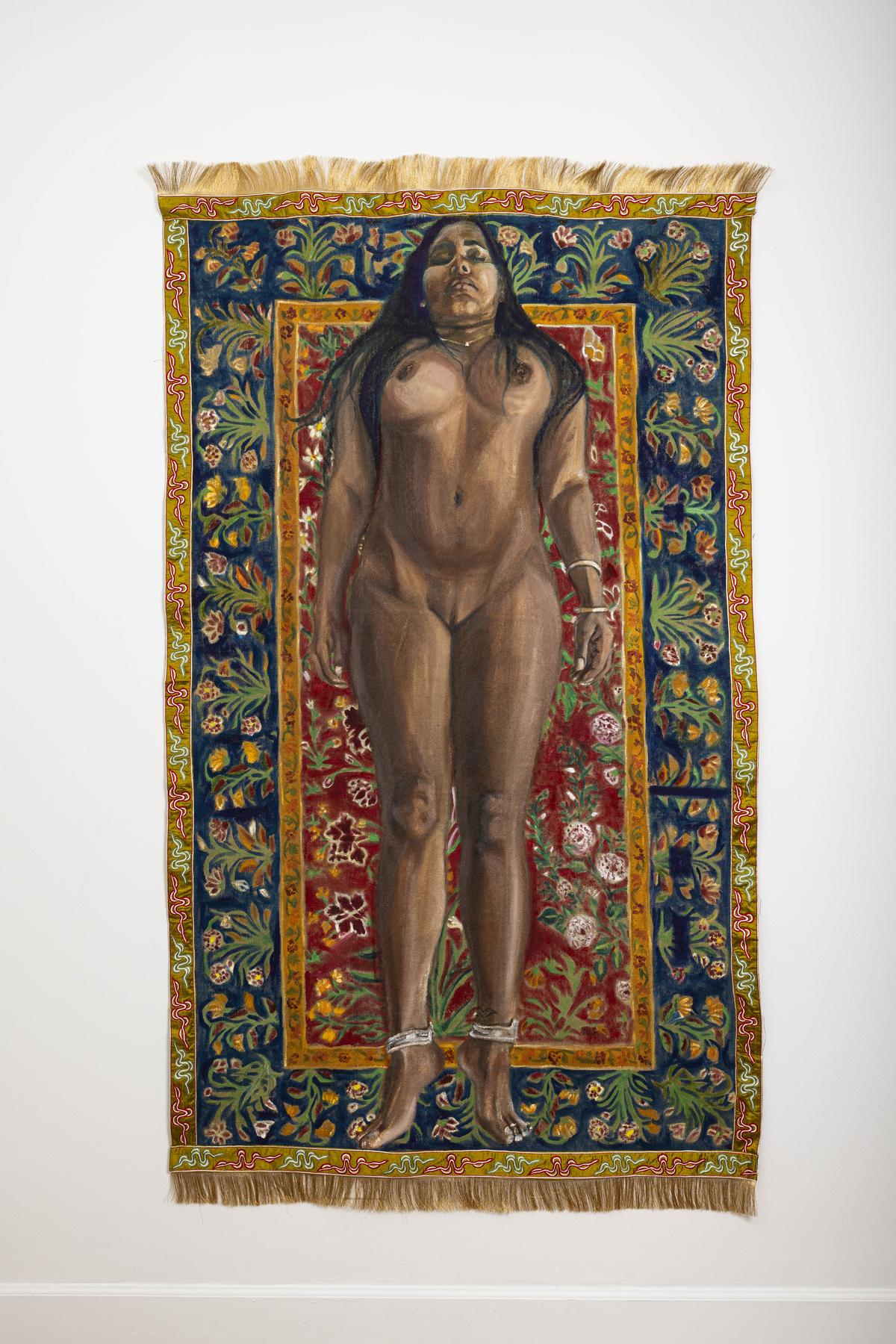
Bhasha Chakrabarti’s Self-Portrait as Mumtaz Mahal on a Carpet from the Shah Jahan Period at the Frick (Untimely Death) 2023 has been acquired by LACMA.
| Photo Credit:
Courtesy of Rajiv Menon Contemporary
LA to Mumbai: Sister cities
Art gets a spotlight being in a city with lots of star wattage. Mumbai’s Rajiv Menon, the founder of Rajiv Menon Contemporary, an LA-based gallery that highlight’s south Asian art, who was also present, notes, “Bombay and LA are like long-lost sister cities. Both thrive on creativity and understand the value of the entertainment industry,” citing the example of LACMA’s annual Film + Art gala. Aparajita Jain, director at Nature Morte, agrees. She represents Bharti Kher, who will be the first living Indian artist to be given a solo show at the museum in 2027. Jain notes, “LA and especially Hollywood dictates world culture in a very strange way. Bollywood and Hollywood are popular culture, and LA is the seat of creativity — from music to theatre to so many different things.”
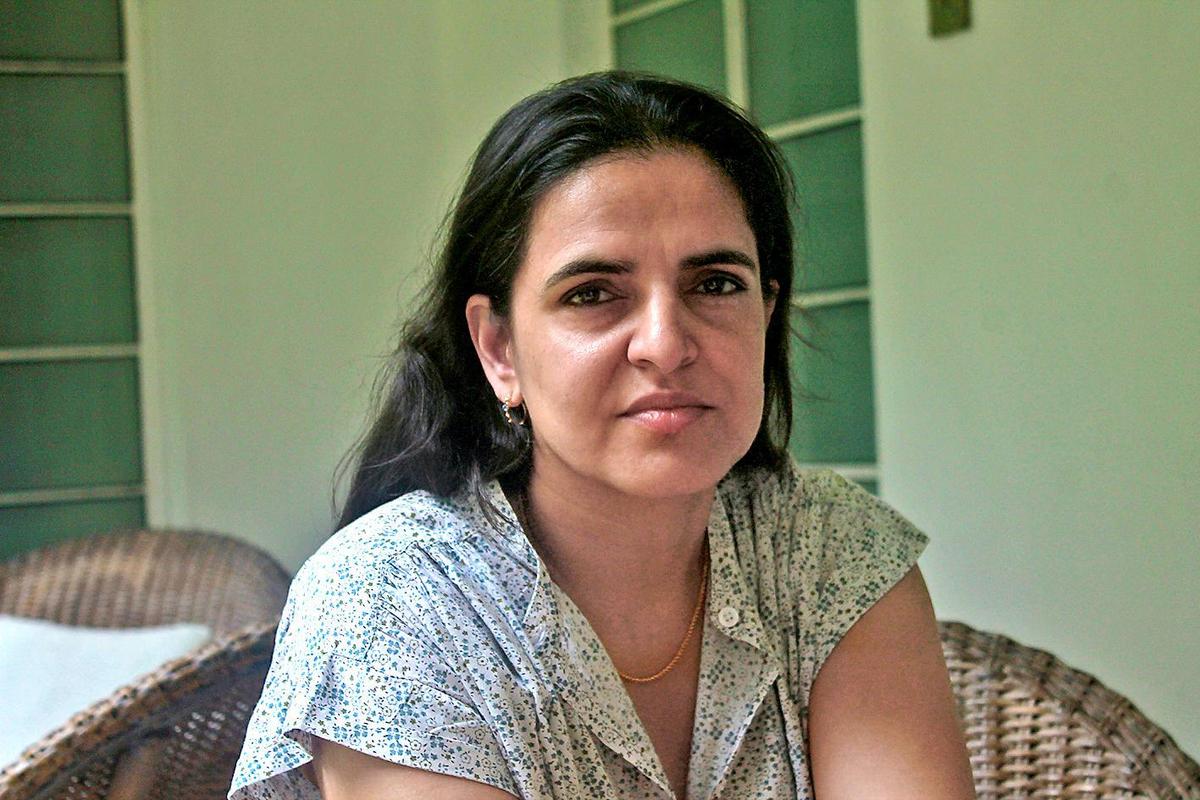
Artist Bharti Kher.
| Photo Credit:
S. Anandan
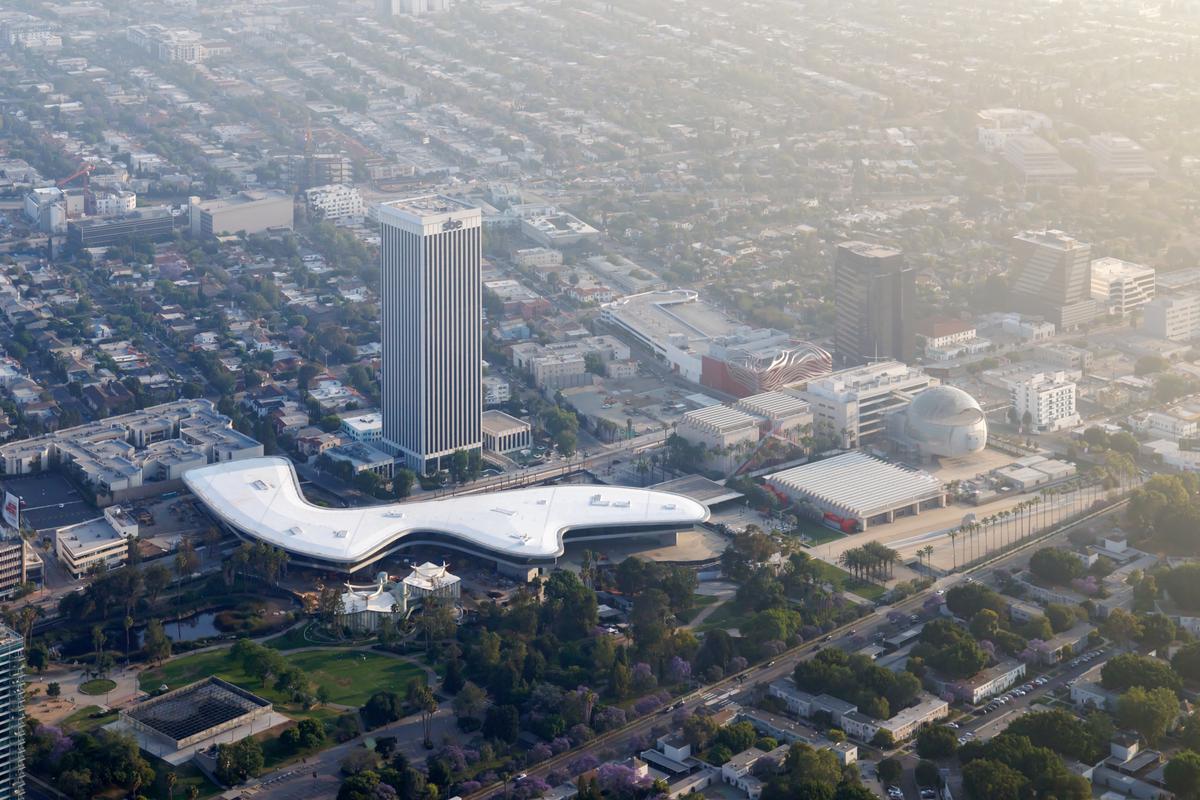
An aerial view of LACMA buildings, including David Geffen Galleries in the Miracle Mile neighbourhood.
| Photo Credit:
© Iwan Baan
The three-year-old Art Mumbai has become a formidable stop on the country’s cultural calendar. Du from LACMA notes, “Art Mumbai presented an invaluable opportunity to deepen our understanding of contemporary Indian art practices and strengthen partnerships within the region,” in a city that is as much about creativity as glamour. Menon opines, “Art Mumbai is significant because it’s an opportunity to experience the wider landscape of this country, in one very-well curated concise fair.”
Programmes like LAADI are a way to ensure that the diaspora and the museum can build networks and create connections between LACMA and the larger art world in Asia. Rhea Kuruvilla, Frieze’s VIP consultant for India, who hosted the LACMA delegation at her art-filled home, says, “I think south Asia, generally, when it comes to the art world, is at an inflection point,” with global institutions now “paying attention to the region.”
In terms of promoting the Asian diaspora art outside of India, ahead of the India Art Fair in Delhi, from February 5-8, LACMA will be hosting two programmes, one each in Singapore and Bangkok, both with LAADI co-chair Kulapat Yantrasast.

