
Last month, following Russian President Vladimir Putin’s visit, celebrated contemporary artist Nikas Safronov debuted in India with a solo show featuring over 100 artworks. His immersive exhibition Dream Vision gave the Lalit Kala Akademi in Delhi a makeover. Think life-sized sculptural elephants, coloured red, blue, white and black; projection mapping; paintings that move with the help of Artificial Intelligence (AI); and large artificial flowers that open and close, emitting a fresh fragrance.
Artificial flowers in motion by Nikas Safronov.
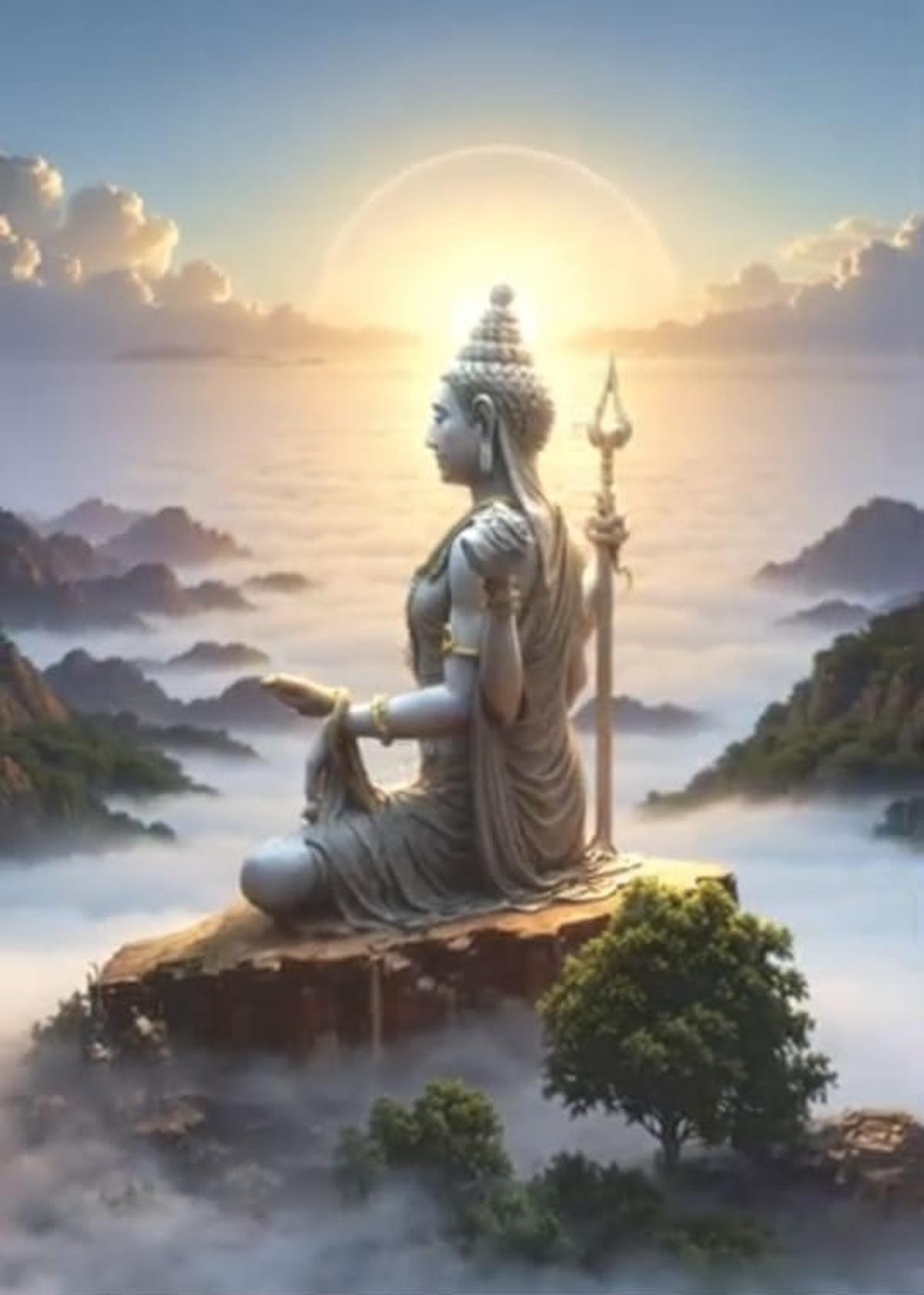
In what was quite an unusual sight for art exhibitions in India, people waited in long queues to get a glimpse of the one-of-a-kind sensorial experience. According to media reports, the show drew an estimated 560,000 visitors over a fortnight. Now, the National Gallery of Modern Art (NGMA) in Mumbai is getting the same treatment till January 15, showcasing 45 paintings. Between Marilyn Monroe and goddess Lakshmi flanked by two elephants, catch your artistic reflection in an AI-powered “neuro-mirror”. Sail down the river Ganga with Lord Shiva or witness the beautiful union of Ganga in his dreadlocks as the paintings come alive on your phone after you scan the QR code.
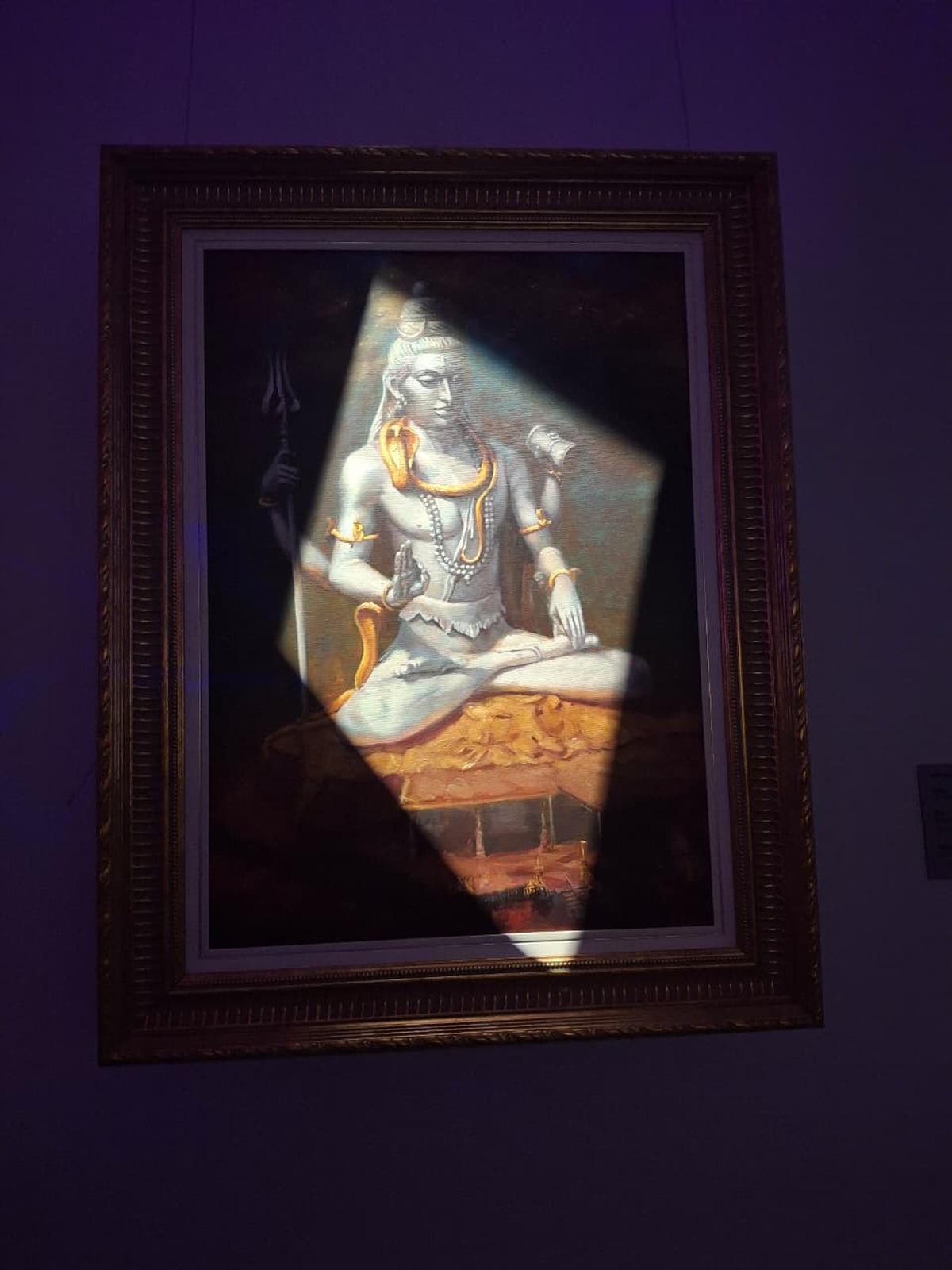
Lord Shiva by Nikas Safronov.
Safronov’s paintings bring together the disciplines of Renaissance style with modern flair, almost creating a time capsule with his art. While his buildings are stately and the tympanums (the recessed surface above a doorway) high, rooted in Classical art, his figures are laced with realism. The works on show span key phases of his career and trace the evolution of his dream-like artistic language. Handy QR codes placed alongside the paintings help transform them into multimedia experiences, with spatial sound and light-touch AI elements.
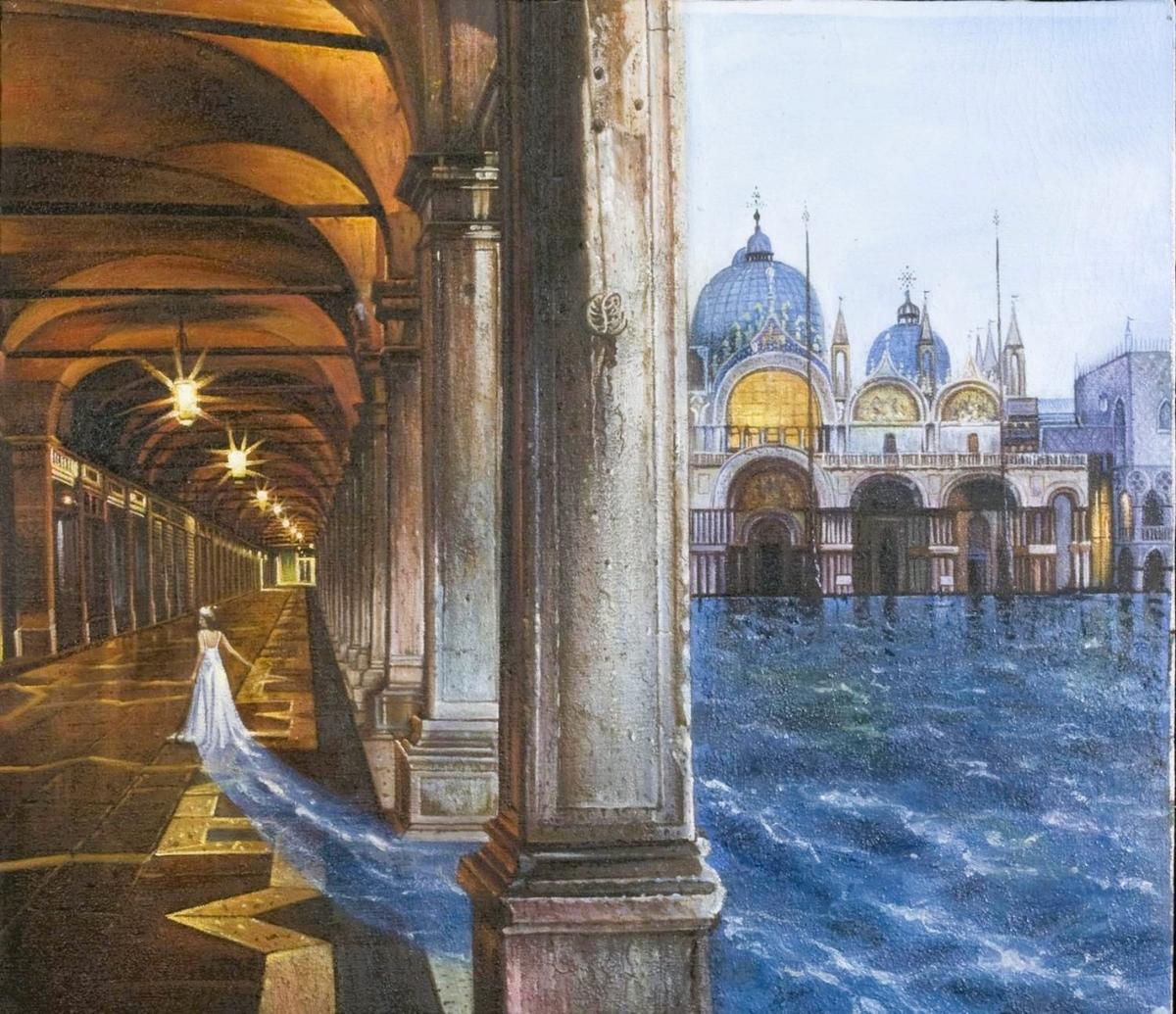
Nikas Safronov’s buildings are stately and the tympanums high, rooted in Classical art.
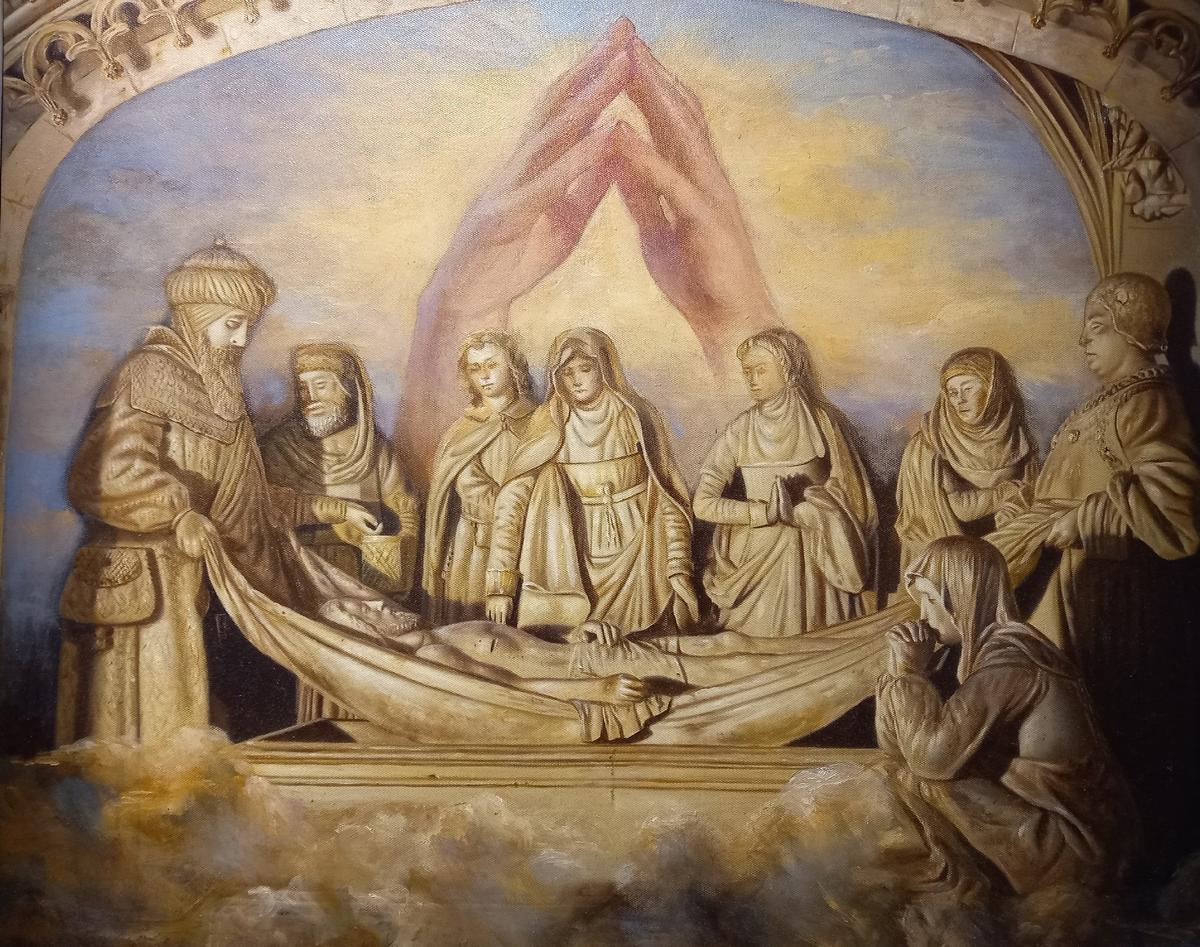
A Divine Story Carved in Stone (2015) by Nikas Safronov.
Soft power of cultural diplomacy
At a time when Russia is still at war with Ukraine, Safronov’s debut in India is a mark of cultural diplomacy. Widely regarded as Russia’s most prominent modern artist, he grew up in the Soviet Union — with its state-sponsored propaganda art of Socialist Realism — but veered towards creating his own unique artistic language. He marries classical painterly discipline with surreal imagery, which harks back to Russian Symbolism in art that predates the Soviet era. “To begin one’s career in the Soviet era meant learning to speak indirectly,” Safronov said in a recent interview to an Indian daily, “There were boundaries — sometimes rigid, sometimes barely visible — and within them an artist searched for his own language.” Metaphors and symbolism became the wind beneath his wings.
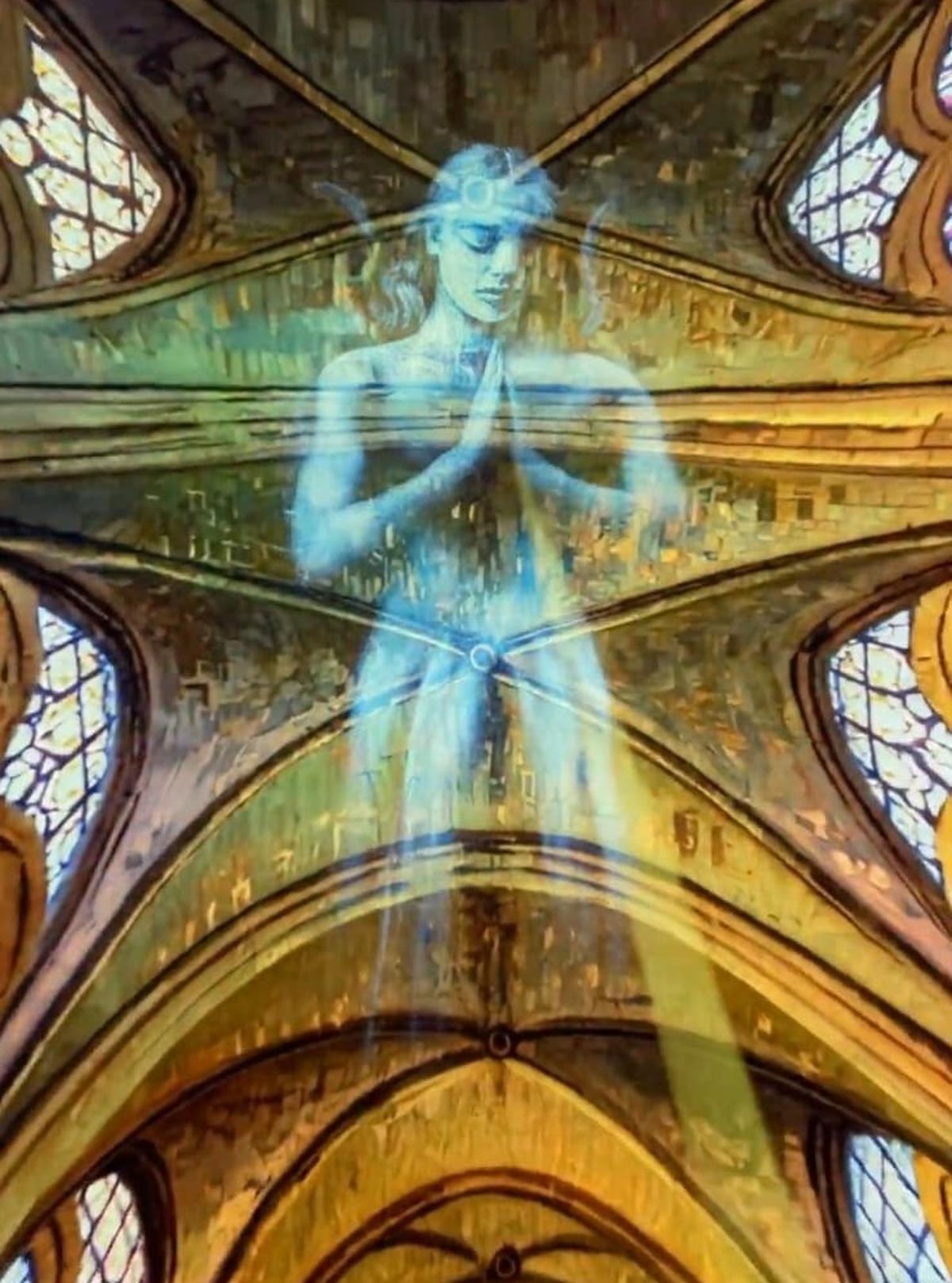
Nikas Safronov’s works’ visual grammar has a dream-like artistic language.
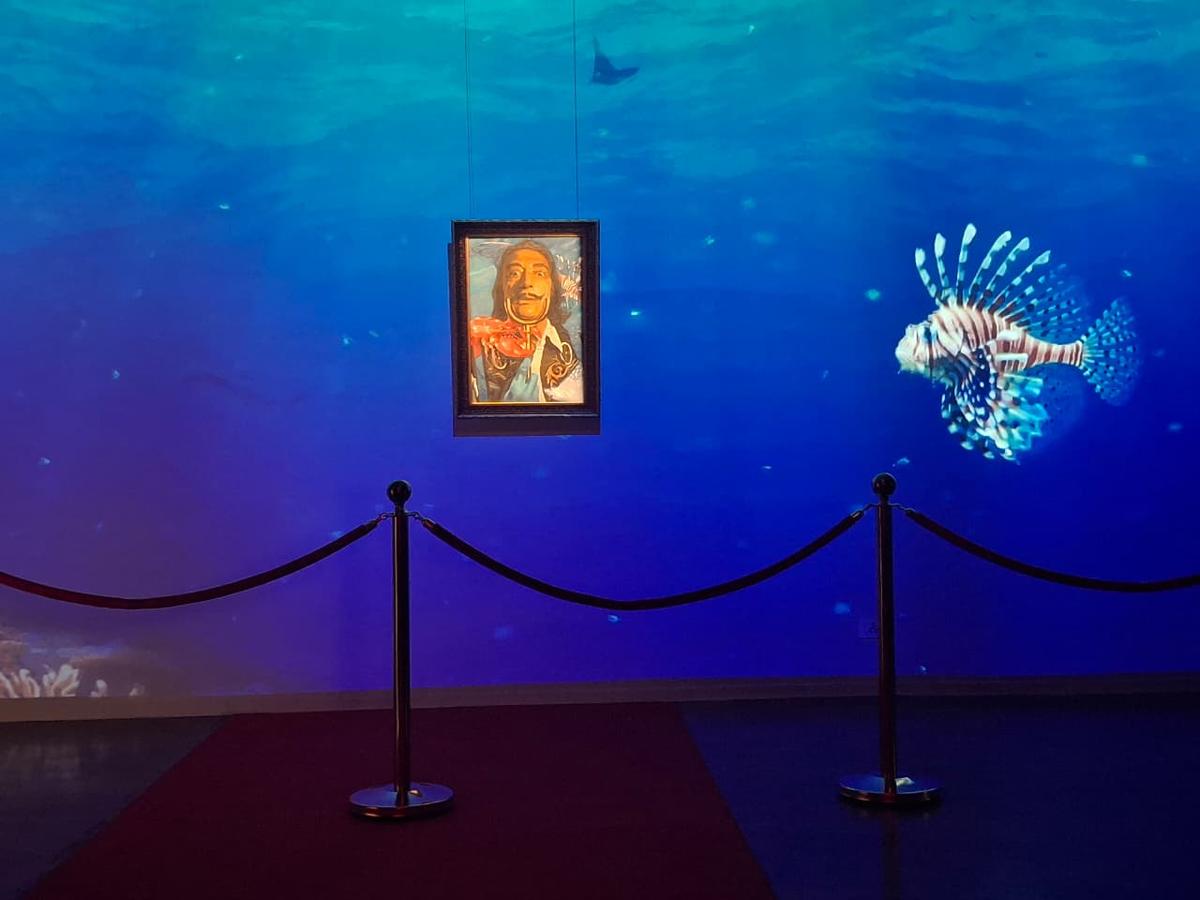
Animated sharks swim around a painting of Salvador Dalí by Nikas Safronov.
Safronov, 69, has built a career that spans decades and crosses continents. Known for his striking portraits, imaginative compositions, and distinctive surrealist-symbolic style he calls “Dream Vision”, he has held over 320 exhibitions worldwide. His work has frequently intersected with international diplomacy, reflecting his belief that art can transcend political boundaries and foster understanding between nations. Awarded the title ‘People’s Artist of Russia’, Safronov has painted over 50 heads of state and figures in his career, including Donald Trump, Pope Francis, Elton John, and Prime Minister Narendra Modi. Although he confessed that actress Sophia Loren was his favourite muse, and one can see why from the beautiful portraits he has rendered of her. Another experience is watching the animated sharks swim around a painting of Salvador Dalí as one sits on the famed lip-shaped counch that the artist recreated as a tribute to one of his favourite Surrealist painters.
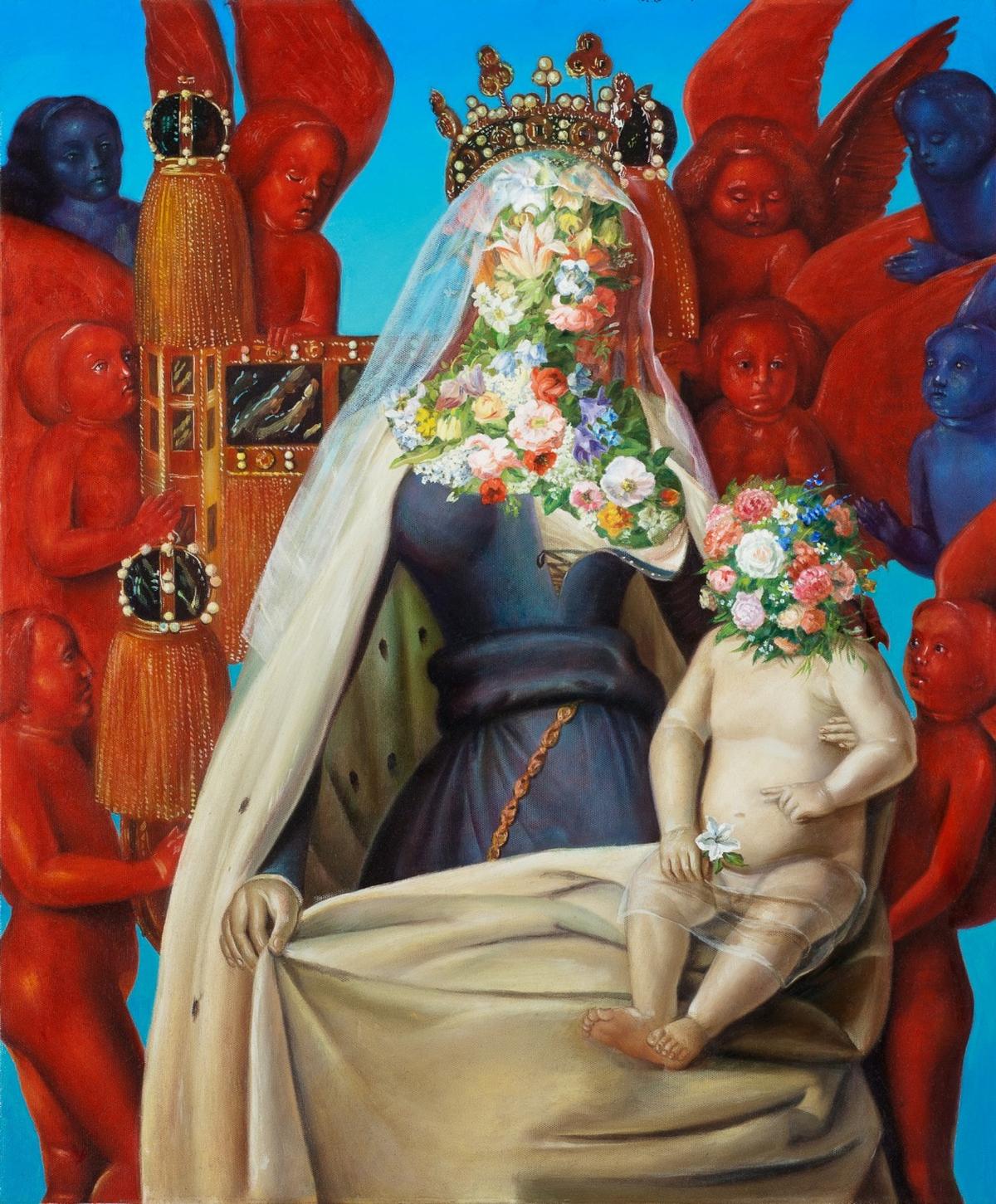
An artwork rooted in surrealism and symbolism by Nikas Safronov.
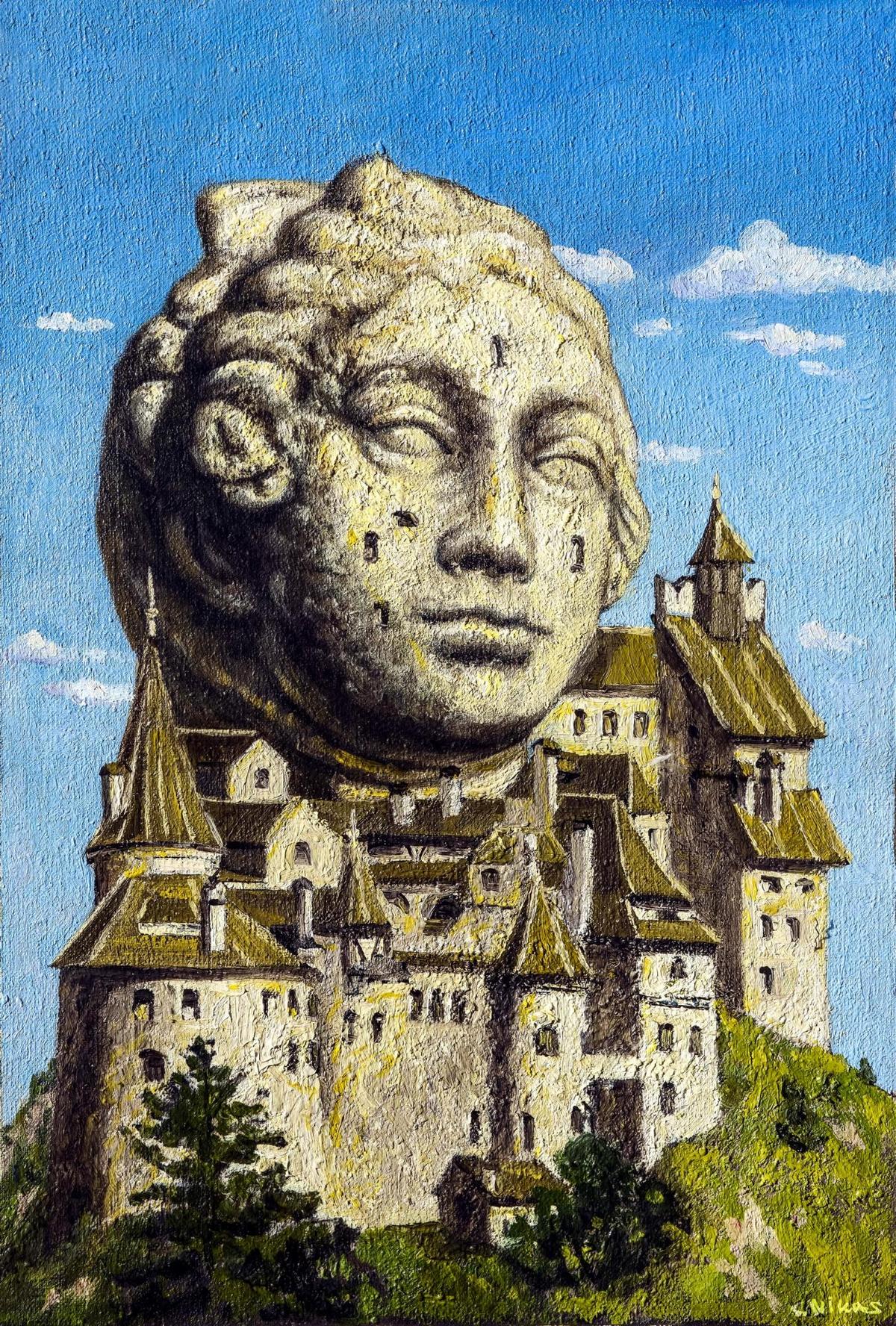
A History Made of Stone (2011) by Nikas Safronov.
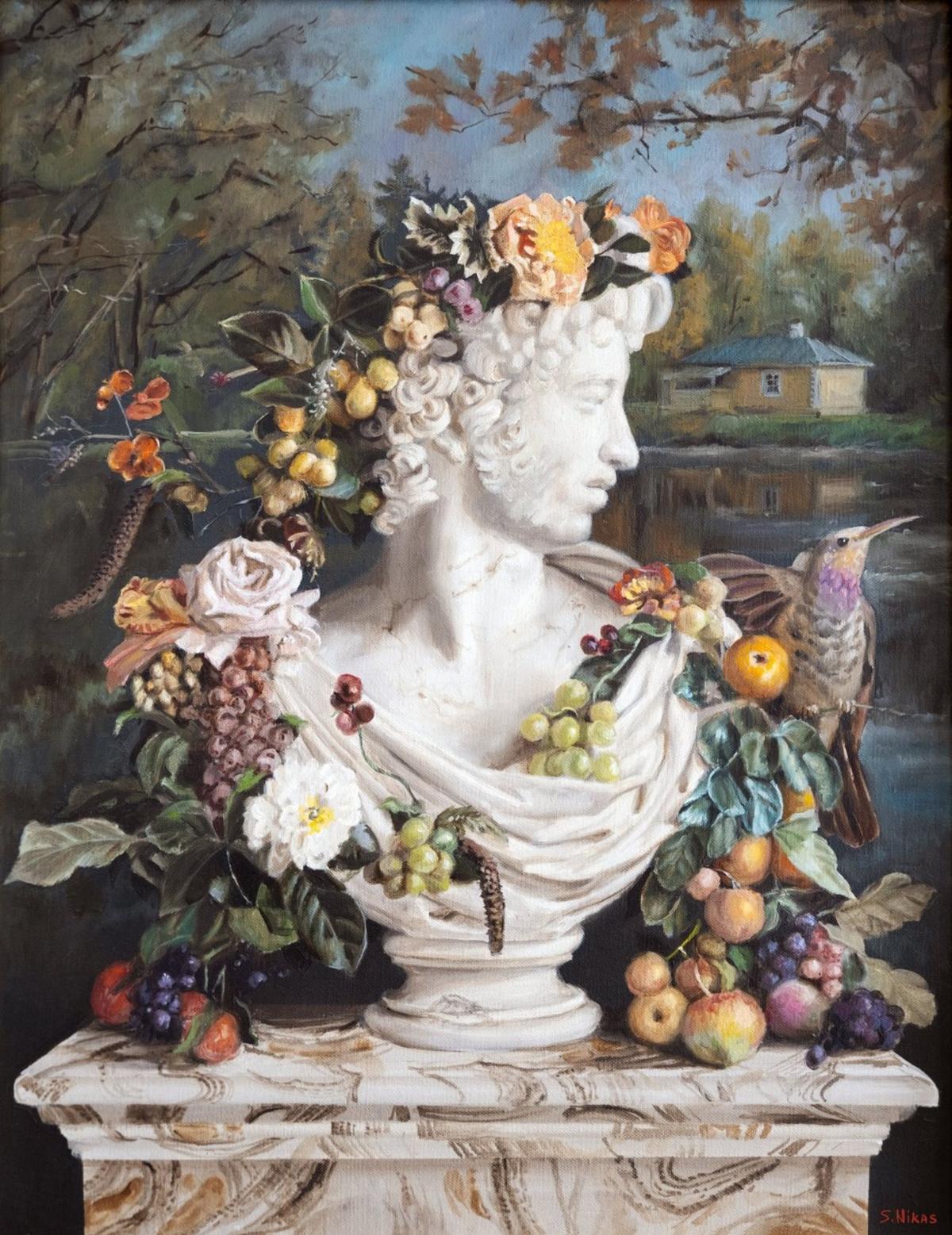
An artwork by Nikas Safronov.
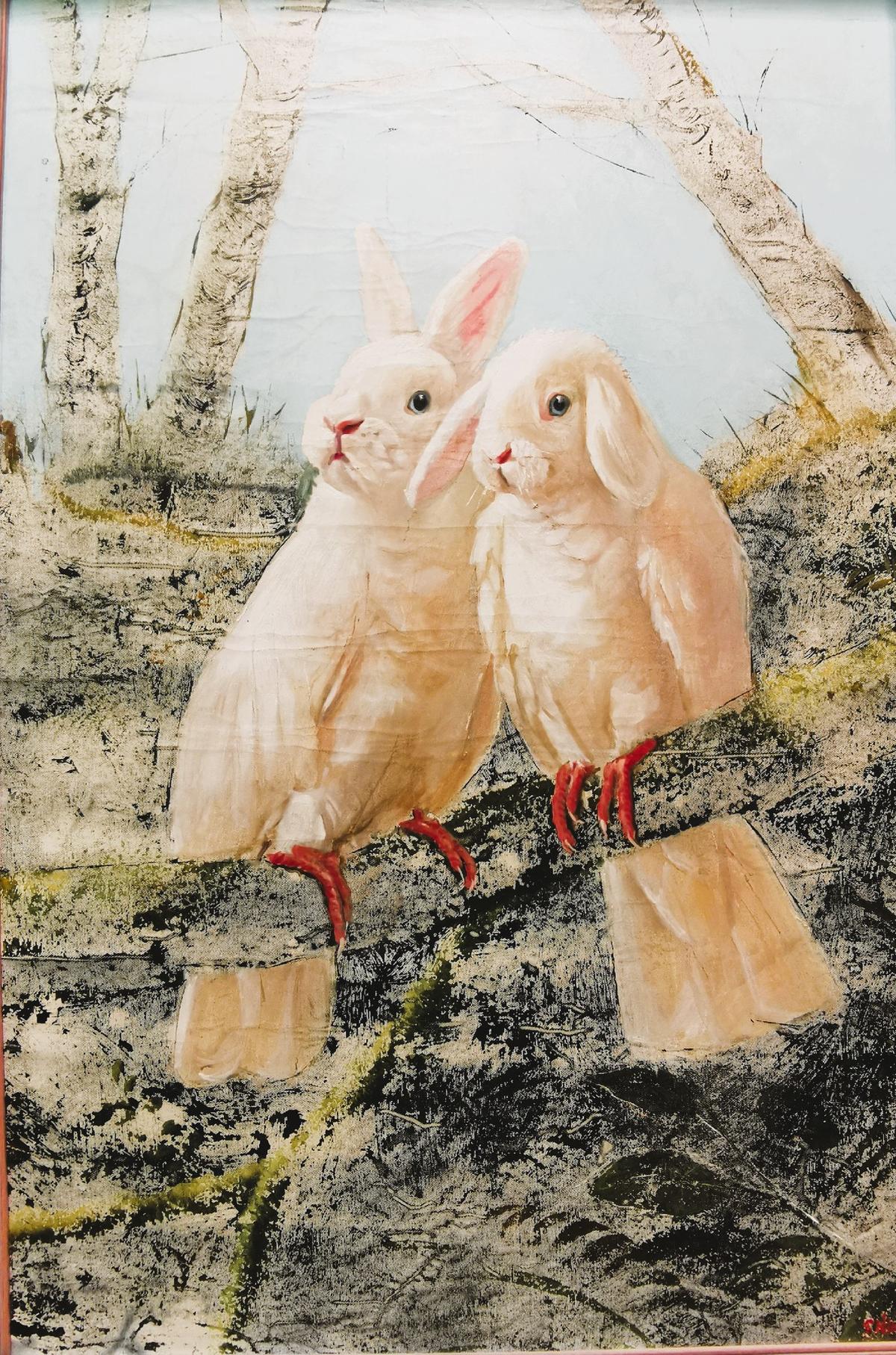
Spring Love (2018) by Nikas Safronov.
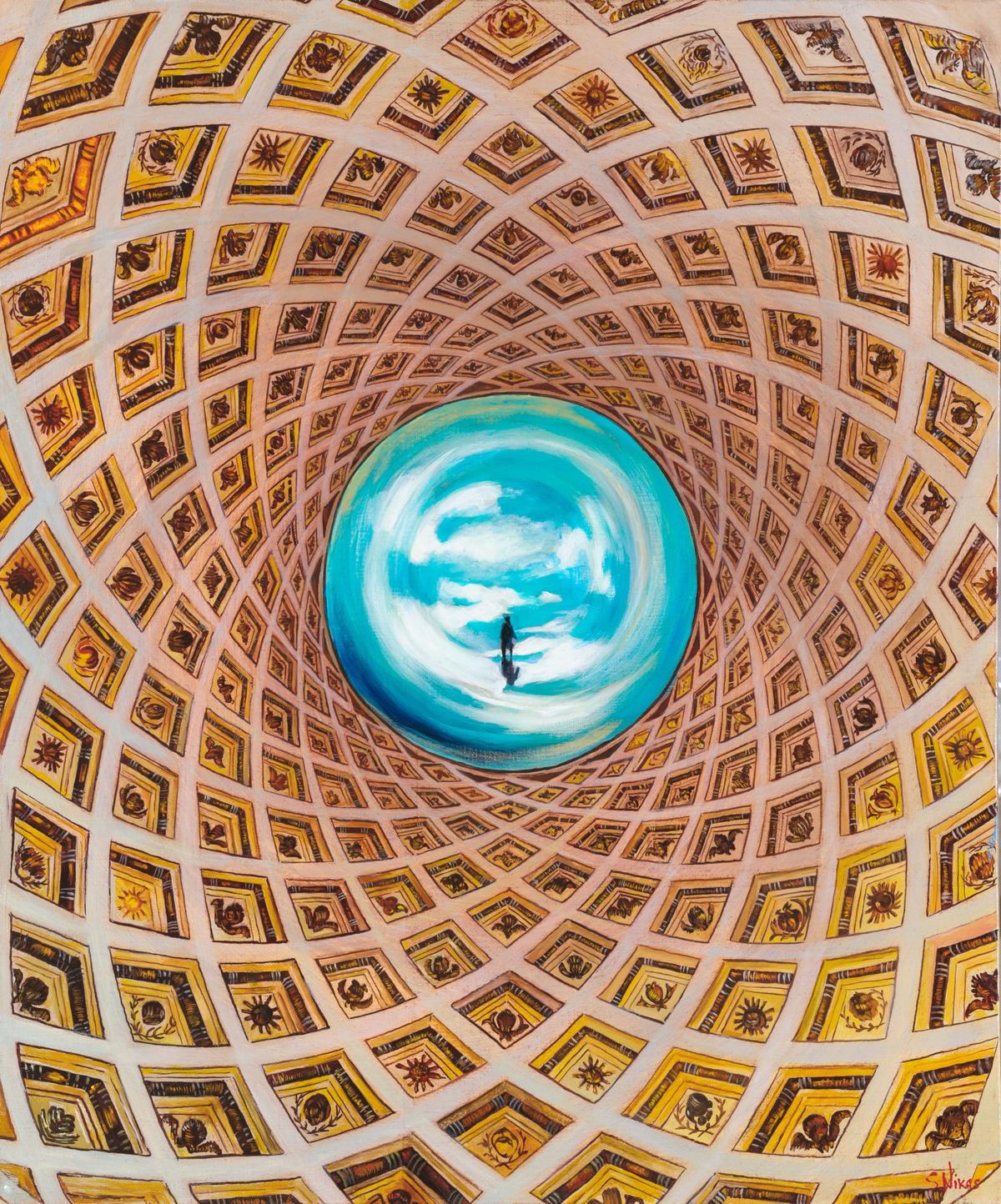
Anti Chaos in the History of Space (2005)by Nikas Safronov.
Organised with the support of Rosneft, Russia’s leading oil company, the two-city show is a cultural marker of the high-profile meeting between Modi and Putin and a renewing of old diplomatic ties between India and Russia. In his artist statement, Safronov says, “Visiting India is like stepping into a world where culture is alive in every street, every temple, and every festival. I hope my work can serve as a bridge of understanding between our countries.”
Symbols of India
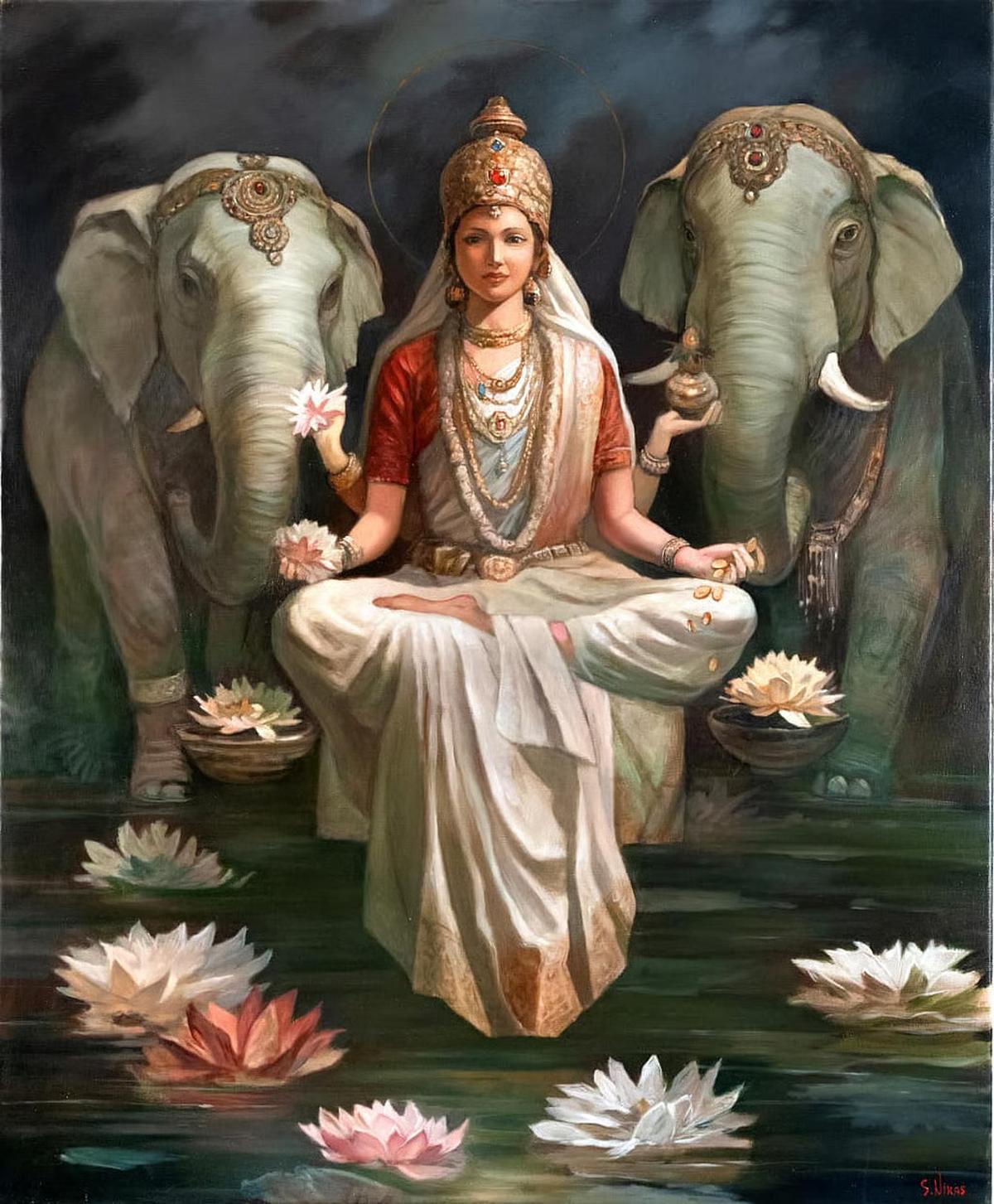
Nikas Safronov has been inspired by Hindu deities such as Lakshmi.
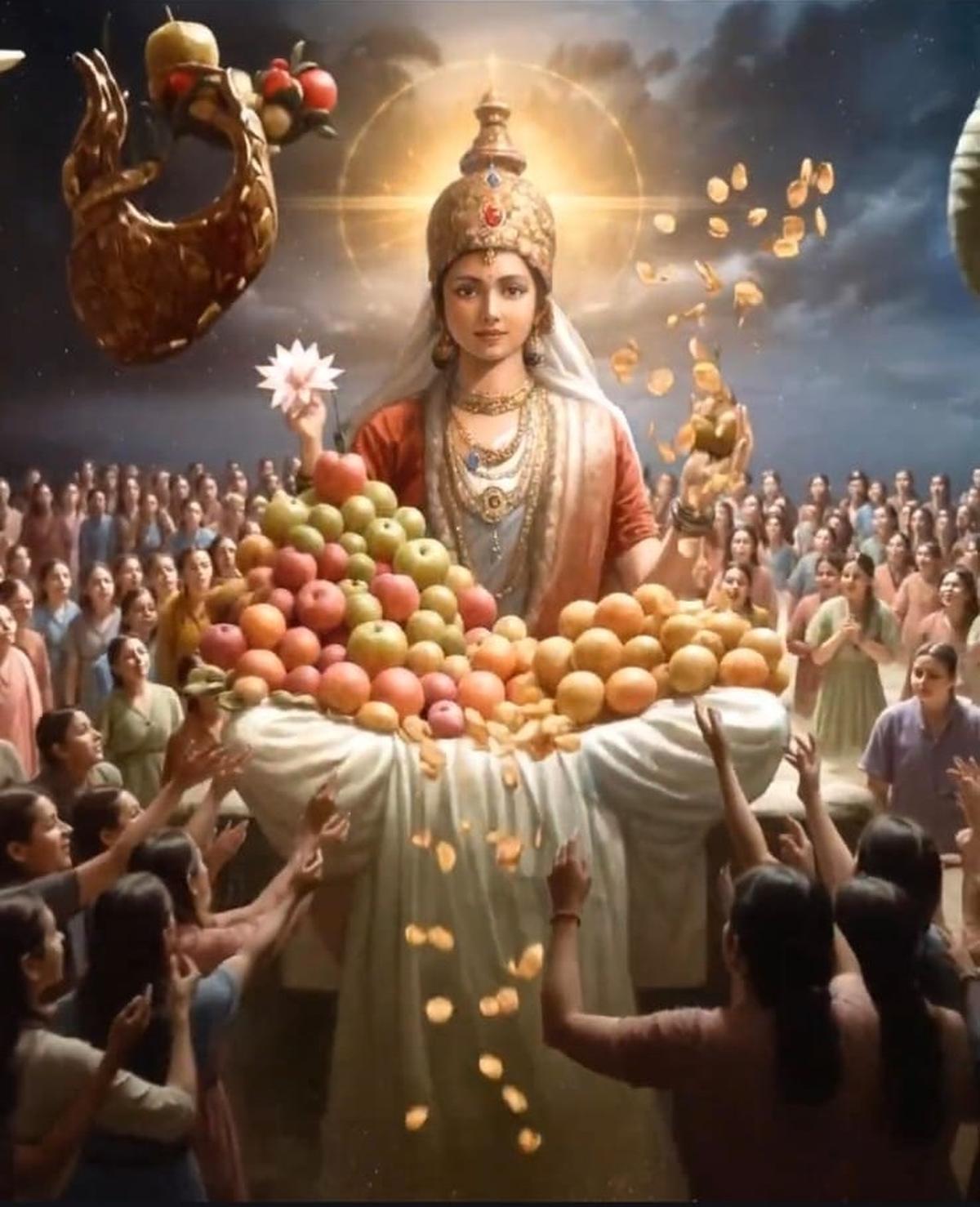
An artwork featuring goddess Durga by Nikas Safronov.
An artwork by Nikas Safronov.
His works in India highlight landscapes, historical sites, and mythological themes that have long inspired him. Paintings of the Taj Mahal, Varanasi, and other iconic Indian landmarks, along with interpretations of Hindu mythology and cultural motifs, figure prominently.
Safronov has said in recent interviews that he has been inspired by Hindu deities such as Lakshmi, Shiva and Brahma. And that unlike the “strict division between the sacred and the human” in Western art and ethos, he found Indian gods imbued with “emotion, movement, and nature”. Just as to him, “Dream Vision is not an escape from reality, but a way of living through it”.
Dream Vision is showing till January 15, at NGMA, Fort, Mumbai.
The writer is a Delhi-based independent art critic and curator.

